This is a story about a man who believes that he has two “selves” - external and internal. That is, an organism is a certain conglomerate of cells, each of which is a separate individual. This hybrid creature has a certain common personal “I” that uses the entire organism, and is the organism itself, which has its own will. According to the character, one can communicate with him, which is what he is trying to do. He wants to reach him and comes up with different ways of communication: injecting substances under the skin or intravenously, tattooing texts on the body, swallowing objects. The answer would come in the form of a rash or other physical manifestation that had to be interpreted. As a result, communication is carried out and the second “I” agrees to die.
A vacant theater still has “screenings” of its own: apparitions that come to life on a curved screen without anyone to see them, creating spectacular scenes without any projectors at all.
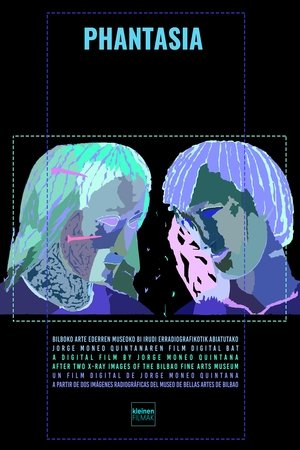
X-ray images were invented in 1895, the same year in which the Lumière brothers presented their respective invention in what today is considered to be the first cinema screening. Thus, both cinema and radiography fall within the scopic regime inaugurated by modernity. The use of X-rays on two sculptures from the Bilbao Fine Arts Museum generates images that reveal certain elements of them that would otherwise be invisible to our eyes. These images, despite being generally created for technical or scientific purposes, seem to produce a certain form of 'photogénie': they lend the radiographed objects a new appearance that lies somewhere between the material and the ethereal, endowing them with a vaporous and spectral quality. It is not by chance that physics and phantasmagoria share the term 'spectrum' in their vocabulary.
In an indeterminate future, forbidden memories challenge a database containing all human memories. An experimental cinematic search between past and future, fiction and fact, Prishtina and Tirana. The future, a glitch.
A documentary about a person who cleans his room with a vacuum cleaner, filled with disasters and mishaps.
An experimental video essay which uses circles and waves to explore neurodivergent experience.
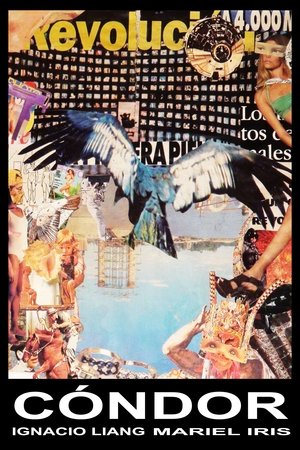
Cóndor
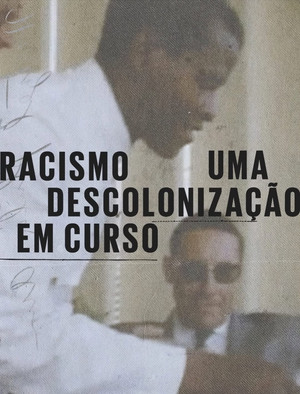
Racismo: Uma Descolonização Em Curso
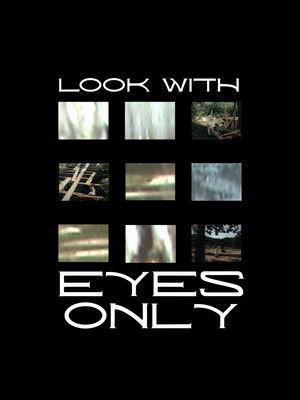
A closeup examination of a tree in the morning light.
Six sequences about Fascism and its segments throughout history.
Kelli Connell spent a decade investigating and editing Edward Weston's photographs, Chris Wilson's writings, and her own photographs and writings to create the exhibition: Kelli Connell: Pictures for Charis and its accompanying book. - Cleveland Museum of Art
Seven actors are brought to an isolated house where they must stay in character for three days under constant surveillance.
Landscapes change with time; people don't. I try to expose the solipsism of lower Appalachian life in this day and age.
The creator of an artificial intelligence that helps people with relationships begins to believe that he is possessed by the AI itself. In the same time, a user of the same AI also begins to go crazy, causing the two to fall into a kind of insanity, unable to tell the difference between reality and fantasy.
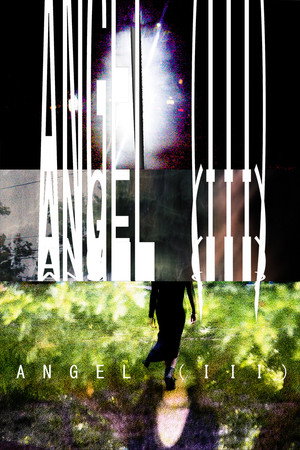
A spectral first-person journey through Los Angeles layers the city across itself as our guide disassociates, giving way to an abstracted daytime ghost story following a woman's splitting of self and perception. ANGEL PROJECT continues.
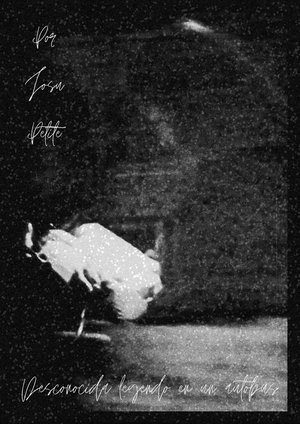
A girl reads during a bus ride
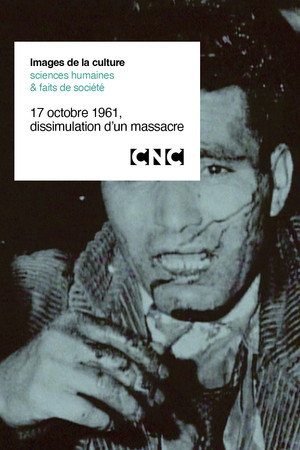
On October 17 and 18, 1961, during a non-violent demonstration against the imposed curfew, dozens of Algerians were murdered in Paris by police officers acting on orders from their superiors. For forty years, this crime has been concealed; yet these events, the deadliest on French soil since the Second World War, resemble, in some respects, the darkest hours of the collaboration. Why has this history been hidden? Under what conditions, and in the name of what reasons, did officials of a democratic state conceal the scale and gravity of such events?
Memory prevents rest and a woman about to die takes advantage of cinema to tell her story (inseparable from that of Franco’s Spain) and to say goodbye. A terrace as a border and a song that crosses time. At home, nothing is always—and everything is still—in the present and defunct now. A home movie of ghosts, a generous gesture of intimacy and solidarity that not witnesses two people at the end of their long lives, but also reveals the weight of history and of the 20th century, which is always present today.
fifteen zero three nineteenth of january two thousand sixteen explores how everyday routines and gestures are transformed when a mother loses her child in the violence impacting Swedish outskirts since the early 2000s. The film resists simplistic media depictions of the suburbs and shows how a home can hold both mourning and the mobilization of women to fight for their own and others' children.
In the mountains of Colombia's Coffee Triangle, a family faces the shadow of armed conflict. Years later, a son reconstructs the inherited fear, amidst echoes of the past and invisible scars. A sensory journey into memory, where the unspoken still resonates.