Take a musical odyssey through five weird and wonderful decades with brothers Ron & Russell Mael, celebrating the inspiring legacy of Sparks: your favorite band’s favorite band.
It contains 99.9 percent of all the matter in our solar system and sheds hot plasma at nearly a million miles an hour. The temperature at its core is a staggering 27 million degrees Fahrenheit. It convulses, it blazes, it sings. You know it as the sun. Scientists know it as one of the most amazing physics laboratories in the universe.
Aspiring teenage astronauts reveal that a journey to Mars is closer than you think.
It has been described as a once in a generation piece of environmental legislation and is key to the government’s commitment to be the first generation to leave the environment in a better state than that in which we found it. The Environment Act passed into law on 9 November 2021 – more than 1,000 days and three Parliaments since its first draft was published in 2018. Its journey was tumultuous, and its fate, at times uncertain. In this documentary, ENDS Report speaks to politicians and environmental policy experts to get the inside story on how this landmark piece of legislation was created – and finds out what the act’s architects think of it now.
How can structures, which take up defined, rigid portions of space, make us feel transcendence? How can chapels turn into places of introspection? How can walls grant boundless freedom? Driven by intense childhood impressions, director Christoph Schaub visits extraordinary churches, both ancient and futuristic, and discovers works of art that take him up to the skies and all the way down to the bottom of the ocean. With the help of architects Peter Zumthor, Peter Märkli, and Álvaro Siza Vieira, artists James Turrell and Cristina Iglesias, and drummer Sergé “Jojo” Mayer, he tries to make sense of the world and decipher our spiritual experiences using the seemingly abstract concepts of light, time, rhythm, sound, and shape. The superb cinematography turns this contemplative search into a multi-sensory experience.
A portrait of sculptor Barbara Hepworth revisiting the Yorkshire landscapes that inspired her and her home studio in St Ives, Cornwall.
Born in 1948, Peter Street struggled at school with epilepsy and illiteracy in Bolton, Lancashire, and, later in life, as a slaughterman, a gravedigger and a war poet. At 66 years old he was then diagnosed with autism, and his world changed forever.
Go higher, faster and farther with the Smithsonian as they explore the dreams of flight.
A self-funded, non-profit feature documentary exploring and celebrating Manchester's contemporary independent music scene at the beginning of the 21st century.
In a career spanning sixty years, Britain's absolute darling has brought his mocking nonchalance and formidable gravelly voice to every genre, from hard rock to jazz and pop. Portrait of a pop aristocrat who has managed to stay in touch with the people.
Caste Aside is a documentary about the British government's controversial decision on whether or not to introduce legislation against caste discrimination in the UK. Highlighting both sides of this heated debate, the documentary speaks to Dalit rights activists, Hindu community leaders, academics and lawyers, as well as those who say they have been discriminated against on the basis of their caste - here in Britain.
What’s it like to dedicate your life to work that won’t be completed in your lifetime? Fifteen years ago, filmmaker David Licata focused on four projects and the people behind them in an effort to answer this universal question.
British legend Adrian Street reflects on his life and career in and out of the ring.
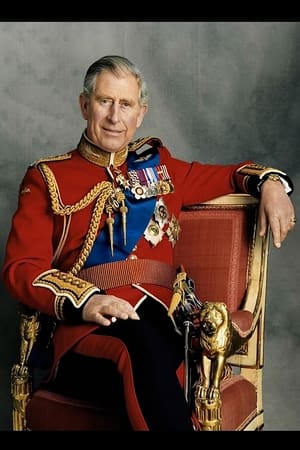
After waiting 74 years to ascend to the throne, Charles III fell ill less than a year after his coronation. The king's health is a cause for concern throughout the kingdom, and the vague statements issued by his medical team raise more questions than they answer. Michael Dixon, head of the king's medical team, is a fervent advocate of homeopathy and alternative medicine. His appointment has been highly controversial.
Apollo 11 : Retour vers la lune
Can Homo sapiens evolve into Homo spatius? For over 50 years now, we have been testing our human nature in our effort to conquer outer space, and still 30 years away from a possible human exploration of Mars, a question remains: Can our body take such travels? Will it ever adapt? Combining human adventure and the exploration of the human body, this film offers unique insights into the physical and psychological effects of space travel on the Astronauts and measures the impact on medical sciences.
The 1960s was an extraordinary time for the United States. Unburdened by post-war reparations, Americans were preoccupied with other developments like NASA, the game-changing space programme that put Neil Armstrong on the moon. Yet it was astronauts like Eugene Cernan who paved the uneven, perilous path to lunar exploration. A test pilot who lived to court danger, he was recruited along with 14 other men in a secretive process that saw them become the closest of friends and adversaries. In this intensely competitive environment, Cernan was one of only three men who was sent twice to the moon, with his second trip also being NASA’s final lunar mission. As he looks back at what he loved and lost during the eight years in Houston, an incomparably eventful life emerges into view. Director Mark Craig crafts a quietly epic biography that combines the rare insight of the surviving former astronauts with archival footage and otherworldly moonscapes.
This extraordinary film features NASA film footage enhanced by AI-based software and other image processing. The clarity of the images gives viewers a whole new perspective on what it was like to step onto lunar soil and ramble about the alien landscapes. The film shows how teams of astronauts collected evidence that has revolutionized our understanding of the origin of both Earth and the moon.
In a studio setting, Stephen Hawking, Arthur C. Clarke and Carl Sagan (who joins them via satellite) discuss the Big Bang theory, God, our existence as well as the possibility of extraterrestrial life.
One year on from the first of four terror attacks which hit Britain in 2017, this documentary tells the personal stories of people who were caught up in the atrocities in Westminster, at Manchester Arena, around London Bridge and outside Finsbury Park Mosque. Those involved - some speaking for the first time - relive the moments of fear and panic that unfolded after the attacks, building a vivid picture of these catastrophic and life-changing events. They also explain how they have continued to try to cope with the consequences ever since. Featuring contributions from the likes of Grant Shapps MP, visitors to Parliament on the day of the Westminster Bridge attack, Ariana Grande fans injured in the Manchester bombing, those caught up in the London Bridge attack and members from the Muslim community in Finsbury Park, this programme provides a compelling insight into the personal consequences of the attacks, as well as the public and political mood in the aftermath.