In the summer of 1977, NASA sent Voyager 1 and Voyager 2 on an epic journey into interstellar space. Together and alone, they will travel until the end of the universe. Each spacecraft carries a golden record album, a massive compilation of images and sounds embodying the best of Planet Earth. According to Carl Sagan, “[t]he spacecraft will be encountered and the record played only if there are advanced space-faring civilizations in interstellar space. But the launching of this bottle into the cosmic ocean says something very hopeful about life on this planet.” While working on the golden record, Sagan met and fell madly in love with his future wife Annie Druyan. The record became their love letter to humankind and to each other. In the summer of 2010, I began my own hopeful voyage into the unknown. This film is a love letter to my fellow traveler. - Penny Lane
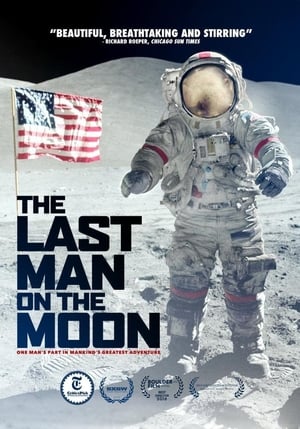
The 1960s was an extraordinary time for the United States. Unburdened by post-war reparations, Americans were preoccupied with other developments like NASA, the game-changing space programme that put Neil Armstrong on the moon. Yet it was astronauts like Eugene Cernan who paved the uneven, perilous path to lunar exploration. A test pilot who lived to court danger, he was recruited along with 14 other men in a secretive process that saw them become the closest of friends and adversaries. In this intensely competitive environment, Cernan was one of only three men who was sent twice to the moon, with his second trip also being NASA’s final lunar mission. As he looks back at what he loved and lost during the eight years in Houston, an incomparably eventful life emerges into view. Director Mark Craig crafts a quietly epic biography that combines the rare insight of the surviving former astronauts with archival footage and otherworldly moonscapes.
All of the necessary technologies required to reach the Moon was first tested during Project Gemini, which comprised of ten missions in the mid-1960s.
The first American space station Skylab is found in pieces scattered in Western Australia. Putting these pieces back together and re-tracing the Skylab program back to its very conception reveals the cornerstone of human space exploration.
Social isolation affects millions of people, even Mars-bound astronauts. A savvy NASA psychologist is tasked with protecting these daring explorers.
Billions of years ago, Venus may have harbored life-giving habitats similar to those on the early Earth. Today, Earth's twin is a planet knocked upside down and turned inside out. Its burned-out surface is a global fossil of volcanic destruction, shrouded in a dense, toxic atmosphere. Scientists are now unveiling daring new strategies to search for clues from a time when the planet was alive.
July 1969. America made history and sent the first humans to the moon. High-quality NASA footage and extensive news broadcasts bring this sensational moment in history bursting back into life. Live news footage from every corner of the globe recreates the excitement and elation that surrounded the event, as 600 million people tuned in to watch Neil Armstrong's remarkable first steps.
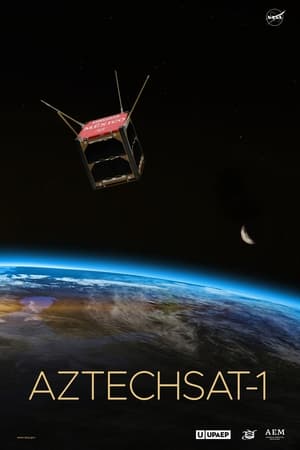
NASA film documenting the launch and commissioning of AzTechSat-1, a pioneering one-to-one communications satellite in space.
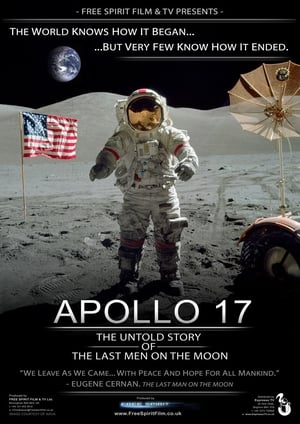
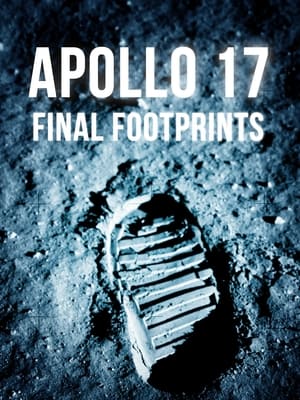
The Apollo 17 mission was the final opportunity to collect first hand information about the history and origin of the Moon. This film looks at this historic mission through the eyes of those who participated in it. Including Commander Eugene Cernan, Lunar Module Pilot Harrison Schmitt, and Command Module Pilot Ron Evans.
A featurette detailing NASA's plans for putting humans on Mars over the next twenty or thirty years, featuring interviews with several NASA staffers.
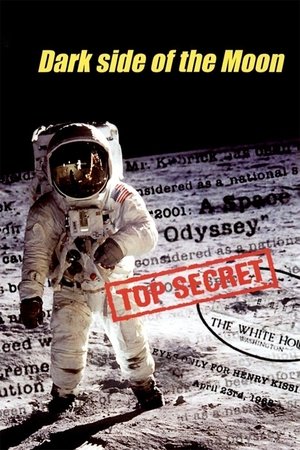
A French documentary or, one might say more accurately, a mockumentary, by director William Karel which originally aired on Arte in 2002 with the title Opération Lune. The basic premise for the film is the theory that the television footage from the Apollo 11 Moon landing was faked and actually recorded in a studio by the CIA with help from director Stanley Kubrick.
The remarkable story of the determination and courage of a generation. A tribute to three brave astronauts and the thousands of men and women behind them during the final days of NASA's Apollo program.
One Small Step: The Story of the Space Chimps is the dramatic and moving real-life tale of the United States Air Force chimponauts and their NASA compatriots.
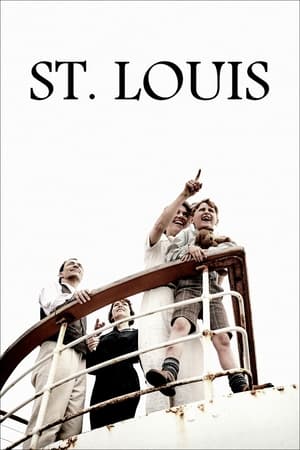
Hamburg, Germany, 1939. Getting a passage aboard the passenger liner St. Louis seems to be the last hope of salvation for more than nine hundred German Jews who, desperate to escape the atrocious persecution to which they are subjected by the Nazi regime, intend to emigrate to Cuba.
With more than 27 years of service, the space shuttle Discovery has clocked more time in space than any other shuttle. She has flown more than 148 million miles, and has become one of the most storied spacecraft in American history. Join us as we celebrate her remarkable past and follow her final flight: to the Smithsonian National Air and Space Museum. It's an emotionally charged mission full of logistical challenges. Discovery is a robust, but very fragile aircraft, and getting her to D.C. in one piece will require some innovative engineering.
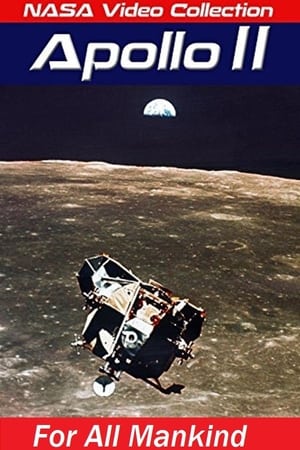
Archival material from the original NASA film footage – much of it seen for the first time – plus interviews with the surviving astronauts, including Jim Lovell, Dave Scott, John Young, Gene Cernan, Mike Collins, Buzz Aldrin, Alan Bean, Edgar Mitchell, Charlie Duke and Harrison Schmitt.
The Academy Award® nominee Cosmic Voyage combines live action with state-of-the-art computer-generated imagery to pinpoint where humans fit in our ever-expanding universe. Highlighting this journey is a "cosmic zoom" based on the powers of 10, extending from the Earth to the largest observable structures in the universe, and then back to the subnuclear realm.
With access to the scientists and engineers responsible for the Curiosity rover's on-the-ground experiments, NOVA captures its landing on Mars
La revuelta de las putas
Moonscape is a free and freely downloadable high-definition documentary about the first manned Moon landing. Funded and produced by space enthusiasts from all over the world, it shows the full, unedited Apollo 11 landing and moonwalk, using only the original TV and film footage and the original audio and photographs. All this material has been scanned, digitized and restored from the best available sources. The live TV broadcast, the 16mm color film footage shot on the Moon and in Mission Control, and the Hasselblad 70mm color photographs taken by astronauts Buzz Aldrin and Neil Armstrong, have been fully synchronized with the audio recordings (including the onboard and Mission Control recordings) and are presented in real time, as they happened, with full subtitles in English or Italian.