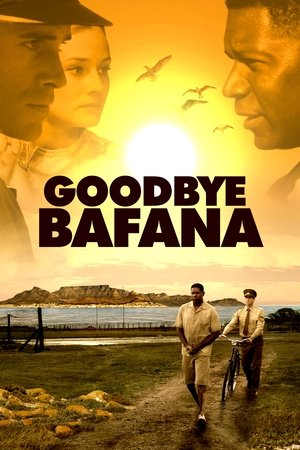
The true story of a white South African racist whose life was profoundly altered by the black prisoner he guarded for twenty years. The prisoner's name was Nelson Mandela.
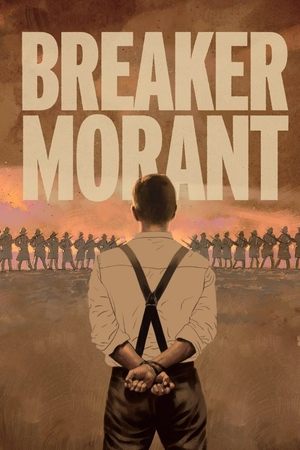
During the Boer War, three Australian lieutenants are on trial for shooting Boer prisoners. Though they acted under orders, they are being used as scapegoats by the General Staff, who hopes to distance themselves from the irregular practices of the war. The trial does not progress as smoothly as expected by the General Staff, as the defence puts up a strong fight in the courtroom.
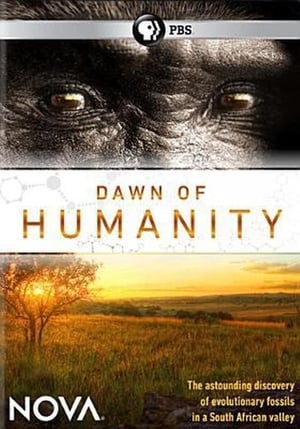
Nova and National Geographic present exclusive access to an astounding discovery of ancient fossil human ancestors.
While her husband served a life sentence, paradoxically kept safe and morally uncontaminated, Winnie Mandela rode the raw violence of apartheid, fighting on the front line and underground. This is the untold story of the mysterious forces that combined to take her down, labeling him a saint, her, a sinner.
In a remote stretch of Patagonia, Argentina, there is a family - the Dickasons - who speak a language from a country 7,000km to the east. They are part of a 114-year-old Afrikaans Boer community - South Africans of Dutch descent who sailed across the ocean to South America after the destruction of a war with the British. Today, less than 50 still speak the language and they struggle to keep their culture alive. Patriarch "Ty" Dickason, 82, is a cowboy who has never flown in a plane - and yet he yearns to one day visit the country of his blood before he and his compatriots pass away. This multiple SAFTA award-winning documentary is a portrait of the last days of the community - a parallel world where Afrikaans was never linked to Apartheid - and one family's journey to reconnect with South Africa.
Robert (not his real name), is a gay Zimbabwean man who fled to South Africa in the hopes of making this his home. What he found instead was abuse at the hands of other gay men, homophobia from Department of Home Affairs officials as well as the difficulties of navigating the Covid-19 pandemic as a sex worker living in a foreign country. In this short film, Robert speaks with candour about fleeing his homeland, his life in South Africa and his hopes for the future.
This Traveltalk series short gives a glimpse into South African history, albeit from a white person's viewpoint. South Africa is a union of four separate states: the Transvaal, the Orange Free State, Natal, and the Cape Provence.
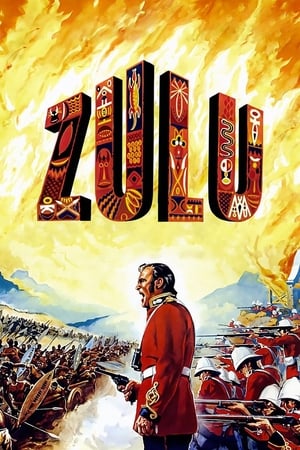
In 1879, during the Anglo-Zulu War, man-of-the-people Lt. Chard and snooty Lt. Bromhead are in charge of defending the isolated and vastly outnumbered Natal outpost of Rorke's Drift from tribal hordes.
A newly discovered mega-hunt is happening off the coast of South Africa. In an epic annual spectacle in False Bay, a pod of cunning killer whales hunt 5,000 common dolphins.
Voyages au centre de la Terre : Dans les pas de Jules Verne
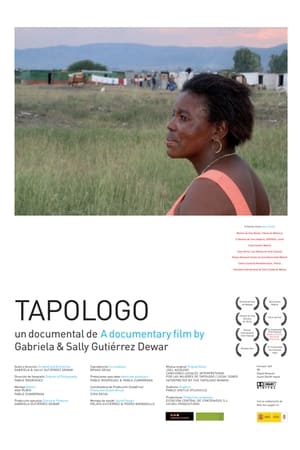
"Africa Light" - as white local citizens call Namibia. The name suggests romance, the beauty of nature and promises a life without any problems in a country where the difference between rich and poor could hardly be greater. Namibia does not give that impression of it. If you look at its surface it seems like Africa in its most innocent and civilized form. It is a country that is so inviting to dream by its spectacular landscape, stunning scenery and fascinating wildlife. It has a very strong tourism structure and the government gets a lot of money with its magical attraction. But despite its grandiose splendor it is an endless gray zone as well. It oscillates between tradition and modernity, between the cattle in the country and the slums in the city. It shuttles from colonial times, land property reform to minimum wage for everyone. It fluctuates between socialism and cold calculated market economy.
Shot in New York, Cape Town, St Helena and the Atlantic Ocean, Sathima's Windsong, is a lyrical portrait of South African jazz singer, Sathima Bea Benjamin. In her Chelsea Hotel apartment, home for over thirty years, she patches together her journeys, from apartheid's 'pattern of brokenness', to a chance meeting and recording with Duke Ellington in Paris, to making a life in New York. The narrative of her journeys are inter-woven with her music and the musings of folks who know her work. Like her haunting song, Windsong, the film is a meditation on displacement, exile and belonging.
Nelson Mandela, au nom de la liberté
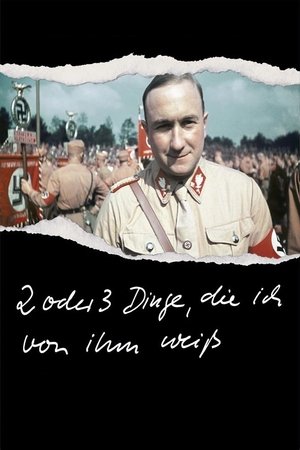
What would your family reminiscences about dad sound like if he had been an early supporter of Hitler’s, a leader of the notorious SA and the Third Reich’s minister in charge of Slovakia, including its Final Solution? Executed as a war criminal in 1947, Hanns Ludin left behind a grieving widow and six young children, the youngest of whom became a filmmaker. It's a fascinating, maddening, sometimes even humorous look at what the director calls "a typical German story." (Film Forum)
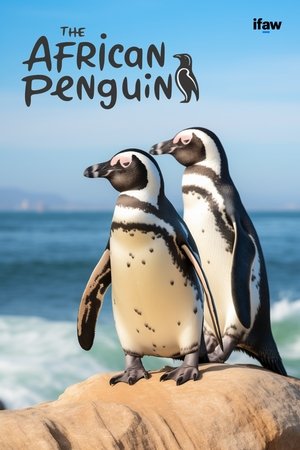
Za tučňáky, lvouny a velrybami
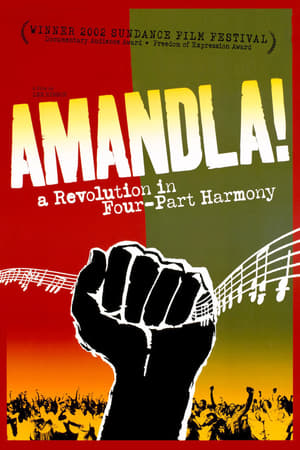
The struggle to eradicate apartheid in South Africa has been chronicled over time, but no one has addressed the vital role music plays in this challenge. This documentary by Lee Hirsch recounts a fascinating and little-known part of South Africa's political history through archival footage, interviews and, of course, several mesmerizing musical performances.
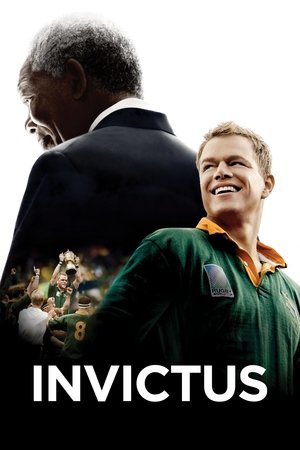
Newly elected President Nelson Mandela knows his nation remains racially and economically divided in the wake of apartheid. Believing he can bring his people together through the universal language of sport, Mandela rallies South Africa's rugby union team as they make their historic run to the 1995 Rugby World Cup Championship match.
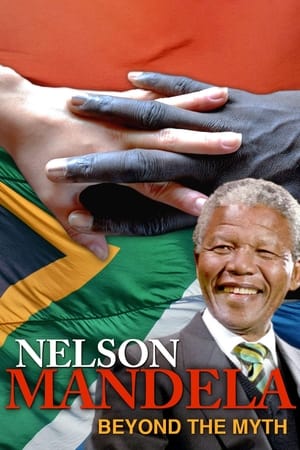
This is the story about the life of the visionary Nelson Mandela. We follow him from 1918 when he was born, the son of the Chief of the Thembutribe. Through the years as a political activistc and political prisoner, to 1994 when he became the President of South Africa.
An exquisite period piece that skillfully explores the intersections of sex, race and politics takes place in 18th century South Africa, telling the passionate (true) story of two men caught in an unjust system rife with racism, homophobia and cruelty.
In the early to mid '90s, when the South African system of apartheid was in its death throes, four photographers - Greg Marinovich, Kevin Carter, Ken Oosterbroek and João Silva - bonded by their friendship and a sense of purpose, worked together to chronicle the violence and upheaval leading up to the 1994 election of Nelson Mandela as president. Their work is risky and dangerous, potentially fatally so, as they thrust themselves into the middle of chaotic clashes between forces backed by the government (including Inkatha Zulu warriors) and those in support of Mandela's African National Congress.