The De Havilland Comet was the world's first passenger jet airliner. But less than two years into service, two aircraft blew up in mid-air, killing all aboard. PM Winston Churchill ordered an assemblage of experts to discover what went wrong - in the process, inventing many of the air crash investigation techniques still used today.
Titanic : les derniers secrets révélés
How secure is our future? This eye-opening documentary -- which uses computer-generated imagery to illustrate an asteroid collision, black holes and worldwide plagues, among other threats -- explores seven scenarios that could spell the end of the world. Interviews with noted scientists examine the extent of preparations for these cataclysmic events and what's being done to save future generations from extinction.
Two students from the Czech Film Academy commission a leading advertising agency to organize a huge campaign for the opening of a new supermarket named Czech Dream. The supermarket however does not exist and is not meant to. The advertising campaign includes radio and television ads, posters, flyers with photos of fake Czech Dream products, a promotional song, an internet site, and ads in newspapers and magazines. Will people believe in it and show up for the grand opening?
Gigantic machine combs beach in southern California and retrieves articles lost in sand; synthetic gems made by new chemical process; aviation school holds classes in grounded transport plane; how seaweed is processed for scientific use.
Explorer Mike Harris leads a second North Atlantic expedition to locate the RMS Titanic, joined by television star James Drury, as the team uses improved technology to investigate promising sonar clues on the ocean floor following their earlier search.
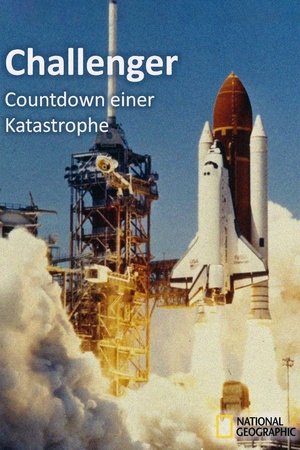
The film explores the background and build-up to this final flight to disaster. Using dramatic reconstruction, archive footage and exclusive interviews with leading historians and engineering experts, the special delves into the political and scientific events that led up to the catastrophe.
Ben Fogle spends a week living inside the Chernobyl Exclusion Zone, gaining privileged access to the doomed Control Room 4 where the disaster first began to unfold.
"The Titanic Chronicles" is based on the 1912 Senate Hearings into the "Titanic" Disaster. The actual testimony is read by an international cast. This program is an enactment of the most striking and revealing moments from the actual hearings. The testimony you will hear comes closest to the truth as to why the R.M.S. "Titanic" now lies on the bottom of the North Atlantic.
An investigation of "disaster capitalism", based on Naomi Klein's proposition that neo-liberal capitalism feeds on natural disasters, war and terror to establish its dominance.
On 28 November 1979, an Air New Zealand jet with 257 passengers went missing during a sightseeing tour over Antarctica. Within hours 11 ordinary police officers were called to duty to face the formidable Mount Erebus. As the police recovered the victims, an investigation team tried to uncover the mystery of how a jet could fly into a mountain in broad daylight. Did the airline have a secret it wanted to bury? This film tells the story of four New Zealand police officers who went to Antarctica as part of the police operation to recover the victims of the crash. Set in the beautiful yet hostile environment of Antarctica, this is the emotional and compelling true story of an extraordinary police operation.
On the 19th of November 2010, the Pike River mine exploded with 31 men trapped inside. In the immediate confusion that followed no one knew what had happened. Within hours two men would manage a heroic escape but 29 remained unaccounted for. Over five days the men’s families and loved ones waited, hoping they would come out alive. Then two further explosions sealed the men’s fate. However, the fuse that would eventually snuff out so many lives was lit decades before. Set in the drama of the five days between the three explosions, Pike River reveals the tragic back story of the mine where pressure for profits would eventually contribute to the deaths of 29 men. Featuring interviews with the Pike River families and scripted drama to depict key events.
Documentary about the sinking of the Britannic during the First World War, examining how she ultimately came to suffer the same fate as her sister ship, the Titanic. The Titanic sank in April 1912, and her sister ship, the Britannic, ultimately suffered the fate, sinking in 1916 due to an explosion caused by an underwater mine. In the wake of the Titanic disaster, Britannic was re-engineered to be even stronger. And yet she sank in just 55 minutes - three times faster than Titanic. It's one of Britain's greatest untold disaster stories. Now on the 100th anniversary, presenters Kate Humble and Andy Torbet piece together exactly what happened in those 55 minutes. While Andy makes a dangerous dive to the wreck, Kate speaks to descendants of the survivors. The characters she uncovers include Violet 'Miss Unsinkable' Jessops, who survived both Titanic and Britannic, Captain 'Iceberg Charlie' Bartlett and lookout Archie Jewell, who miraculously survived while those around him died.
Explore the 1928 collapse of the St. Francis Dam, the second deadliest disaster in California history. A colossal engineering and human failure, the dam was built by William Mulholland, a self-taught engineer who ensured the growth of Los Angeles by bringing the city water via aqueduct. The catastrophe killed more than 400 people and destroyed millions of dollars of property.
Neil Oliver describes the worst ever railway accident in the UK, which happened a hundred years ago on 22 May 1915, in which three trains collided at Quintinshill near Gretna Green. One of the trains was a troop train taking soldiers to fight in World War I at the Battle of Gallipoli: many of the dead were in this train which caught fire due to escaped gas from the archaic gas lighting in the carriages. The cause of the crash was attributed to a catastrophic signalman's error, but Neil examines whether there were other contributory factors and whether there was a cover-up to prevent investigation of them, making convenient scapegoats of the signalmen.
This is a film about the response by a community to New Zealand’s largest environmental disaster, seen through the eyes of that community. The film captures the shock, anger and grief driven into the heart of the local community, but also the humour, purpose and overwhelming positivity when people join together with a common goal.
The Titanic is under a new threat. Resting at over 12,500 feet below sea level and 380 nautical miles off the coast of Newfoundland, the most famous shipwreck in the world is being consumed by a colony of iron-eating bacteria. This slow and irreversible decay, according to the most concerned experts, will sweep away all the secrets of the mythic liner within a few decades. This documentary details the underwater odyssey of the greatest Titanic expeditions and the evolution of the most scrutinized shipwreck in the world. From the epic discovery of the wreck by a French-American team in 1985 to the exploratory missions led by James Cameron, and to the treasure hunts that brought back over 5,000 vestiges–experience the unequaled thrill of these extreme dives through the eyes of the explorers who have attempted to unlock Titanic’s secrets.
Decades after the RMS Titanic sank into the Atlantic, the dream of investigating the wreckage was finally realized by undersea geologist Dr. Robert D. Ballard. In 1986, only a single camera crew was allowed to accompany his historic expedition. Using high-tech cameras mounted on submersibles, this remarkable program takes viewers into the frigid depths nearly two and a half miles below the ocean’s surface, revealing spectacular color images of the ship’s once-luxurious interior.
A young woman tells her parents and fiance (in flashback) about the recent sinking of the Titanic and her experiences as a passenger during the disaster. Her intended marriage now faces a new hazard because her fiance is a sailor and her parents have just been reminded of the dangers of the sea. Premiering in the United States just 29 days after the event, it is the earliest dramatization about the tragedy.
Groundbreaking documentary which follows a Japanese-led team of scientists as they attempt to shed light on the mysterious world of deep sea sharks. Only 50 specimens of the newly discovered 'megamouth' have ever been sighted. Over four years, scientists and film crews voyaged in midget submarines into the depths of Suruga Bay and Sagami Bay to film them. Prehistoric 'living fossil' sharks such as bluntnose sixgill sharks, goblin sharks and frilled sharks also lurk in the depths. As part of the investigation, a sperm whale carcass was placed at the bottom of the sea to attract these sharks, which were then studied and observed from the submersible vessels. Revealing in detail the previously unknown behaviour of deep sea sharks, the film unravels another of the intriguing mysteries of our planet's biodiversity.