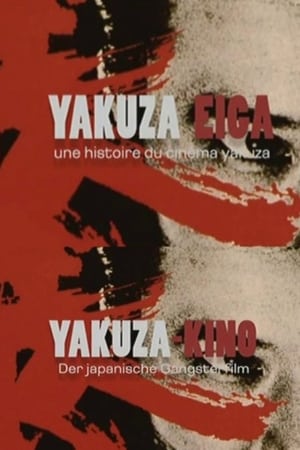
The history of the Yakuza Eiga at the TOEI studio is roughly outlined. Real Yakuza and also their connections to the movie business are discussed, and many important actors and directors of the genres are interviewed. Former real yakuza boss turned actor Noboru Ando, Takashi Miike, Sonny Chiba and many more get a chance to speak.
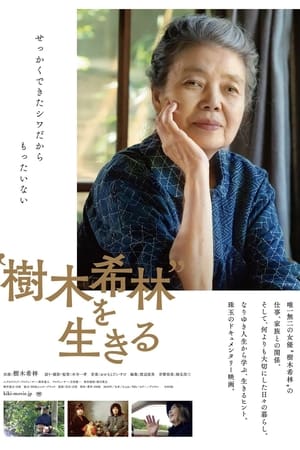
This documentary follows the last days of actress KIKI Kirin, who passed away on September 15, 2018. The documentary is the first long-term, in-depth coverage of Ki-kin, and is a re-edited version of the NHK documentary of the same title that was broadcast on September 26, 2006, adding previously unseen footage. She was loved all over Japan for her blunt remarks, her attentive concern for those around her, and her overflowing sense of humor. Despite her busy schedule, she valued her daily life and had her own unique style, even though she talked about life as it came. This film captures the last days of her life and gives us hints for living from her "life as it comes" and her many inspiring words.
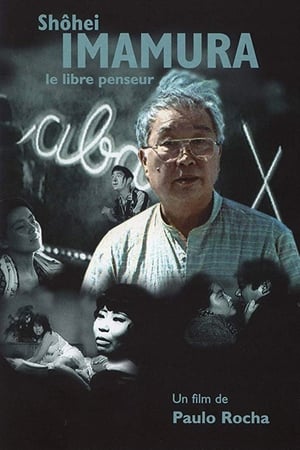
Documentary about Japanese film director Shohei Imamura.
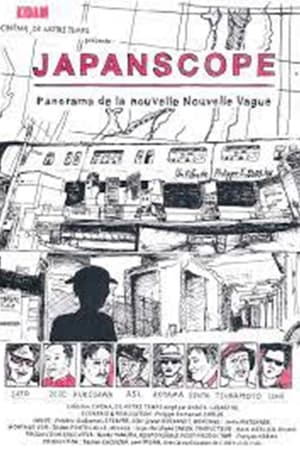
A “Cinéma, de notre temps” series episode directed by french filmmaker Philippe-Emmanuel Sorlin, originally aired 16 June 2015.
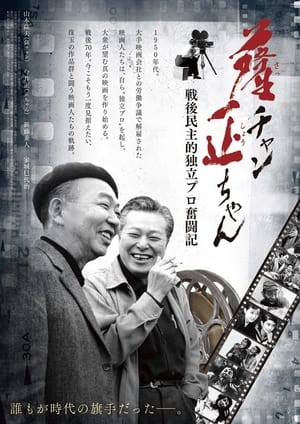
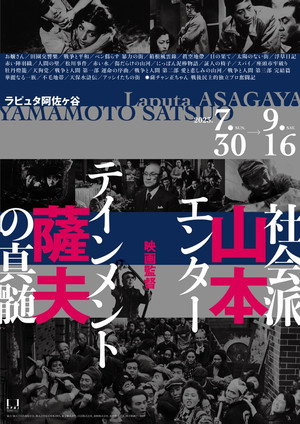
After the war, many filmmakers were expelled from the Japanese film industry due to the Toho Dispute and the Red Purge. Amid such circumstances, there were people who set up their own independent production companies and embarked on film production without relying on corporations. This documentary film focuses on the passionate "spirit of film" of directors such as Satsuo Yamamoto and Tadashi Imai, who, despite many hardships, produced a succession of masterpieces overflowing with humanism and rebellious spirit.
A short documentary primarily focused on Nikkatsu's Roman Porno series.
A documentary on Teruo Ishii, the Japanese "King of Cult".
Unveiling Yasujiro Ozu’s legacy through his personal diaries, letters, and interviews, the documentary delves into his life, creative process, and lasting impact on filmmaking.
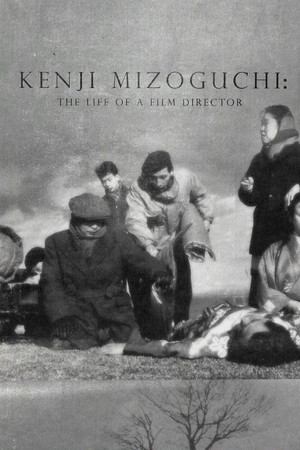
In 39 interviews with actors and actresses, writers, producers and staff members, interspersed with film excerpts and stills, Shindō recounts the life and career of his friend and mentor Mizoguchi.
Because his style was similar to that of Yasujiro Ozu, who was already active at Shochiku, he moved to PCL (currently Toho) in 1933, where he appeared in the talkie works "My Wife, Like a Rose" and "Tsuruhachi Tsurujiro." It got attention. There were times when he was unable to make as many films as he wanted due to wartime film regulations and post-war Toho disputes, but in 1951 he revived his career with Meshi. Since then, he has released masterpieces one after another, including "Okaasan," "Lightning," "The Couple," "Wife," "Anii Mouto," "Sounds of the Mountain," and "Bangiku." The pinnacle of his work, "Floating Clouds," is Kenji Mizoguchi's "Wife." Even director Ozu was impressed, calling it a masterpiece of Japanese cinema, on par with "The Sisters of Gion." He depicted ordinary people in everyday life with an everyday realism that was not influenced by lyricism, and he consistently sought out women as his subjects.
An intimate chronicle of the shooting of Ran (1985), a film directed by the legendary Japanese filmmaker Akira Kurosawa.
Bâtons d'encens pour Mizoguchi
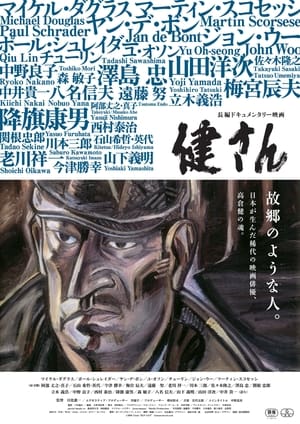
KEN SAN pieces together the puzzle of the life and legacy of Japan's mythical acting icon, Ken Takakura. Collaborators, friends and family tell intimate stories of Ken's journey: how one man of quiet dignity became a cultural barrier-breaking film star.
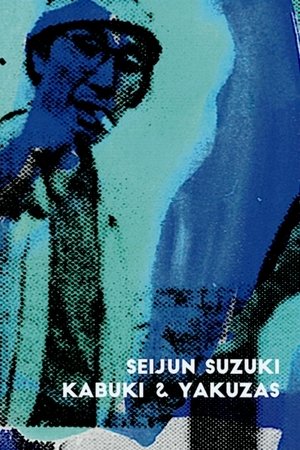
Film director and screenwriter Seijun Suzuki (1923-2017), who in the sixties was the great innovator of Japanese cinema; and his collaborator, art director and screenwriter Takeo Kimura (1918-2010), recall how they made their great masterpieces about the Yakuza underworld for the Nikkatsu film company.
The film is a series of vignettes from Taiji Tonoyama's life and film clips, interspersed with a dialogue to camera by Nobuko Otowa, addressing the camera as if she is addressing Tonoyama himself, recollecting events in his life. The film focuses on Tonoyama's alcohol dependence and his various sexual relationships, as well as his film work with Shindo.
東京シンデレラ娘
Legendary anime director Rintaro’s (Metropolis, X/1999, Galaxy Express 999) first new work in over a decade depicts pioneering 1930s director Sadao Yamanaka and the production of his Nezumikozo Jirokichi. Despite dying before the age of 30, Yamanaka was a pivotal influence in Japanese cinema whose work would go on to inspire future generations. While most of his films have been lost to time, his scripts remain, and Nezumikozo Jirokichi recreates one of these lost films—a tale of a famous, virtuous bandit in old Edo—as imagined by Rintaro together with an all-star team including Katsuhiro Otomo (Akira, Memories), Taro Maki (Pluto, Millennium Actress) and Masao Maruyama (Ninja Scroll, Perfect Blue).
Keichi Tanaamis new animation work Red Shade (2021) is based on paintings that he had produced on the premise that they will be set in motion. Each of the 80 selected scenes was given a distinct movement of its own, and the edited version of the completed work became the first film. The 80 scenes are each independently complete, and can be freely rearranged. For example, you can start from scent 80 and end in scene one, or arrange them irregularly like 1, 4, 8, 7, and so on. In other words, the essence of the work does not change no matter how the scenes are arranged. Even so, it is possible to produce a strong impact by exchanging the images for each frame, and one can also for instance, create an impression of a refreshing breeze sweeping through the green meadows.
The film is a commemoration of the lost livelihood of the earth, the lost lives of the War and to the work of two of the cinema’s greatest artists.
The first part of this series by Norman McLaren deals only with tempo. It starts by showing the disc travelling in one move (1/24 of a second) from A to B, and progressively demonstrates slower and slower tempos.