Madrid, Spain, 1949. The Circo Americano arrives in the city. While the big top is pitched in a vacant lot, the troupe parades through the grand avenues: the band, a witty impersonator, the Balodys, acrobats, jugglers, acrobatic skaters, clowns and… Buffallo Bill.
Vienna’s Prater is an amusement park and a desire machine. No mechanical invention, no novel idea or sensational innovation could escape incorporation into the Prater. The diverse story-telling in Ulrike Ottinger’s film “Prater” transforms this place of sensations into a modern cinema of attractions. The Prater’s history from the beginning to the present is told by its protagonists and those who have documented it, including contemporary cinematic images of the Prater, interviews with carnies, commentary by Austrians and visitors from abroad, film quotes, and photographic and written documentary materials. The meaning of the Prater, its status as a place of technological innovation, and its role as a cultural medium are reflected in texts by Elfriede Jelinek, Josef von Sternberg, Erich Kästner and Elias Canetti, as well as in music devoted to this amusement venue throughout the course of its history.
A young girl has already seen everything there is to see and her world has lost all meaning. Her anger shatters her world and she finds herself in the universe of QUIDAM, where she is joined by a playful companion, as well as another mysterious character who attempts to seduce her with the marvelous, the unsettling and the terrifying.
Alegría is a mood, a state of mind. The themes of the show, whose name means "jubilation" in Spanish, are many. Power and the handing down of power over time, the evolution from ancient monarchies to modern democracies, old age, youth - it is against this backdrop that the characters of Alegría play out their lives. Kings' fools, minstrels, beggars, old aristocrats and children make up its universe, along with the clowns, who alone are able to resist the passing of time and the social transformations that accompany it.
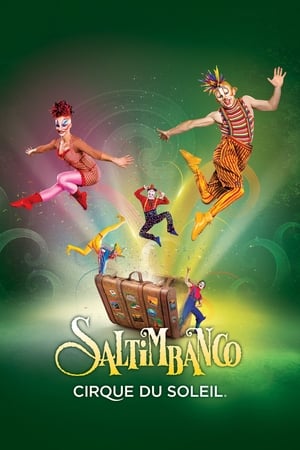
From the Italian 'saltare in banco' – which literally means 'to jump on a bench' – Saltimbanco explores the urban experience in all its myriad forms. Between whirlwind and lull, prowess and poetry, it takes spectators on an allegorical and acrobatic journey into the heart and soul of the modern city.
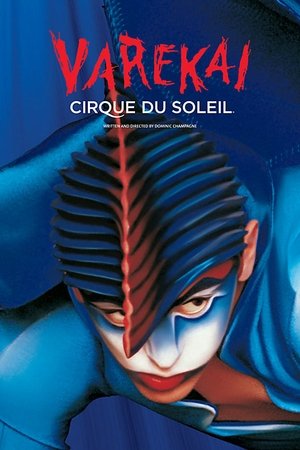
Icarus is the main character of Varekai, who falls to the ground, breaking his legs as he does. He is suddenly in a strange, new world full of creatures he has never seen before. Parachuted into the shadows of a magical forest, a kaleidoscopic world populated by fantastical creatures, this young man sets off on an adventure both absurd and extraordinary.
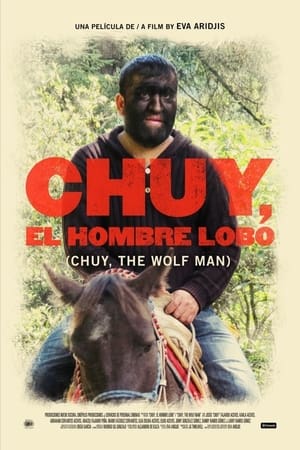
Jesus 'Chuy' Aceves and a dozen living members of his extended family suffer from the very rare condition of congenital hypertrichosis, meaning they were born with excessive hair on their faces and bodies. Due to their appearance, they suffer from discrimination in all areas of their lives: the children are made fun of at school and abandoned by their 'non-hairy' parents, and the adults cannot find work unless they choose to exhibit themselves as freaks in circuses. This moving and visually arresting documentary is a portrait of Chuy and his family members. It examines their day-to-day lives and their struggle to find love, acceptance and employment.
Drawing upon a vast and richly visual archive and featuring a host of performers, historians and aficionados, this four-hour mini-series follows the rise and fall of the gigantic, traveling tented railroad circus and brings to life an era when Circus Day would shut down a town and its stars were among the most famous people in the country.
The feature-length documentary Fakir portrays the success of fakirism in Brazil, Latin America and France. This circus art origin show is presented and analyzed through archives that reveals the success of these presentations with their pain resistance championships and the great public presence, including politicians and government officials. Fakir spans current footage from contemporary artists who keep this art alive in performances and shows.
In the magical world of La Nouba, dreams become reality and talent turns the ordinary into the extraordinary. La Nouba is, literally, a waking dream come true – clowns, ballerinas, trapeze artists, an incredible BMX bicycle act – and much more.
Once a year, people from different marginalized communities meet together in the woods to delve into the art of circus and have this discipline become a common way to express themselves, away from the city.
French filmmaker Laurent Chevallier always wanted to make a documentary on an African circus, but there were no native circuses on the continent. So Chevallier decided to help found a circus in Guinea. 36 young people were chosen from the city of Conakry to participate in what would become Circus Baobab. A group of French circus artists were imported to train the participants for 2 years in acrobatics and trapeze. Then the group took their show on the road. This film is Chevallier's account of the troupe's inaugural tour in Guinea, from March 1 - April 11, 2000.
An intimate portrait of Mariano "Cronopio" Gedwillo, an Argentinian clown in Riga, as he transforms ordinary life into wonder through the magic of the circus — and teaches others to do the same, all while battling his own loneliness.
Footage from the premiere of Charlie Chaplin's 1928 film 'The Circus'.
This documentary highlights the evolution of Brazil's Circo Voador venue from homespun artists' performance space to national cultural institution.
Errol Morris’s Fast, Cheap & Out of Control interweaves the stories of four men, each driven to create eccentric worlds from their unique obsessions, all of which involve animals. There’s a lion tamer who shares his theories on the mental processes of wild animals; a topiary gardener who has devoted a lifetime to shaping bears and giraffes out of hedges and trees; a man fascinated with hairless mole rats; and an MIT scientist who has designed complex, autonomous robots that can crawl like bugs.
One man, one camera, one goal...to capture the essence of adventure. An experimental, often abstract new type of filmmaking process creating color rich visuals combined with a lush soundtrack that grounds the project. A unique cinematic experience.
The neon sign ‘Circus’ illuminates the wide street of Naples’ suburbs: four circus families were abandoned by the institutions, and now they’re awaiting the pandemic will disappear, like a magic show. The circus has stopped, but their lives go on.
In 1988, the Cirque du Soleil toured the United States and set up its big top in New York City - a grand three-ring circus in itself! - garnering rave reviews. Behind the scenes, artists working in the fledgling Quebec circus talk about what it means to them to be a part of this success, and also the price they pay for sharing the American Dream.
Short dramatised documentary showing the ups and downs of daily life on a circus farm. “The only light comes from the flames of the funeral pyre that consumes a dead circus elephant shortly after its corpse has been unceremoniously dragged across a field by 50 carthorses.” (BFI)