China's Secret Monkey Kingdom
At the edge of our solar system supposedly lies an immense planet. Five to ten times the size of the Earth. Several international teams of scientists have been competing in a frantic race to detect it, in uncharted territories, far beyond Neptune. The recent discovery of several dwarf planets, with intriguing trajectories, have put astronomers on the trail of this mysterious planet. Why is this enigmatic planet so difficult to detect? What would a ninth planet teach us about our corner of the universe? Could it help us unlock some of the mysteries of our solar system?
The Phantom of the Rockies is a video project that explores the wild world. When the slow pace of a wildlife photographer meets the fast pace of a YouTuber, the result is a nature documentary that celebrates authenticity.
Explore an extraordinary region where water and land life intermingle six months out of the year.
A film crew follows two leopard cubs as they make the fascinating journey from infancy into adulthood in this up-close-and-personal nature documentary.
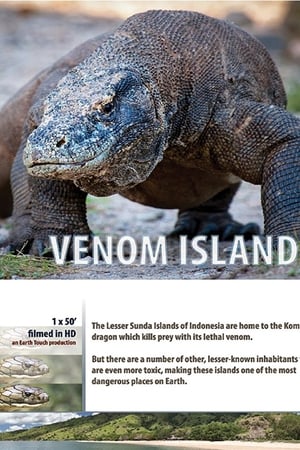
Venom expert Dr. Bryan Fry embarks on a dangerous island journey to uncover the deadly secrets of vipers, stonefish and the formidable Komodo dragon.
This documentary delves into the mysteries surrounding the Neanderthals and what their fossil record tells us about their lives and disappearance.
Liz Bonnin introduces a cast of charismatic animals to reveal the remarkable strategies they use to survive, and even thrive, through the winter.
Premiers pas dans les Rocheuses
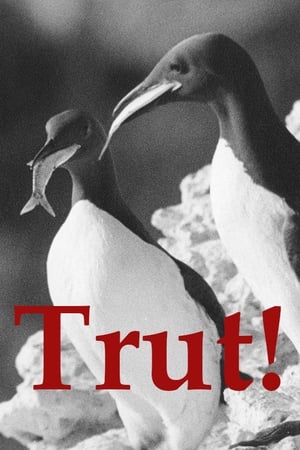
Arne Sucksdorff’s short documentary observes gulls raiding nests and stealing eggs with ruthless persistence. Though presented as pure nature study, the film was widely read as an allegory of Nazism—a symbolic parable of predation and violence during wartime. Sucksdorff himself denied such intent, but remarked that “a film that is not open to interpretation is a dead film.”
A ten-minute study of wild animal life in a Swedish forest; stoat, fox, hare, and owl, who stalk and savage one another, are photographed with extraordinary vividness and intimacy. It is perhaps the most striking of Sucksdorff's animal studies, in spite of an abrupt introduction and ending.
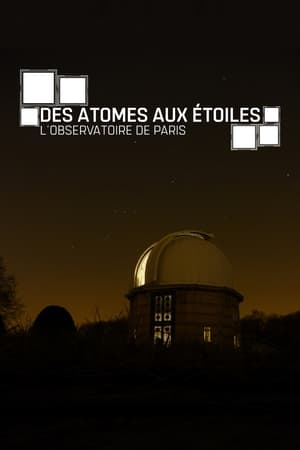
An incredible travel through space and time between the walls of the Paris Observatory, which is celebrating its 350th birthday. Place of discoveries such as speed of light or Neptune’s existence, it is still today one of the oldest operating observatories and the greatest hub in the world for astronomy and astrophysics researches, second only to Harvard.
Billions of years ago, Venus may have harbored life-giving habitats similar to those on the early Earth. Today, Earth's twin is a planet knocked upside down and turned inside out. Its burned-out surface is a global fossil of volcanic destruction, shrouded in a dense, toxic atmosphere. Scientists are now unveiling daring new strategies to search for clues from a time when the planet was alive.
From Brooklyn's concrete jungle to the heart of the Everglades, meet George McKenzie Jr., a Black photographer transforming his lens into a beacon of change. Swapping the weight of a gun for the promise of a camera, George found his calling amid nature's raw grandeur, capturing everything from city pigeons and rats to elusive panthers.
Island Heroes: The Whale Rescuers of Campobello Island
The Lake District, nearly all a national park, covers a mountainous region in NW England's Cumbria county, and contains Windemere and other lakes, England's largest and deepest. The seasons dominate tourism, the dominant modern sector as it is the most popular domestic destination, with walks, aquatic fun and lake tours, as well as traditional rural life, including old-fashioned games and competitions at Rusland. While the varied environment is home to many wildlife species, some rare or even unique, the agricultural pride is the local Herdwick sheep, which produces fine wool and survives outdoors on high slopes even in harsh winters.
A documentary that explores the natural world of the sea, from the single-celled organism to more complex forms of life, OCEAN ORIGINS was originally filmed in the IMAX large format, which adds a crispness and clarity to the images. This documentary film seeks to examine the process of evolution by looking at the many creatures of the sea that can illustrate the way multi-cellular life emerged over the course of four billion years. OCEAN ORIGINS is a creative film that uses fascinating documentary footage to look at scientific theories and principles in an interesting manner
In the docudrama "Les Derniers Secrets de l'humanité" (The Last Secrets of Humanity), author and director Jacques Malaterre and paleoanthropologist and professor at the Collège de France Yves Coppens reveal the incredible adventure of Asian prehistory. How does science help to reconstruct these bygone times in images? Thanks to discoveries made at excavation sites and in analysis and genetics laboratories, researchers are now revealing this distant, vanished past.
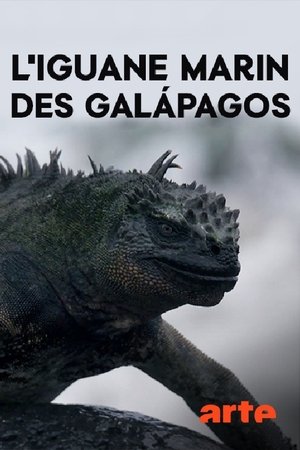
The Marine Iguanas of the Galapagos
Mission Gombessa - Die Jagd nach dem Methusalem der Meere