The retelling of June 6, 1944, from the perspectives of the Germans, US, British, Canadians, and the Free French. Marshall Erwin Rommel, touring the defenses being established as part of the Reich's Atlantic Wall, notes to his officers that when the Allied invasion comes they must be stopped on the beach. "For the Allies as well as the Germans, it will be the longest day"
Autumn 1941. German tank troops are making another attempt to break through to the Uritsk and Pulkovo Heights. During heavy fighting, Soviet troops managed to stop the offensive of fascist tanks one and a half kilometers south of the Pulkovo Observatory. The 900 days of the blockade and the incredible courage of the Soviet people were approaching ...
Slovak psychological drama from the end of World War II. The plot of the film takes place in a short period of time just before the outbreak of the uprising. It is the story of a man who wages his "private" war against the man who is responsible for the serious injury of his brother. The upcoming Slovak National Uprising becomes the backdrop for a model-built story that touches on stubborn personal revenge in a situation of war conflict, when human life loses all value. The actions of the main character thus sound like increasingly absurd actions, his motives and the impact of his actions are relativized, the very legitimacy of such a belief appears shaky.
In 1942, Friedrich Weimer's boxing skills get him an appointment to a National Political Academy (NaPolA) – high schools that produce Nazi elite. Over his father's objections, Friedrich enrolls. During his year in seventh column, Friedrich encounters hazing, cruelty, death, and the Nazi code. His friendship with Albrecht, the ascetic son of the area's governor, is central to this education.
Seven people waiting for their death. A group of assasins - three men and two women - and Gypsy thief spend their time in prison to be tucked up.
Belgique nazie
The war in Europe is over, but the one at home has only just begun. The Second World War is ending and throughout Britain, evacuees are returning home to their families - but not the families they remember. Like so many other women, Peggy’s life has been transformed by the war. Living and working with good friends, she is happier than she has been for years. Yet Peggy’s life is not the only one changed by the war. Her daughter, Rusty, has just returned from the U.S., where she has been living as an evacuee for the last five years. After so long abroad, her home in England has become unrecognizable. Just as Peggy begins to restore normal family bonds, her husband returns from the war, damaged and desperate to make everything as it was before. Adapted from the novel by Michelle Magorian, author of Goodnight, Mister Tom, Back Home is the story of a family who struggle to make sense of their new lives in a world irrevocably altered by the far-reaching effects of war.
Berlin, 1943, during World War II. Martha Liebermann, an elderly upper-class Jewish woman, faces the decision of her life: should the widow of the world-famous and revered painter Max Liebermann continue to try to obtain an exit permit from the Nazis or, with the help of a resistance group, should she flee to Switzerland?
Israel, 1956: Jewish teacher Rachel Stein rather unexpectedly meets an old friend at the kibbutz. It brings back memories of her experiences in the Netherlands during the war, memories of betrayal. In September 1944, Rachel's hiding place is bombed by Allied troops; she makes contact with a resistance member and joins a group of Jews to be smuggled across the Biesbosch to the freed South Netherlands. Only Rachel escapes a massacre by patrol Germans, and is rescued by a resistance group under the leadership of Gerben Kuipers, whose son is captured trying to smuggle weapons. Kuipers asks Rachel to seduce SS-hauptsturmführer Ludwig Müntze, a mission that she will soon learn that the boat attack wasn't a coincidence.
In 1942, a convoy of 35 civilian ships, carrying vital supplies from Iceland to the Soviet Union, faces deadly challenges in the Arctic. Despite Allied naval escort, catastrophic intelligence errors expose the convoy to relentless German air and naval attacks. In the brutal conditions, inexperienced civilian sailors fight for survival, with only 12 ships making it to their destination.
World War II vet Paul Sutton falls for a pregnant and unwed woman who persuades him -- during their first encounter -- to pose as her husband so she can face her family.
For fans of history, this glimpse of Munich society in the 1920s will be a much-treasured event. The story revolves around an art-gallery manager who puts on a show featuring the scandalous works of a woman artist who committed suicide. He is unjustly accused of having committed adultery with her, and for some reason the authorities decide to make an example of him. He is imprisoned at about the same time that Hitler and the nascent Nazi party attempt the infamous Beer Hall Putsch, and the gallery manager's girlfriend and a Swiss writer valiantly (and unsuccessfully) attempt to get better justice for him. Nobody in authority, it seems, has the courage to take up the challenge of righting this particular injustice.
Set in the Spain of 1680, a time of torture and interrogation by the Grand Inquisitor. A young man appears that is healing the sick and raising the dead. There are rumours that he might be the second coming of the Messiah. He is brought before the Grand Inquisitor. Though questioned and tortured, he chooses to remain silent.
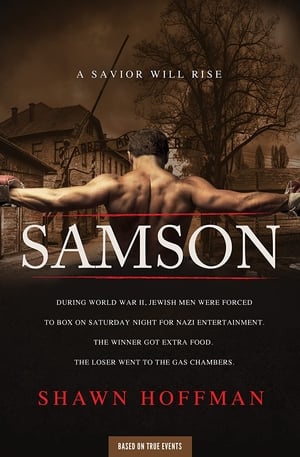
Harry Haft is a boxer who fought fellow prisoners in the concentration camps to survive. Haunted by the memories and his guilt, he attempts to use high-profile fights against boxing legends like Rocky Marciano as a way to find his first love again.
A Jewish woman named Jettel Redlich flees Nazi Germany with her daughter Regina, to join her husband, Walter, on a farm in Kenya. At first, Jettel refuses to adjust to her new circumstances, bringing with her a set of china dishes and an evening gown. While Regina adapts readily to this new world, forming a strong bond with her father's cook, an African named Owuor.
When allied troops liberate a small battle-scarred Belgium town in 1944 the American and British commanders do all they can to help the war-weary people back on their feet. There are mental and physical wounds to heal, fields to plough, the church to rebuild. But a top Nazi, knowing the War is lost, has infiltrated the town and is fostering dissent and disunity.
Without lights and in a driving rain, a bus is lumbering along the muddy Assam Road en route from Chunking to the Indian border. Passengers include a European of unknown nationality, a missionary a French officer, and a White Russian. There is also an ancient Chinese lady on an important diplomatic mission to Indian and her traveling companion. The trip is halted when Japanese planes bomb the road and hit a munitions truck and kill many Chinese soldiers. The Chinese commander puts the wounded soldiers on the bus and directs it to a nearby secret airport where the officer in charge is an American attached to the Chinese Air Force.
An eight-year-old boy is willing to do whatever it takes to end World War II so he can bring his father home. The story reveals the indescribable love a father has for his little boy and the love a son has for his father.
A dramatic tale of a man's life marked by two world wars. The story is divided into two parts. The first part focuses on the life of the Dobrik couple after the outbreak of World War I, the second part develops the life events of their son Peter, who fought in the Red Army during World War II.
After World War II, a woman refuses to believe her husband, missing on the Russian front, is dead. Flashbacks reveal their brief courtship and marriage. Years later, she travels to Russia with his photo, determined to find him. What will she discover?