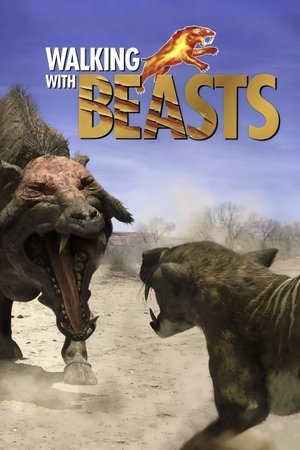
Walking With Prehistoric Beasts explores how life on earth first began. Using real footage, the series goes inside the body of our monster ancestors. For the first time, morphing technology is used to reveal how our ancestors evolved.
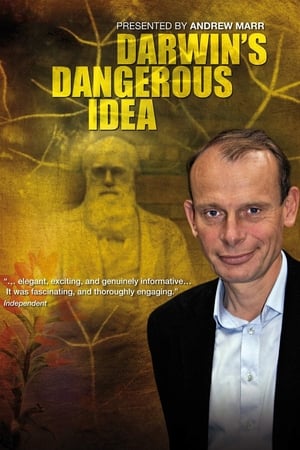
Andrew Marr explores how Darwin's theory of evolution by natural selection has taken on a life of its own far beyond the world of science.
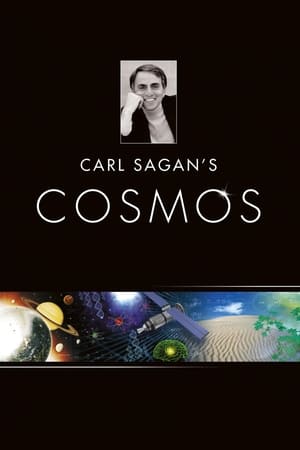
Carl Sagan covers a wide range of scientific subjects, including the origin of life and a perspective of our place in the universe.
A minute-by-minute account of the December 2004 tsunami, which destroyed towns and villages across the Indian Ocean, killing 230,000.
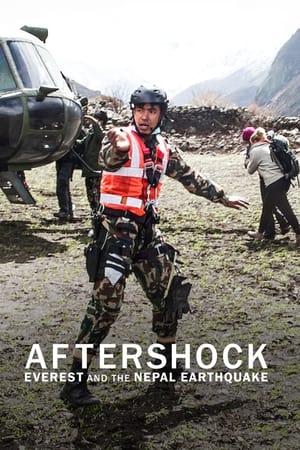
After a terrible earthquake in Nepal, locals and tourists join forces to face destruction in this gripping docuseries.
Follow brothers Marty and Rick Lagina through their effort to find the speculated - and as of yet undiscovered - buried treasure believed to have been concealed through extraordinary means on Oak Island.
Arnout Hauben travels through the Netherlands and Belgium with Philippe Niclaes and Ruben Callens. In his own unique way, he speaks to people he meets along the way and looks for stories that have given color to our regions.
A century after the Great Kanto Earthquake, previously unknown details have been extracted from newly 8K remastered and colorized footage, vividly demonstrating how Tokyo citizens faced the disaster.
Brian Cox tackles some of the most challenging and intriguing questions facing science today by using his best material from past programmes and the latest scientific research.
Presenter Rob Bell takes us on a voyage around Britain and Ireland to reveal the hidden secrets that make offshore lighthouses such extraordinary feats of engineering.
A risky expedition along thoroughfares that harbor mortal danger for those who use them or live on them. They run through deserts, ice, and snow, deep in the jungle, along water, and over mountains: the world's most dangerous roads, truly "hot roads." Many have died along these roads.
Sir David shines the spotlight on some of nature’s evolutionary anomalies and reveals how these curious animals continue to baffle and fascinate.
Sir David discovers a microscopic world that’s invisible to the naked eye, where insects feed and breed, where flowers fluoresce and where plants communicate with each other and with animals using scent and sound.
This captivating docuseries examines Winston Churchill's pivotal role in World War II and the formative events that made him an ideal leader for the era.
David Attenborough embarks on a remarkable 500 million-year journey revealing the extraordinary group of animals that dominate our world, and how their evolution defines our human bodies.
Life is a fragile thing. It changes and adapts so specifically to survive in the environment it's placed in. This ability to adapt is called evolution, and it's the reason that life has endured for the past few billion years. But evolution takes a long time, so when environments change too quickly for the inhabitants to keep up, the result is a drop in population or at the worst… extinction. And sometimes these changes can be so big that they affect the entire globe. Leading to some of the most catastrophic events in our planet’s history… mass extinctions. Content creator Angel of Death explores the five mass extinctions and the effects they had on life on earth in this five part miniseries.
That'll Teach 'Em is a British reality television documentary series produced by Twenty Twenty Television for the Channel 4 network in the United Kingdom. Each series follows around 30 teenage students as they are taken back to a 1950s/1960s style British boarding school. The show sets out to analyse whether the standards that were integral to the school life of the time helped to produce better exam results, to the current GCSE results and to compare certain contemporary educational methods with modern ones. As part of the experience, the participants are expected to board at a traditional school house, abiding by strict discipline, adopting to 1950s diet and following a strict uniform dress code. After four weeks, the students then take their final exams, produced to the same standard as contemporary GCE O Levels. There were three series of the show, the first airing in 2003, the second in 2004 and the third and final series in 2006.
Natural and man-made catastrophes retold by eyewitnesses and dramatic reconstructions.
Dynastiet Mærsk
Experience the wonders of our world like never before in this epic series from Jon Favreau and the producers of Planet Earth. Travel back 66 million years to when majestic dinosaurs and extraordinary creatures roamed the lands, seas, and skies.