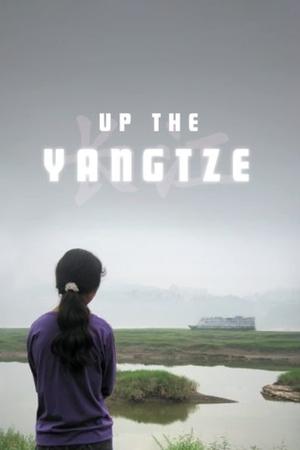
At the edge of the Yangtze River, not far from the Three Gorges Dam, young men and women take up employment on a cruise ship, where they confront rising waters and a radically changing China.
Documentary on water usage, money, politics, the transformation of nature, and the growth of the American west, shown on PBS as a four-part miniseries.
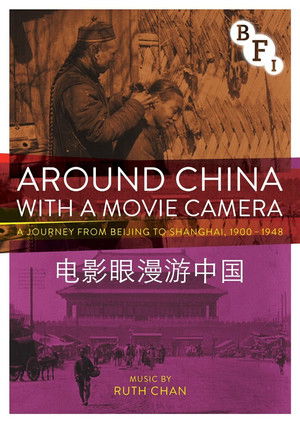
A new film compiled from the BFI National Archive's unparalleled holdings of early films of China, features films from 1900-48 filmed across China. The cinematic journey of Around China with a Movie Camera contains many films which may never have been seen in China, or at the very least not for over 70 years. These travelogues, newsreels and home movies were made by a diverse group of British and French filmmakers, some professionals, but mainly enthusiastic amateurs, including intrepid tourists, colonial-era expatriates and Christian missionaries.
Explores the plans for the construction of the monumental dam on China's Yangtze River, the structure that when completed in 2009 will become the Three Gorges Dam. It is slated to be 610 feet high, 1.3 miles across, creating a reservoir 400 miles and the largest power plant in the world.
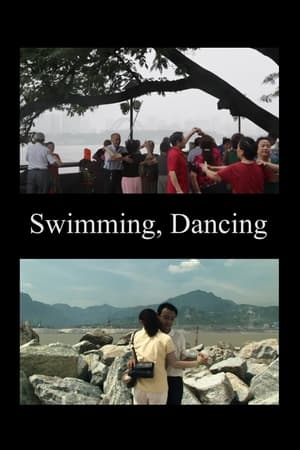
Swimming, Dancing examines audiovisual representations of the Yangtze (1934–present), from silent film to video art to the contemporary vlog. Inspired by the city symphonies of the 1920s, Swimming, Dancing pieces together a “river symphony”, evoking the images, sounds and contradictions that make up the river’s turbulent history.
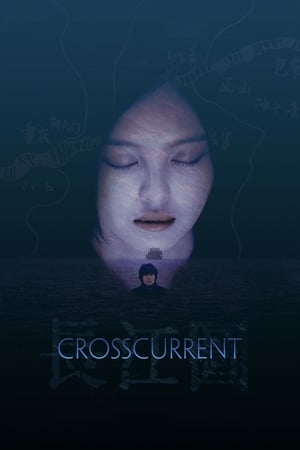
A voyage between a woman searching for the meaning of life and a man holding a book of poems on the longest river of Mainland China.
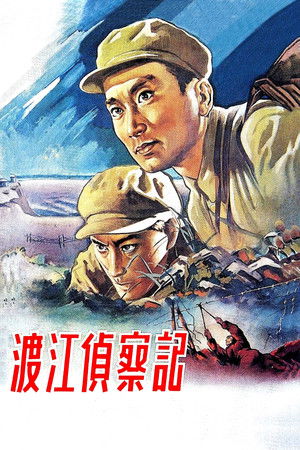
In the spring of 1949, a war is about to happen between the Liberation Army and Kuomintang Army on the Yangtze River. The Liberation Army dispatches a reconnaissance to scout the southern parts of the River, whose work is actually full of hardships and dangers. However, with the help of the local crowd and the guerrillas, finally, the members of the reconnaissance succeed in the commission and offer valuable information to the Liberation Army, making great contributions in the war.
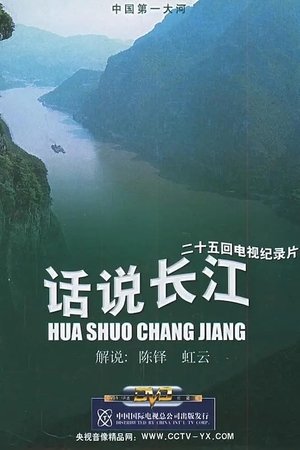
The Yangtze River is the largest river in China. Every Chinese is familiar with the theme song of the film - "Song of the Yangtze River", which was written by children soaked in their mother's milk. He wrote about the inexplicable and unclear love: the Yangtze River is the mother river of the Chinese nation, and the Yangtze River belongs to the Chinese nation. There are countless natural and cultural deposits on the Yangtze River and its banks. Everyone can listen to "Song of the Yangtze River" and follow "Talk about the Yangtze River" to understand its magic and magnificence.
The construction of the Three Gorges Dam will force nearly a million people on both sides of the river to relocate from their villages. This film follows several local families as they face the fate of leaving their villages, complaining about being forced to leave their ancestral homeland, resigning themselves to the situation, and reluctantly reacting.
In March 1997, a teaching and research team led by Professor Zhuang Kongshao came to the Tujia area along the middle reaches of the Yangtze River to conduct anthropological research, with the aim of establishing a link between anthropological academic knowledge and field studies, as well as finding valuable research points to achieve the possibility of interdisciplinary collaborative research. "Field Study Along the Yangtze River" is a synchronous film and television work based on this survey. Now re-edited and transferred to today's university classroom, it is intended to facilitate anthropology students who are preparing to enter the field study phase, and by watching this film, it will trigger them to think about the opportunity of academic docking between theory and research sites, and further transition them into their own fieldwork thinking.
Discover the story behind the man who sparked the Protestant Reformation. Told through a seamless combination of live-action storytelling and artistic animation, Martin Luther's daring life is presented in extensive detail while still making the film relevant, provocative, and accessible.
A feature documentary about the writer JT LeRoy - Ethically charged, controversial, and confusing, JT’s life and death sprang open a Pandora’s box of powerful questions about literature and culture, identity and celebrity, and the reality of the society we live in. Fraud? Art? Mental illness? Complicity? The Cult of JT Leroy will be a testament to this bizarre and elaborate story that has captured the attention and fascination of the world’s media, and perplexes to this day.
Experience the lives and surroundings of a few São Paulo punks, the fierce Brazilian birthplace of this global culture of dissent. In a country with a well-known non-rock musical tradition, where corruption is cultural and violence is routine - Punk brought a cathartic expression more akin to urban realities. As a working class movement that started under the violent grip of Brazilian dictatorship, this is do-it-yourself at its most creative, and a celebratory means of resistance.
Universally accepted as a true icon of the 20th century, Muhammad Ali’s phenomenal achievements spanned sport, politics and religion. One man – photographer William Klein had comprehensive access to the events that shaped Ali’s legend. In 1964, the young gregarious Cassius Clay successfully defeated the seemingly invincible Heavyweight Champion of the World Sonny Liston – the manner of Clay’s victory and his amazing persona made him an instant superstar. Through this incredible period, and Clay’s subsequent rematches with Liston, William Klein enjoyed unrivalled access top Clay’s camp – witnessing at first hand Cassius Clay becoming Muhammad Ali and angering the American people with his allegiance to Islam. Forward to Zaire 1974, and the return of Muhammad Ali to the world stage to face another invincible champion George Foreman. As Ali reclaimed the crown for a second time, Klein was ever present, capturing the full story at close quarter.
Documentary on motorcycle racing featuring stars of the sport, including film star Steve McQueen, a racer in his own right.
Isabella Rossellini’s follow-up to her one-of-a-kind GREEN PORNO delves further into the surprising, eccentric mating rituals of the animal, marine, and insect worlds. From the anything-goes free love practiced by the creatively kinky dolphin to the startlingly violent reproductive methods of the humble bedbug, Rossellini—aided by colorful costumes and imaginative puppetry—invites us to see sex, our fellow creatures, and perhaps ourselves in a whole new way.
The modern hero, able to travel, to arrive, to gaze, to move on, to be anonymous, to be in a liminal zone. The strolling flâneur was the forerunner of the twentieth-century tourist and in particular of the activity which has in a way become emblematic of the tourist: the democratised taking of photographs - of being seen and recorded and seeing others and recording them. The brain is a book - the eye is a camera. Consciousness is going on a trip - a travel into the cities, the heart of ancient Europe and culture - Florence. The human body has to rest. But the brain is corresponding, and the eye is recording. A requiem in slow motion.
An in-depth behind-the-scenes look at all of the music from this movie phenomenon.
The thousand-year-old tradition of pottery in the Indian subcontinent is now under threat. With the market being flooded with plastic in the evolution of civilization, today this Pal community is becoming displaced.
Dyke Richens and his partner design and make lifelike masks and animal costumes for the theatre.