An account of the reign of Herod the Great, king of Judea under the rule of the Roman Empire, remembered for having ordered, according to the Gospel of Matthew, the murder of all male infants born in Bethlehem at the time of the birth of Jesus, an unproven event that is not mentioned by Titus Flavius Josephus, the main historian of that period.
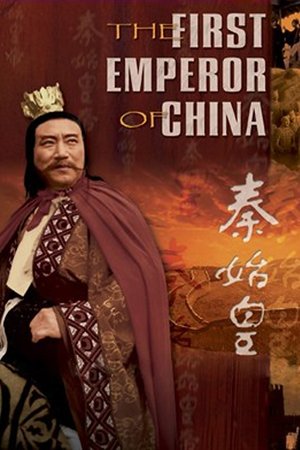
This historical drama tells the story of Qin Shihuang, who unified China's vast territory and declared himself emperor in 221 B.C. During his reign, he introduced sweeping reforms, built a vast network of roads and connected the Great Wall of China. From the grandiose inner sanctum of Emperor Qin's royal palace, to fierce battles with feudal kings, this film re-creates the glory and the terror of the Qin Dynasty, including footage of Qin's life-sized terra cotta army, constructed 2,200 years ago for his tomb.
With over 60 tombs, the Valley of the Kings is the most-famous burial ground on Earth. In the biggest Egyptian excavation ever, a team of archaeologists led by Zahi Hawass heads into the Western Valley to hunt for evidence of an undiscovered tomb.
The methods used by Danish archaeologists to study the Stone Age are illustrated.
An examination of how Africa's mythological stories have served as the basis for the world religions that came after, especially in Western civilization.
Chaco Canyon, located in northwest New Mexico, is perhaps the only site in the world constructed in an elaborate pattern that mirrors the yearly cycle of the sun and the 19-year cycle of the moon. How did an ancient civilization, with no known written language, arrange its buildings into a virtual celestial calendar, spanning an area roughly the size of Ireland?
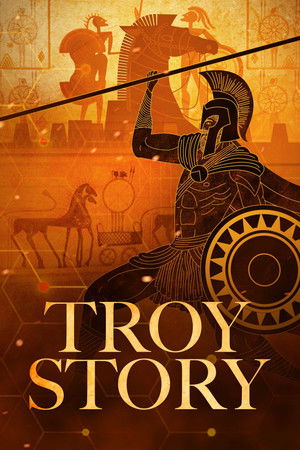
The story of the Trojan Horse is probably one of the most famous stories ever told: after ten years of bloody war, the Greek coalition decides to lift the siege and depart, but not before leaving at the gates a huge wooden horse, which the Trojans confidently lead into the city. A few hours later, the once invincible Troy goes up in flames. What exactly happened? Is this myth true or false?
Archeologists discover a pit filled with terracotta warriors buried to protect the grave of the First Emperor of China.
Come back with us to Ancient Greece, 2,500 Years ago to the original Olympic Games. The ancient Games, like our modern Olympics, included champions and cheaters, glory and scandals, bitter rivalries and contests of strength, speed and savage combat. Set in 448 BC when the pounding of horse's hooves and the brutal hand-to-hand combat could be heard and seen by the crowds that filled the Olympic stadium. This one-hour special event follows the glory and corruption of the arc of a single, five-day Olympiad. The competitions include chariot racing, running, jumping, discus, javelin and two man-to-man combat finals-boxing and pankration, a form of extreme fighting in which death was not uncommon. With the help of sports historians and great athletes such as George Chuvalo and Olympic medallists Donovan Bailey and Angela Schneider, viewers travel back to a very different life-in a very different world.
What is true and what is false in the hideous stories spread about the controversial figure of the Roman emperor Gaius Julius Caesar Augustus Germanicus (12-41), nicknamed Caligula? Professor Mary Beard explains what is accurate and what is mythical in the historical accounts that portray him as an unbalanced despot. Was he a sadistic tyrant, as Roman historians have told, or perhaps the truth about him was manipulated because of political interests?
In this gripping investigation, archaeologist Pepi Papakosta is on a hunt for Alexander the Great's lost tomb, and she makes an extraordinary discovery.
The location of the sanctuary of Artemis at Amarynthos has long remained one of the last great archaeological enigmas of Ancient Greece. This vast Artemision is mentioned in several ancient texts, which even go so far as to specify the distance that separates the sanctuary from the ancient city of Eretria. But despite the efforts of numerous scientific expeditions since the end of the 19th century, no trace of the sanctuary or its temple has ever been found. In the 1960s, a young archaeologist - Denis Knoepfler - set out in search of the lost temple of Artemis. His investigations soon led him into the hinterland of the island of Euboea, well beyond the limits of previous expeditions. It would take five decades of searching, unshakeable faith and moving tons of earth to finally unravel the mystery. In 2017, a tenacious Swiss-Greek team of archaeologists formally identified the sanctuary of Artemis, where Denis Knoepfler had predicted it lay buried.
Outside the Sudanese capital Khartoum, the remains of an ancient city stand in the desert. Are you ready to dive beneath the pyramids of Sudan's black pharaohs?
Dr. Mark Fairchild, world-renowned archaeologist, traces the hidden years of Saint Paul's life in the mountainous Turkish countryside of Rough Cilicia.
5000 years ago the ancient Elamites established a glorious civilization that lasted about three millennia. They created marvelous works in architecture and craftsmanship. These works of art depict the lifestyle, thoughts, and beliefs of the Elamites.
Forensic experts scan Pompeii’s victims to investigate why they didn’t escape the eruption.
Explores the Pyramids of Giza as Egyptologists try to unravel the mysteries and decipher the clues behind these stone giants built over 4,500 years ago.
The discovery of Tutankhamun’s tomb is revealed for the first time in color, thanks to colorization of black-and-white newsreel and photographs.
Thanks to new excavations in Mauritius and Madagascar, as well as archival and museum research in France, Spain, England and Canada, a group of international scholars paint a new portrait of the world of piracy in the Indian Ocean.
For centuries Troy was believed to be a mythical city. Now, a leading team of American archaeologists have discovered an ancient thriving city, and evidence of a real Trojan War.