Arriving in the US with a background in abstract art, opera, and film—including work with German director Werner Schroeter—Vogl began making Super8 films in New York that stripped away the stylistic markers of Hollywood, New Wave cinema of the 1960s and ’70s, and classic avant-garde film, leaving only traces of their generic conventions. For the first hour of OK Today Tomorrow, he stages a series of fraught encounters around the city between four gentrified New Yorkers before abandoning his vague narrative of youthful angst altogether in favor of documenting the urban landscape itself. The dusk-to-dawn “city symphony” that ends the film resembles similar Super8 social studies by Vogl’s uptown contemporary John Ahearn; both recorded the daily lives of working-class black and immigrant communities on the streets of a city on the verge of the corporate takeover and sweeping gentrification that followed in the 1980s and ’90s. Preserved by The Museum of Modern Art, New York.
In this story set in near future, a group of young rebels, hippies and 1968 protesters want to cede and make an independent Island from the Mainland. A journalist who came to the Island to make a report about political summit that takes place there gets involved in the clash between young rebels and establishment.
A day in the city of Berlin, which experienced an industrial boom in the 1920s, and still provides an insight into the living and working conditions at that time. Germany had just recovered a little from the worst consequences of the First World War, the great economic crisis was still a few years away and Hitler was not yet an issue at the time.
The wife of an abusive criminal finds solace in the arms of a kind regular guest in her husband's restaurant.
Set halfway through the 17th century, a church play is performed for the benefit of the young aristocrat Cosimo. In the play, a grotesque old woman gives birth to a beautiful baby boy. The child's older sister is quick to exploit the situation, selling blessings from the baby, and even claiming she's the true mother by virgin birth. However, when she attempts to seduce the bishop's son, the Church exacts a terrible revenge.
The quasi-fictional story of transgender sex workers living in Rio de Janeiro's swampy red light district, who are joined by a group of hippies and a runaway stockbroker, "Mangue-Bangue" is the paradigmatic expression of the post-1968 spirit of desbunde, the Brazilian slang catchword for "sex, drugs, and rock 'n' roll".
The inner world of the great painter Max Ernst is the subject of this film. One of the principal founders of Surrealism, Max Ernst explores the nature of materials and the emotional significance of shapes to combine with his collages and netherworld canvases. The director and Ernst together use the film creatively as a medium to explain the artist's own development.
The Alchemist assembles together a group of people from all walks of life to represent the planets in the solar system. The occult adept's intention is to put his recruits through strange mystical rites and divest them of their worldly baggage before embarking on a trip to Lotus Island. There they ascend the Holy Mountain to displace the immortal gods who secretly rule the universe.
Five lonesome cowboys get all hot and bothered at home on the range after confronting Ramona Alvarez and her nurse.
Art dealer Salvatore Viviano and director Angela Christlieb embark on a search for the lost artist collective Gelitin, which since the 1990s has shattered the borders of "good taste" again and again with extravagant actions and installations. Interviews with old companions and artist friends in the U.S., Europe, and Asia are linked with anarchically montaged Gelitin archive material: intense, transgressive, experimental, gaudily colorful, funny, and virulent.
An anthology of one-minute films created by 51 international filmmakers on the theme of the death of cinema. Intended as an ode to 35mm, the film was screened one time only on a purpose-built 20x12 meter public cinema screen in the Port of Tallinn, Estonia, on 22 December 2011. A special projector was constructed for the event which allowed the actual filmstrip to be burnt at the same time as the film was shown.
High school hotshot Zach Siler is the envy of his peers. But his popularity declines sharply when his cheerleader girlfriend, Taylor, leaves him for sleazy reality-television star Brock Hudson. Desperate to revive his fading reputation, Siler agrees to a seemingly impossible challenge. He has six weeks to gain the trust of nerdy outcast Laney Boggs -- and help her to become the school's next prom queen.
A depiction of a girl’s uneasy state of mind as it wavers between life and death.
"This project consists a visual fluidity of construction, harmony and thoughts taking colors and length from this body of autonomy. Different images between figuration and abstraction are created by meaning and phenomenon letting the decoupage revealing a piece of a strange underworld. I built it like a window opened to the fresh air of improvisation by familiar landscapes, those exact moments articulating a connection between light and movement."
Luis Bunuel, the father of cinematic Surrealism, made his film debut with 'Un Chien Andalou' in 1929 working closely with Salvador Dali. Considered one of the finest and controversial filmmakers with, 'L’Age d’Or' (1930), attacking the church and the middle classes. He won many awards including Best Director at Cannes for 'Los Olvidados' (1950), and the coveted Palme d’Or for 'Viridiana' (1961), which had been banned in his native Spain. His career moved to France with 'The Diary of a Chambermaid' with major stars such as Jeanne Moreau and Catherine Deneuve.
A successful mod photographer in London whose world is bounded by fashion, pop music, marijuana, and easy sex, feels his life is boring and despairing. But in the course of a single day he unknowingly captures a death on film.
A dying man in his forties recalls his childhood, his mother, the war and personal moments that tell of and juxtapose pivotal moments in Soviet history with daily life.
The winner of the Miss World Virginity contest marries, escapes from her masochistic husband and ends up involved in a world of debauchery.
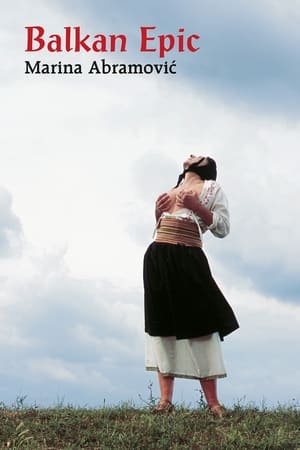
The film explores the sexual aspects of Serbian folklore. Ancient myths that have trickled into everyday household remedies or explanations are juxtaposed with the joys of the female and male sexual forms from which all human life originates. Functioning as both sexual liberation and reinvented modern myth, Balkan Erotic Epic is a display of the need for a cultural change in viewpoint around sex.
The second part: Brakhage’s layering of images spends less time with images of war, and begins filtering in scenes of Vienna and his home in Colorado. He sets up a comparison between “Kubelka’s Vienna” and his own.