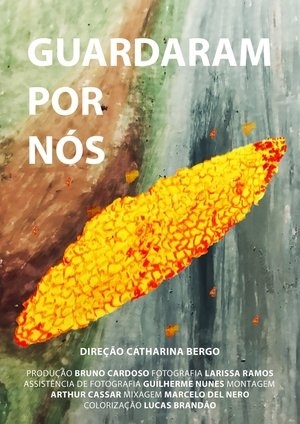
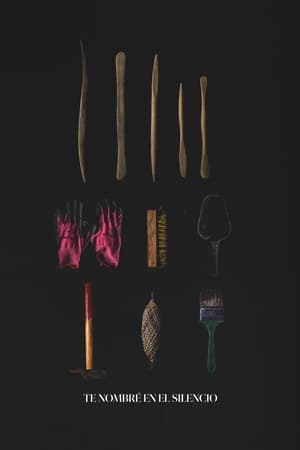
The Rastreadoras de El Fuerte are a group of mothers of disappeared persons in northern Sinaloa who, in the absence of the authorities, twice a week go out with picks and shovels in search of the remains of their children; a testimony of the abandonment of the State, the aggressions of the drug traffickers, the indifference of society and the pain, but also of the strength and courage that keep these women together, and of their empowerment to mobilize society in community organization.
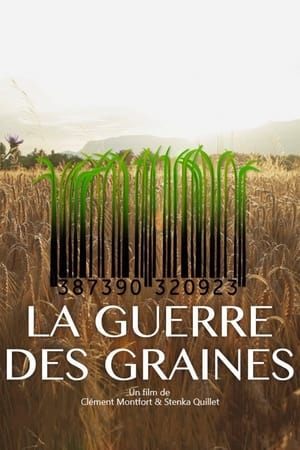
One of the world's most precious resources is at risk. This film will help others learn what is at stake and what can be done to protect the source of nearly all our food: SEEDS. While the price of gold and oil skyrockets the fate of our most priceless commodity is ignored. Seeds provide the basis for everything from fabric, to food to fuels. They are as essential to life as the air we breathe or water we drink... but given far less attention. Over the past one hundred years, seeds have steadily shifted from being common heritage to sovereign property. This film tells the story of seeds by following the challenges and triumphs of some of their most tireless stewards and advocates.
Growing up in Masbate Province in the Philippines, Jary is neglected and shunned since the moment of his birth for one reason-- his appearance. His older sister, Jessa protects Jary through his early years, then takes him in as a young teen, to raise him alongside her own two children in a fragile house on a hill. Jessa seeks out the medical care Jary has been denied since birth. And more, the support to begin his physical and emotional recovery. Every Day After is a 35-minute documentary film that provides a more nuanced look at the complexities of the healing process we don’t often see. And honors the invisible labor of a sister whose love and action make it possible for Jary to experience the everyday joys and struggles of growing up.
How did the willful daughter of a Himalayan forest conservator become Monsanto’s worst nightmare? The Seeds of Vandana Shiva tells the remarkable life story of Gandhian eco-activist Dr. Vandana Shiva, how she stood up to the corporate Goliaths of industrial agriculture, rose to prominence in the regenerative food movement, and inspired an international crusade for change.
La Guerre des Graines
Gangstresses, a documentary by Harry Davis, tells the story of violence, poverty, and survival in the streets from a female perspective. Over a two-year period, Davis interviews female hustlers, drug dealers, rappers, porn stars, prostitutes, mothers, and daughters. Among them are Champagne, a well-known African American porn star who has a small child; Mama Mayhem, a street hustler; Uneek, a rapper from the Bronx; and Vanessa Del Rio, a famous porn actress. Musicians Lil' Kim, Mary J. Blige, Ice T, and Tupac Shakur also share personal stories of survival. The documentary conducts follow-up research on the women's complicated lives, offering glimpses of both tragic reality and hopeful recovery.
In July 1860, the schooner Clotilda slipped quietly into the dark waters of Mobile, Ala., holding 110 Africans stolen from their homes and families, smuggled across the sea, and illegally imported to be sold into slavery. Surviving Clotilda is the extraordinary story of the last slave ship ever to reach America's shores: the brash captain who built and sailed her, the wealthy white businessman whose bet set the cruel plan in motion, and the 110 men, women, and children whose resilience turned horror into hope.
French visual artist-director JR situates his latest social-art intervention in a Southern Californian supermax prison, where he has imagined an enormously ambitious collaboration with the facility’s inmates.
Casimê Celîl was born into a Yezidi Kurdish family in 1908, in a village called Kızılkule, located in Digor, Kars. The village and family life, which he longed to remember throughout his life, ends with the massacre they endured in 1918. During his long road to Erivan, Armenia, he lost all his family members. Left all alone, Casim was placed into an orphanage and was forced to change his name. To remember who he was and where he came from, every morning he repeated the mantra “Navê min Casim e, Ez kurê Celîlim, Ez ji gundê Qizilquleyê Dîgorê me, Ez Kurdim, Kurdê Êzîdî me”, which translates to: “My name is Casim, I am the son of Celîl, I come from the village of Kızılkule in Digor, I am a Kurd, and I am Yezidi”. He clings to every piece of his culture he can find, reads, and saves whatever Kurdish literature or art he comes across. As the year’s pass, Casim finds himself with an impressive collection of Kurdish culture and history.
Traquer l'invisible - Nos chercheurs face à la menace mondiale des virus et des bactéries
"The Boy Of The Fish" follows Noon, a young boy living in a Syrian refugee camp, who finds solace and a sense of freedom in a whale-shaped doll he names "Bahr." Set against the challenging realities of camp life, Noon’s journey is both a story of resilience and a testament to the boundless imagination of childhood. Through vivid symbolism and a unique soundscape, the film explores themes of loss, hope, and the longing for freedom amidst confinement. Shot entirely on an iPhone due to restrictions in the conflict zone, the film combines raw authenticity with poetic depth to capture the emotional landscape of a young soul navigating adversity.
Through its founder, Terry "Huncho" Cooper, we witness the story of the infamous basketball tournament in Harlem that has symbolized resilience, hope, and community for decades.
An early morning phone call in 2017 changed the lives of two teenage brothers bonded by their love of percussion. One died tragically in a car accident while the other determined to make sense of his loss through music.
Grace Fisher was an active musician and dancer until a rare spine disease almost derailed her budding career. In this award winning documentary, we see grief transformed into gratitude and tragedy turned into opportunity.
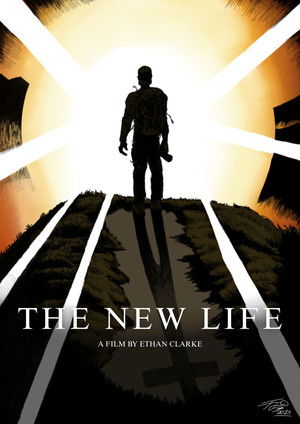
Travelling the French Alps at 17 while coming to terms with losing my dad. Exploring ideas of faith through difficult situations, and how bad times can bring out the good in our lives, documenting the journey after losing a parent to cancer and the importance of art and creativity in our lives. Using "The New Life" as a new way of defining grief, serving as the name given to the life we are forced to live after losing a loved one, and a christian name given to Heaven. It’s the similarity in all of our lives and the life that we go out of our way to live, in search of experiences, after it feels like all hope is lost. Why do we fall? It does, in fact, get better.
Jane Goodall-Reasons For hope is an uplifting journey with stories to inspire people to make a difference in the world. Three different conservation stories illustrate Jane's pillars of hope.
In the 1960s, the suburbs were meant to be modern havens for newcomers from rural France, Portugal, Spain, North Africa, and Africa, helping rebuild post-war France. Large housing complexes symbolized this ideal, offering comfort, heating, and electricity. But by the 1980s, disillusionment set in as economic crisis, unemployment, poverty, crime, racism, and police violence took hold. Mohamed Bouhafsi tells the story of a dream that didn’t last.
A short visual tale about the life, works, and failures of Hanoch Piven, an internationally acclaimed artist who creates funny portraits of people from everyday objects. Through his playful worldview, Piven reminds us how to find faces in unexpected places, how to practice empathy, and above all - how to stop taking yourself too damn seriously!
There's no definitive separation as long as there is memory'. Since the Tsunami hit the northern part of Japan's coast in 2011, more than 20 thousand people lost their lives, and many others are still missing. As time went by the families of the victims abandoned all hope and stopped looking for their loved ones. However, this is the story of two men that are still fully committed to their respective searching activities. Even though their backgrounds are extremely different, both share a strong force of will and firmly wish to keep alive the memories of the ones that went missing. Perseverance is what pushed an ex-convict to look for redemption by helping the victims' families to find the remains of their loved ones, and perseverance is what brought a bus driver to start to dive in order to search for his wife.
After the death of his grandmother Emma, Robin Hunzinger and his mother Claudie find a carefully preserved collection of letters which Emma received from a girl called Marcelle. In the 1920s, Emma and Marcelle met at school in Dijon. Secretly, love blossomed between the two teenage girls, but after two years they parted ways. Marcelle developed tuberculosis and was admitted to a sanatorium. Complementing the sparse photographs of the women, Hunzinger combines archive footage, avant-garde films, and music to create a sensuous, poetic atmosphere.