Juger Pétain
A major political, historical, human and economic fact of the 20th century, the Gulag, the extremely punitive Soviet concentration camp system, remains largely unknown.
The Canadian contribution to World War Two was extraordinary in scale and variety. More than one million people, out of nation of just eleven million, volunteered to serve. To transform a small, virtually unequipped military into a powerful army, navy and air force was a remarkable achievement. No Price Too High traces Canada's involvement from the prewar years through 1945, explaining the events of the war in the context of the political and military realities of the time. There is none of the second guessing that has characterized so much recent analysis of the war. No Price Too High draws on original sources - personal letters and diary entries, and powerful photographs - to evoke the mood of those momentous years. The thoughts, hopes, dreams, fears, and heartbreaks of the generation of Canadians who faced the war are captured. Produced by Norflicks, No Price Too High chronicles Canada's role in the major events of the war, including The Battle of Britain, Dieppe and D-Day.
The Jewel in the Crown is a 1984 British television miniseries based on Paul Scott's The Raj Quartet novels. In India during the final years of British rule in World War II, an unjust arrest for rape sets off questions of identity and personal responsibility being explored against a background of war and personal intrigue. The critically acclaimed drama explores the complex relationships between the British colonizers and the Indian population, focusing on themes of cultural clash, racial tension, and the decline of the empire.
During the second world war, the Nazis looted everything they could get their hands on, including an estimated 600 tons of gold, thousands of pieces of artwork, and millions of priceless artifacts. While some of these items have been found, much of it remains missing. Treasure hunter Darrell Miklos believes some of these stolen riches were loaded into specially modified U-Boats that are currently lying at the bottom of the Caribbean Sea. His evidence: two top-secret documents acquired over 40 years of research.
Summer 1943: Hitler engages in a decisive battle in Kursk to win the war in the East. This is without counting on the pugnacity of the Red Army and the Allied intervention in the West. Month after month, the noose tightens on the Nazi tyrant who refuses to admit defeat and precipitates his country in its fall.
Combat! is an American television program that originally aired on ABC from 1962 until 1967. The show covered the grim lives of a squad of American soldiers fighting the Germans in France during World War II. The program starred Rick Jason as platoon leader Second Lieutenant Gil Hanley and Vic Morrow as Sergeant "Chip" Saunders.
The action of the epic film takes place in the second half of World War II. The plot focuses on the liberation of European countries from German occupation and the anti-fascist activities of the communist parties of these countries. After the victory at Stalingrad, a decisive turn occurred during the war. The main aim is the rallying of all patriotic forces, the creation of a national anti-fascist front in the struggling countries. The swift offensive of the Soviet troops, problems with the opening of a second front, major operations and the offensive of the Soviet army lead to the liberation of Europe. Rebellions are rising in different countries - such as the heroic uprising in Warsaw, in Slovenia, Bucharest and other cities. Brave heroes who performed immortal feats in the name of the happiness of mankind and freedom.
The story of the last year of the war in Europe, from the D-Day landings in Normandy in June 1944 to the dual German surrender, first in Reims then Berlin, in May 1945. Eleven months of unprecedented combat.This was the deadliest year of WW2.
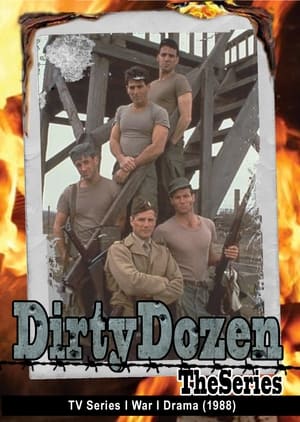
A group of soldiers awaiting court martial are brought together to form an elite team of specialists during World War Two.
WWII in HD is a 10-part American documentary television miniseries that originally aired from November 15 to November 19, 2009 on the History Channel. The program focuses on the firsthand experiences of twelve American service members during World War II, including an Army nurse, a member of the Tuskegee Airmen, a second generation Japanese American and prisoner of war, and an Austrian Jewish immigrant. The twelve members recorded their time in both theaters and some had later interviews; found footage from the battlefield was paired with the stories of the twelve service members. The episodes premiered on five consecutive days, with two episodes per day. The series is narrated by Gary Sinise and was produced by Lou Reda Productions in Easton, Pennsylvania, United States.
The misadventures of hapless cafe owner René Artois and his escapades with the Resistance in occupied France.
World War II drama about covert organisation Lifeline helping allied airmen escape after being shot down in occupied Europe, working with the Resistance and hiding from the Gestapo.
In this prequel to the movie, set from June 1940 to November 1941, American Rick Blaine runs the Cafe Americain in Casablanca and deals with Nazis, French, and locals in this center of World War II intrigue.
Goldene Zeiten - Bittere Zeiten
Exil
Chuzhie krylya
Comprised entirely of re-mastered and colorised archive footage from World War II, much of it never before seen, Sacrifice recounts the story of D-Day through the testimonies of those who lived it. These important historical days are seen through the eyes of French civilians and members of the military fighting on both sides. The testimonies of famous individuals like Dwight D. Eisenhower and Erwin Rommel are intertwined with those of anonymous soldiers and citizens, such as film director Samuel Fuller and Eisenhower's chauffeur, Kay Summersby. From the preparations for D-Day all the way through to the liberation of Paris, the accounts of these men and women provide a moving and invaluable retelling of this pivotal time in history.
"Die Kinder der Flucht" is a three-part German docudrama that portrays the harrowing experiences of children and young people during the final months of World War II and its aftermath in Eastern Europe. The series weaves together dramatized reenactments, archival footage, and poignant interviews with real-life survivors to tell three distinct yet interconnected stories of displacement, survival, and resilience.
End of Innocence is a two-part television film that focuses on the work of the German Uranium Association during World War II. At Farm Hall in England, the ten German nuclear scientists interned there as part of Operation Epsilon learn of the dropping of the first atomic bomb on Hiroshima in August 1945. In flashbacks, the development of the German uranium project is recapitulated chronologically from the discovery of nuclear fission by Otto Hahn to the work of Kurt Diebner at the Heereswaffenamt to the experiments of the Kaiser Wilhelm Institute for Physics under Werner Heisenberg and Carl Friedrich von Weizsäcker at the Haigerloch research reactor in spring 1945.