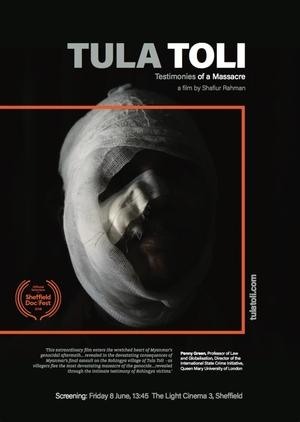
Filmed along the Myanmar-Bangladesh border and within Rohingya refugee camps, Shafiur Rahman’s documentary on the 2017 Tula Toli massacre exposes chilling interviews and evidence of Myanmar military’s premeditated atrocities. The film documents mass killings, sexual violence, and the systematic destruction of the village of Tula Toli, highlighting a humanitarian crisis that forced over half a million people—many of them children—to flee in an exodus of historic scale.
Les enfants de la lanterne magique
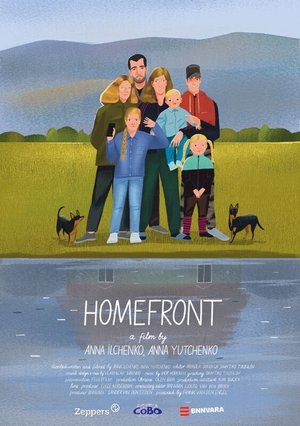
A family with five children flees the war raging in their home village on the Russian border. They end up in Mshanets, a farming village on the other side of the country, remote and unknown. Here the family starts building a new home. At the same time, two documentary makers come to the village, looking for a story. In the Lymar family they find the ideal characters for their film. But one day, when the renovation of their house is almost finished, the family disappears. The filmmakers go in search of their characters and along the way they try to find an answer to the question: what does a person need to feel at home?
Bobbing around on Mediterranean waters aboard the Ocean Viking, aid workers from the French relief service SOS Méditerranée gaze at the horizon. Is that a rubber dinghy in the distance, or is it garbage? The organization sails up and down the Libyan coast looking to pick up refugees in boats. On board is a 30-strong team ready to offer help and support refugees with their asylum applications.
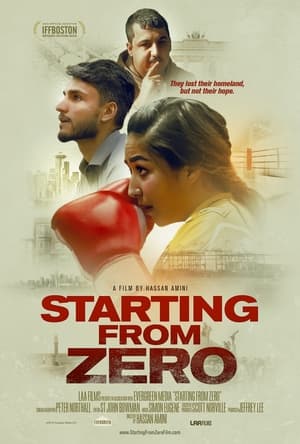
STARTING FROM ZERO documents the journey of three refugees — a female boxer, a TV personality and a journalist — caught in the crosshairs following the U.S. military’s sudden withdrawal from Afghanistan. Fleeing for their lives, they are transported to an unlikely luxury compound in Qatar before making their eventual journey to the United States and Germany, where they must restart their lives and confront the deferment of their dreams.
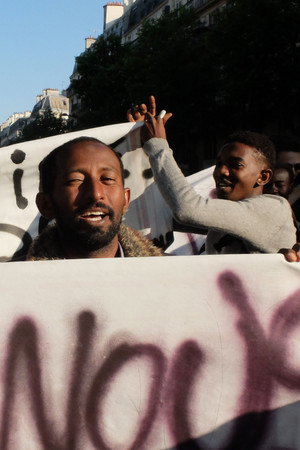
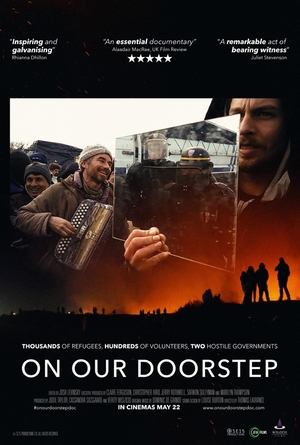
On Our Doorstep delves deep into an aspect of the refugee crisis that rarely reached the press. With NGOs being blocked by red tape and the absence of any positive action by French or British authorities, the film is a behind-the-scenes look at the unprecedented grassroots movement that rose to aid the refugees in Calais, and the community that sprang up there, before it was forcefully demolished. This is the story of what happens when young and inexperienced citizens are forced to devise systems and structures to support 10,000 refugees; and are left unguided to face the moral and emotional conflicts, blurred lines and frequent grey areas of giving aid to vulnerable people. People who do not want to be there. It questions whether the aims of the volunteers were met, and whether these aims ultimately served the refugees' needs.
Refuge(e) traces the incredible journey of two refugees, Alpha and Zeferino. Each fled violent threats to their lives in their home countries and presented themselves at the US border asking for political asylum, only to be incarcerated in a for-profit prison for months on end without having committed any crime. Thousands more like them can't tell their stories.
A film about a generation of four friends who grew up together in Sarajevo. They are the friends of filmmaker Lidija Zelovic-Goekjian, now living scattered across the world. What has happened to them over the past 13 years: how did they survive the war, how do they live now, how do they look back on their former lives, on Sarajevo, and on their old friends?
A prominent Czech journalist Saša Uhlová leaves her family and joins “cheap labour force” in Western Europe. Undercover, she works at an asparagus farm in Germany, tries her hand as a maid at a hotel in Ireland and takes care of the elderly in France. She experiences first-hand the struggles of Eastern European low-wage workers whose sacrifice and hard work allow for the Western society’s comfort. What is the real price that Europe pays for exploiting its own citizens? How do the lives of economic migrants, who have been forced to leave their children and elderly parents, look like? And why are privileged Europeans looking the other way?
"I Am Rohingya" is a chronicle of the journey made by 14 young refugees, who share their endeavouring experiences amidst the Myanmar internal genocide in the Burma region, with Rohingya muslisms being the target. Sharing their personal lives and showing the struggles in the adjusting process of starting a new life in Canada, the children will be tasked with depicting on stage the horror of real life events. It's upon these youth to share the stories of their people and be sure no one forgets about them.
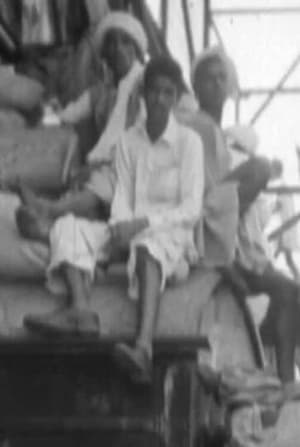
Millions of Muslims flee to Lahore in the newly created state of Pakistan, prompted by the partition of British India.
After 11 strangers unite to help a gay youth escape life-threatening violence in Uganda, the unexpected pandemic and conflicting opinions over his best interests test the limits of their commitment and jeopardize his fresh start in Canada.
A U.S. Marine plots a terrorist attack on a small-town American mosque, but his plan takes an unexpected turn when he comes face to face with the people he sets out to kill.
Successful model Samira Hashi makes an emotional return to Somalia, one of the most dangerous places in the world and the place she was born. Civil war broke out in 1991, 10 days after Samira's birth, but two years later her family managed to flee the country and she grew up in the UK.Now, as Samira and the war both turn 21, she's going back for the first time to visit the people and places she left behind. The contrast with her safe and glamorous life in London could not be starker as she experiences firsthand the war's effect on a generation of young people growing up in conflict.
After 30 years of conspiracy theories and myth making, this film uncovers the story of the CIA's most extensive clandestine operation in the history of modern warfare: The Secret War in Laos, which was conducted alongside the Vietnam War from 1964 -1973. While the world's attention was caught by the conflict in Vietnam, the CIA built the busiest military airport in the world in neighboring and neutral Laos and recruited humanitarian aid personnel, Special Forces agents and civilian pilots to undertake what would become the most effective operation of counterinsurgency warfare. As the conflict in Vietnam grew, the objective in Laos changed from a cost effective low-key involvement to save the country from becoming communist into an all-out air war to cut the Ho Chi Minh Trail and bomb Laos back into the Stone Age that it had never really left in the first place. Conventional bombs equivalent to the destructive power of 20 Hiroshima-type weapons fell on Laos each year - 2 million tons
Poignant postwar appeal for Britain’s Jewry to support orphaned Jewish children rescued from Europe.
Journey with us to Athens, where the same Gospel that Paul preached here in the first century is still mighty to save. The Athens of Paul’s day was a city full of idols and empty philosophies. In our day—beyond the postcard scenes of the ancient Acropolis—Athens is a city roiled with a flood of desperately needy refugees, street violence, and trafficking in human misery. Into this maw of need, God has sent His people to serve with compassion and to speak the Gospel with clarity and courage—whether in a mosque or a crack house. “Radical Rescue Work” opens a window into the lives of these faithful servants of the Risen Christ as they run to—not from—the cries in the darkness.
It is a daring idea: to grow food from old mattresses in a desolate camp at the edge of a war zone. When a refugee scientist meets two quirky professors, they must confront their own catastrophes - and make a garden grow. Short film now streaming on Waterbear.com.
A Palestinian grain miller in a Jordanian refugee camp safeguards her culture and shares her people’s history through food prepared with love, longing, and sumud—the Palestinian spirit of steadfastness.
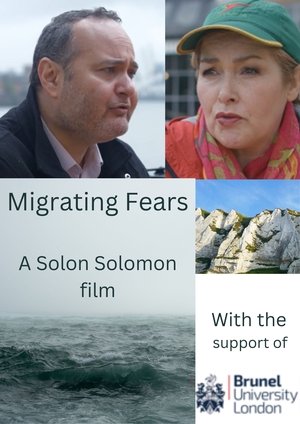
'Migrating Fears' is a docu-drama on the sentiments around migration, both from the side of the refugees and asylum-seekers as well as from the perspective of these segments of society that appear hesitant towards migration. Trying to understand 'migrating fears', the film follows Solon Solomon, a law professor, in his London quests and interactions with refugees, politicians and psychologists, as he comes to see the fear in the refugees' eyes and the worries of the locals, ultimately creating dialogues between the two groups.