During the last forty years, the photographer Sebastião Salgado has been travelling through the continents, in the footsteps of an ever-changing humanity. He has witnessed the major events of our recent history: international conflicts, starvations and exodus… He is now embarking on the discovery of pristine territories, of the wild fauna and flora, of grandiose landscapes: a huge photographic project which is a tribute to the planet's beauty. Salgado's life and work are revealed to us by his son, Juliano, who went with him during his last journeys, and by Wim Wenders, a photographer himself.
Johnny Knoxville and his band of maniacs perform a variety of stunts and gross-out gags on the big screen for the first time. They wander around Japan in panda outfits, wreak havoc on a once civilized golf course, they even do stunts involving LIVE alligators, and so on.
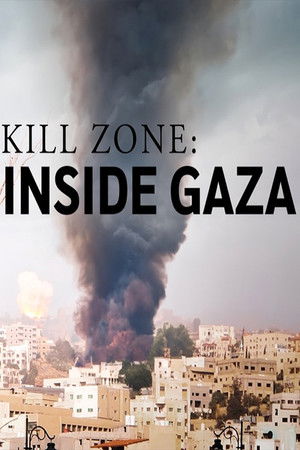
Going behind the usual images of war-torn Gaza, Swiss documentarian Nicolas Wadimoff offers this look at how people survive despite constant threat of danger. Children still play, rappers still create music and families still love one another. In addition to visiting the United Nations Food Distribution Center, Wadimoff films at a derelict amusement park and profiles the DARG TeaM rappers, whose politically charged music proclaims their defiance.
The Museu da Pessoa challenged filmmakers to create films based on the many interviews that are part of the site's collection, and the result is an essay based on the interview with Francisco Edmisio da Silva, who migrated to São Paulo full of dreams and found a new reality.
In 2014, during a trip, American Tim Bruns discovered cliffs in a small village five minutes north of Ramallah in Palestine and got to work equipping all the easy routes, then setting up climbing routes so that we can start teaching people how to climb. Bruns and Harris also opened Wadi Climbing, the first indoor climbing gym in Palestine. Today, gathered in the conflict-torn hills of Palestine, a diverse team of Bedouins, activists and urban professionals have embraced climbing as a much-needed respite from the burden of Israeli occupation. American writer and climber Andrew Bisharat visits the West Bank to explore his own roots and the power of climbing to transform lives. This documentary is part of the Reel Rock 17 series released in 2023.
The story of the Israeli military assault on Gaza. Seen through the eyes of children, journalists and doctors, Dispatches takes an unflinching look at the horrific challenges and heartbreaking loss. Made by 12 Palestinian film-makers who risked their lives to depict the ongoing assault, this documentary confronts us with the loss and suffering of people whose gaze we have met.
Pour l'honneur de Gaza, des déplacés sous les tentes
A young filmmaker follows the transformative journey of a former gang member incarcerated since the 80s, when an act of compassion for the people of Gaza amidst prison walls sparks a viral movement of solidarity and hope.
Talking about the story of the Gaza genocide with other images and other words is possible. The discovery of some slides in a high school in Catania is the starting point for analyzing the origins of Israel's military occupation of Gaza by resorting to the etymology of the words used to describe what expressions like "terrorist" or "military occupation" mean, while the drawings of Amos, an Israeli child who portrays his imaginary friend Anya under the worried gaze of the babysitter May Golan, point out that most horror stories have deep roots in everyday life. Invention and black humor try to overcome the (denied) reality of an apartheid and a normalized genocide, exposed and simultaneously removed.
Gaza Ghetto: Portrait of a Family, 1948 – 1984 is a documentary film about the life of a Palestinian family living in the Jabalia refugee camp. The film, created by Joan Mandell, Pea Holmquist, and Pierre Bjorklund in 1984 is believed to be the first documentary ever made in Gaza. The film features Ariel Sharon, Binyamin Ben-Eliezer and soldiers on patrol "candidly discuss[ing] their responsibilities." The film follows a refugee family from the Gaza Strip who visit the site of their former village, now a Jewish town in Israel. As the grandfather and great-grandfather point out an orchard and sycamore fig that belonged to Muhammed Ayyub and Uncle Khalil, an Israeli resident appears and tells them to leave, claiming they need a permit to be there. The mother tells him that, "We work in Jaffa and Tel Aviv and that's not forbidden," to which he replies, "Here it's forbidden."
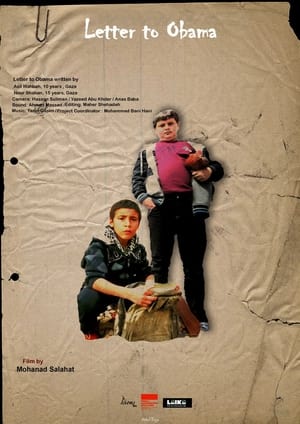
Two sons from the beach refugee camp for Palestinians in the Gaza Strip decide to correspond with US President Barack Obama on his Facebook page. They ask him, as president of the United States, to intervene and lift the years-long blockade, inviting him and his wife to visit Gaza and watch the suffering of people there. But they don’t receive a response from him, deciding to use a small video camera to record a very angry video message addressed to Barack Obama from the campers
BBC look at whether or not Snuff films really exist. Snuff as defined by the FBI and the film is a film that shows some one being killed which was produced for gratification of the viewer who pays to see the film. The film takes a look at the start of the rumors of snuff films, the latching on by exploitation producers and how the ability of anyone to shoot video with things such as mobile phones and put them up on the Internet have made the existence of a such a film likely. A very good very reasoned film that isn't really that graphic (at least with actual footage) the film looks at the subject with filmmakers and law enforcement officials and relates the chilling tales of the people who actually set out to make a film for themselves. The key element is the profit motive since its clear that killers and other people have been using home video equipment to record their nasty deeds, we just don't know if money has changed hands. A film to make you think.
O Sacrifício do Quarto Anjo
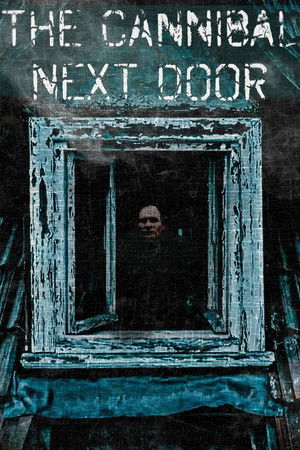
The shocking story of one of the world's most notorious cannibals, Armin Meiwes, who found a willing victim online who agreed to be dismembered and eaten for sexual pleasure. Told by those closest to the case, the documentary discusses how the killer and the victim's lives led to their fatal night together
In Killing Gaza, independent journalists Max Blumenthal and Dan Cohen documented Israel’s 2014 war on Gaza. Yet this film is much more than a documentary about Palestinian resilience and suffering. It is a chilling visual document of war crimes committed by the Israeli military, featuring direct testimony and evidence from the survivors.
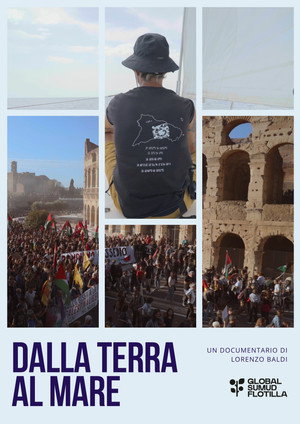
The documentary explores the intimate and political story of the participants of the Global Sumud Flotilla, a civilian and non-violent mission that in September 2025 attempted to bring humanitarian aid to Gaza, amid the siege and genocide perpetrated by Israel. From the harbour to departure, the film recounts the preparation of the largest civilian humanitarian mission by sea organised for Palestine. Alongside the mission, the Italian mobilisations that emerged around the call “Blocchiamo tutto” (Let's block everything), launched by the dockworkers involved in the Flotilla, come to light. Amid drone attacks, demonstrations, rallies and institutional promises withdrawn when needed, the journey becomes a concrete metaphor for the will of peoples to overcome the limits and hypocrisies of the international community.
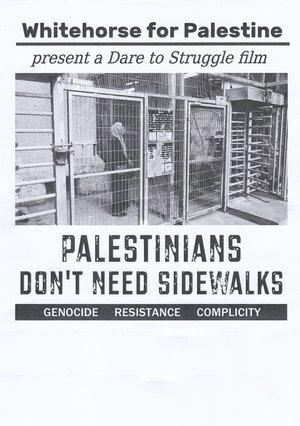
A raw journey through occupied West Bank and East Jerusalem, this film profiles Palestinian life under Israeli aggression, exposing Australia’s complicity and media bias.
On an expedition through Latin America, Italian General Italo Balbo made the Atlantic crossing with his seaplane squadron, which left Boloma, entered Brazilian territory via Natal and now ended its journey in the capital Rio de Janeiro. Arrival of the fascist squadron at Enseada de Botafogo. People, many in boats, applaud the descent of the seaplanes. A group of officers searches the soldiers in profile. Italo Balbo, Ambassador Vittorio Cerrutti and Royal Consul Onorevole Mammalella watch the parade of troops. A group of officers with Col. Magdalena, "the intrepid hero of several aerial feats". At the Catete Palace, Balbo and Cerrutti are received by the President of the Provisional Government, Getúlio Vargas, and his ministers. The Italian delegation leaves the Catete Palace.
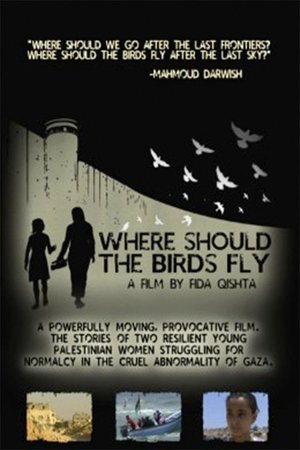
The film tells the compelling and moving stories of two remarkable young women living in Gaza and the struggle of Gazans trying to maintain their humanity and humor while hoping to find some sense of normality in a world that is anything but normal.
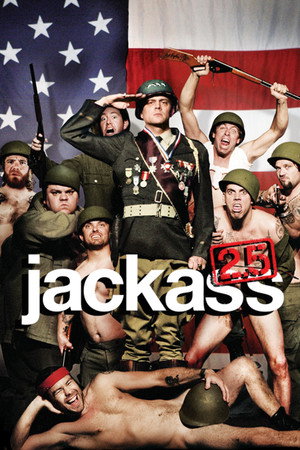
The crew have now set off to finish what as left over from Jackass 2.0, and in this version they have Wee Man use a 'pee' gun on themselves, having a mini motor bike fracas in the grocery mall, a sperm test, a portly crew member disguised as King Kong, as well as include three episodes of their hilarious adventures in India.