Det danske Kongehus
Danish documentary about the relationship between Queen Magrethe II and the prime ministers.
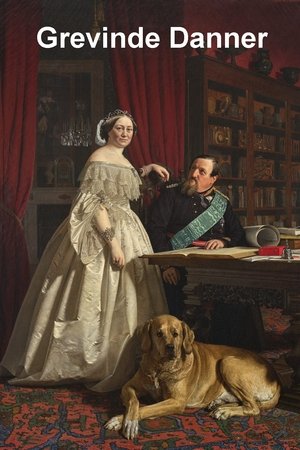
Grevinde Danner
Danish journalist Mads Brügger goes undercover as a Liberian Ambassador to embark on a dangerous yet hysterical journey to uncover the blood diamond trade in Africa.
Ghitas hemmeligheder
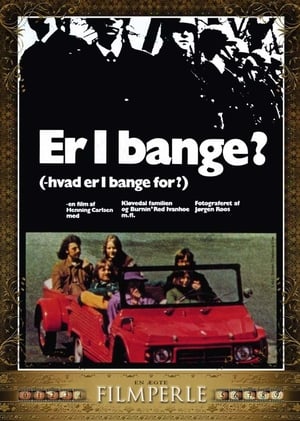
This documentary examines a feature of Danish life in the late '60s and early '70s: the political commune. In a series of stiff and unrevealing interviews with members of the Kloevedal Commune, "Mao's Pleasure," director Carlssen seeks to discover why they have chosen to live communally. Turning the tables on the director, members of the commune also interview people who live ordinary, middle-class lives, ostensibly to find out why they chose their "lifestyles." Other footage concerns the Annisse Commune, a less radical organization which predates the Kloevedal Commune by decades. A highlight of the film is an interview with a very old woman who lives with and talks chiefly with her cats.
An overview of the art collection of Richard Winther.
It is not in the cards that young Anne Marie Christensen from Fanø ends up as one of the most notorious Danish war criminals from World War II. Nevertheless, she is recruited by the Gestapo under the name Jenny Holm during the occupation. She turns out to have agent skills beyond the usual. It is believed that she is responsible for many hundreds of arrests of enemies of Nazism. She is so skilled that she is recruited by Danish and British intelligence in the years just after the war, where she uses her skills to catch Nazi war criminals in Germany. Jenny Holm disappears into oblivion - until a day when a resourceful writer finds out where Jenny Holm ends her days. The trail ends surprisingly, at a celebrated alternative therapist with electric hands on Gammel Kongevej
Børsen - Danmarkshistorie i flammer
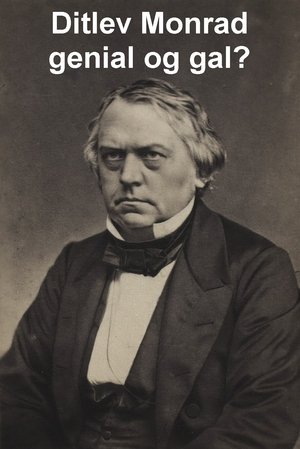
Ditlev Monrad - genial og gal
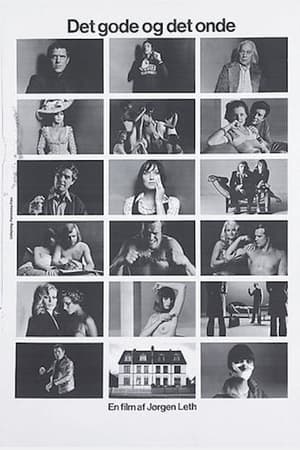
Jørgen Leth can squeeze poetry from a stone and wit from dust, and he can find love where the milk of human kindness runs dry. In a series of tableaux of Life in Denmark, he carries absurdism to a happy extreme. To act out his minuscule non-dramas, he uses a motley crew of professional actors like Ghita Nørby and Claus Nissen, writer Dan Turéll plus a snake charmer, a bicycle racer and a circus queen.
Tells the life story of Danish author Karen Blixen, who at the beginning of the 20th century moved to Africa to build a new life for herself. The film is based on her 1937 autobiographical novel.
Count Axel is a comedy that takes place somewhere in the Nordic countries in 1783. It's a classic comedy about mixed identities, with strong elements of contemporary humour and satire.
A boy explores the hidden depths of his bathtub in a grey world dominated by boring adults.
Karlskov is a self made, successful owner of a large electronics factory, has a wife and five children. They live the good, privileged upper-class life on Strandvejen north of Copenhagen when the Nazis occupy Denmark in April 1940. Karl struggles to continue production at the factory, but to protect his family and employees he reluctantly begins to produce for the German market. It brings him into a controversial collaboration with the occupying power and causes painful breaks in the family.
The old comrades are called up for three weeks of autumn maneuvers. They are usually more interested in beer, girls, and cheerful music, but Sergeant Vældegaard is determined to scrape the civilian rust off the "boys." Their old friends from their days as recruits have remained in the system as platoon leaders and sergeants, respectively, but that does not dampen the fun. In the heat of battle, the schoolteacher finds time to flirt with his Lotte Corps colleague Birthe.
The story centers around the busybody housewives of a modern Danish working class neighborhood of the 1960's. A remake of the Norwegian comedy film from 1959.
A group of residents in the Copenhagen suburb of Solvænget decide to buy a farm in order to become self-sufficient in vegetables and other goodies. Unfortunately, farm life turns out to be much more strenuous and difficult than the small group of city dwellers had imagined.
At their 25th high-school anniversary some bourgeois citizens remember their time in school as a happy one. In reality it was quite the contrary. The school was a madhouse in which the teachers, especially Blomme, tormented the students. As a result one of them became a murderer.
Tony has recently been released from a sentence for violent behaviour. He promises to improve his ways and is finally granted a few hours alone with his two children. They celebrate the reunion by going to the movies to see a new film by the famous, critically acclaimed Danish director Claus Volter. But the film is not the masterpiece it is said to be on the poster; the children are crying and Tony cannot get the money back he spent on tickets and candy. Tony does not give up; he seeks out Claus Volter in order to get an explanation and a refund. It is however easier said than done to get money out of a world-renowned filmmaker.