Sanssouci, Friedrichs Paradies
As the seasons turn, director Ava Ferrera follows a new generation rediscovering the fading art of craft cider-making. Raising intimate questions about heritage, cultural memory, and what we choose to carry forward. A journey of rediscovery, tradition and history.
This two-part documentary reveals how al-Qaeda used Bosnia as a training-ground, money-laundering centre and forward operating base during the brutal civil war of 1992-95. The veterans went on to attack New York, Washington DC, London, Madrid, Mombasa and Bali. The story also reveals how the people of Srebrenica were betrayed by the Sarajevo government in advance of the massacres of July 1995.
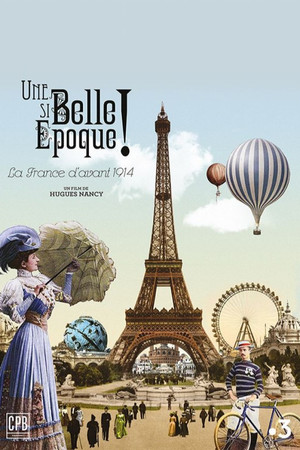
Les Trésors du Paris de la Belle Époque
Two 10-year-old girls, one Palestinian and one Israeli, recount their daily lives under bombardment in the West Bank. Two poignant perspectives on the same conflict.
French documentary on Walt Disney's relationship with France through his personal and professional life.
When an academic unearths a forgotten history, residents of the small township of Pukekohe, including kaumātua who have never told their personal stories before, confront its deep and dark racist past.
Gdańsk, Poland, September 1980. Lech Wałęsa and other Lenin shipyard workers found Solidarność (Solidarity), the first independent trade union behind the Iron Curtain. The long and hard battle to bring down communist dictatorship has begun.
It is estimated that the mythical city of Atlantis was swept away by a Tsunami in 9600 BC, vanquished from existence - but recent findings of ancient maps, monuments and submerged artifacts indicate that the Lost Kingdom may in fact have existed. The recent discovery of mummies, an underwater Stonehenge, monoliths, ancient drawings and much, much more could provide confirmation of one of Mankind's oldest mysteries.
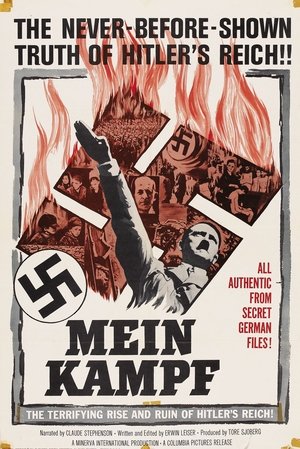
The documentary of the Nuremberg War Trials of 21 Nazi dignitaries held after World War II.
Louis XIV's ship La Lune was wrecked off Toulon in November 1664. The ship was returning from an expedition to the Barbary Coast with nearly one thousand people on board, simple seamen or nobles of the highest rank. Discovered by a submarine in 1993, the wreck lies in 90 metres of water. In a state of magificent preservation, like some underwater Pompei, she will, starting in 2012, be the subject of an exceptional archeological investigation, bringing together history and robotics, the expertise of archeologists and the passion for the deep.
During World War II, the photographer Francisco Boix and other Spanish Republican prisoners of the Mauthausen concentration camp, where 120,000 people died, managed not only to survive their indescribable experience, but also, after the war, to reveal to the world what really happened in that hell, saving from destruction thousands of official photographs taken by the SS.
September 3rd, 1939. Britain and France declare war on Nazi Germany, only two days after the Wehrmacht invades Poland. This day, the sad date when the fate of the world changed forever, the Phoney War began: eight months of uncertainty, preparations, evacuations and skirmishes.
Half-timbered houses, storks, wine, sauerkraut, traditional headdresses, the Alsatian accent: these images and clichés of Alsace occupy the imagination of almost all French people. Few other regions can boast such a charming and popular heritage. But behind this apparent prosperity and love of a job well done lies a more painful history. Ravaged by three wars in less than a century, Alsace saw its inhabitants forced to change nationality four times during a single lifetime. A tormented, extraordinary destiny, little known to the rest of the country.
Île de Pâques : comment son peuple s'est effondré
In one of those wonderful coincidences of history, lumière, the French word for “light,” was also the last name of brothers Auguste and Louis, whose brilliant invention, the cinematograph, helped to inaugurate the most beloved art form of the last 130 years. Institute Lumière director Thierry Frémaux uses Lumière, Le Cinema! to guide the viewer through over a hundred shorts—some famous, some forgotten, some never before seen—directed by Lumière and company. In the process, Frémaux illuminates how the brothers employed the camera as a creative instrument as they (and their operators) mastered framing, staging, and subject selection for quotidian and exotic microdocumentaries as well as the first ever fictional motion pictures. The result is not only a glorious re(telling) of the genesis of cinema but a profound meditation on the beautiful world captured—and the mysterious world imagined—by the Lumières.
1941, dernier bateau pour l'exil
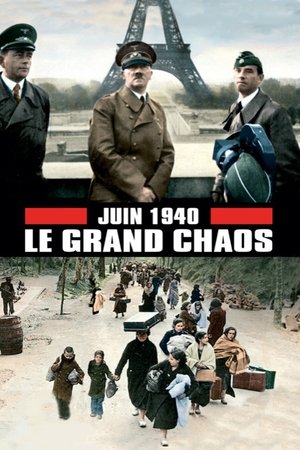
From May 10, 1940, France is living one of the worst tragedies of it history. In a few weeks, the country folds, and then collapsed in facing the attack of the Nazi Germany. On June 1940, each day is a tragedy. For the first time, thanks to historic revelations, and to numerous never seen before images and documents and reenacted situations of the time, this film recounts the incredible stories of those men and women trapped in the torment of this great chaos.
Zahi Hawass, an Egyptian archaeologist, has been excavating the ancient necropolis of Saqqara, south of Cairo, for several decades. He hopes to discover the tomb of Imhotep, the architect of humanity’s first pyramid: Djoser’s Step Pyramid. Together with his team, he will unearth fabulous tombs and uncover the secrets of Egyptian mummies.
The moral dimension of humanity's interaction with nonhuman animals and the industries that profit from their exploitation, as informed by world religions. A historical explanation of how the current global situation came to be.