In May 1974, the Israeli Air Force carried out an extermination operation against the Palestinian refugee camp Nabatiyeh. With this as a starting point, it is reviewed how the last 50 years of Zionist colonization of Palestine have partly led to the establishment of the state of Israel, partly to the expulsion of a people, the Palestinians, from their land. The film shows scenes of daily life in Palestinian refugee camps. We hear various of the inhabitants talk about their desire to return to their country, and we follow how the resistance movement works to free women from their traditional backward role. At the same time, the emergence of the armed resistance struggle is analysed, and the significance of the latest military technological developments for guerilla wars in the 3rd world is explained.
Cambodian refugee Ted Ngoy builds a multi-million dollar empire by baking America's favourite pastry: the doughnut.
In a contemplative coming of age portrait, PINBALL follows Yosef, a spirited athlete, in Louisville, Kentucky as he dives into the memories of his journey from Iraq to America and what it means to chase his dreams in the shadow of a war that displaced his family from their Iraqi homeland.
138 Pounds in My Pocket: The Story of Hind Al-Husseini - Women, War and Welfare in Jerusalem
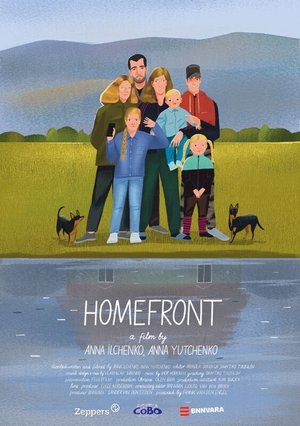
A family with five children flees the war raging in their home village on the Russian border. They end up in Mshanets, a farming village on the other side of the country, remote and unknown. Here the family starts building a new home. At the same time, two documentary makers come to the village, looking for a story. In the Lymar family they find the ideal characters for their film. But one day, when the renovation of their house is almost finished, the family disappears. The filmmakers go in search of their characters and along the way they try to find an answer to the question: what does a person need to feel at home?
Les enfants de la lanterne magique
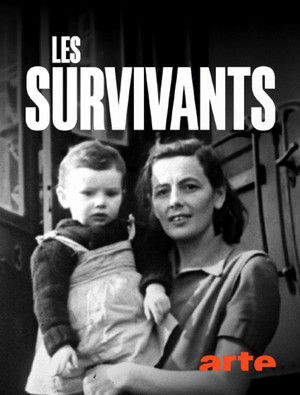
Les survivants, l'impossible départ après la Shoah
12-year-old Dyab is a Kurdish Yazidi boy living at Arbat refugee camp, after the horrendous attacks by the Islamic States on their villages at Shingal Mountains (Sinjar). However, Dyab’s dream is, to become a filmmaker and actor and tell the stories and sufferings of his people to the outside world.
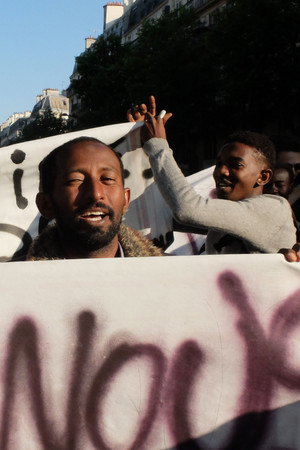
La Chapelle neighbourhood, Paris. Hundreds of exiled people from East Africa survive on the streets, chased violently by the police, yet seeking to defend their rights as asylum seekers. Some months later, having finally obtained their rightful housing, two Sudanese young men return to the sites where they first landed and talk about their arrival in Paris during this agitation.
"We, the Yazidis, became doves. Doves without wings", says Hedil. Stranded with her family in a Yazidi refugee camp in Eastern Turkey, she reminisces about her former life in Northern Iraq and recounts the horrors of her escape. The film follows two families' attempts at normality in an otherwise miserable place. (ML)
An Iranian filmmaker participates in a series of video calls with a young Palestinian photojournalist who describes her life confined in Gaza during the current regional conflict.
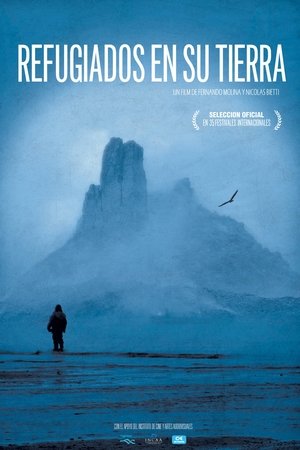
Refugees in Their Own Land is an intimate portrait of a man and what belongs to him, an inner struggle forged by the forces of nature.
In 1963, Rosans, a village in the Hautes-Alpes region depopulated by the rural exodus, welcomed Harkis (military soldiers) forced to leave Algeria for supporting France during the Algerian War. Around thirty families settled in a camp below Rosans. Nearly half a century after their arrival, first- and second-generation Harkis and native Rosanais recount their experiences of this culture clash, often painful, sometimes happy. Language barriers, religious differences, living in barracks for 14 years, and unemployment were all obstacles to overcome in order to be accepted and then achieve mutual enrichment. Enriched with archive footage to explain the historical context of the time, the film seeks above all to express feelings and unspoken words.
A tour of the small kibbutz Gadot, whose location, on the banks of the pastoral Jordan River, demands its residents be alert at all times to bombings by the Syrian army. However, the life of the kibbutz is not harmed – the children play, the youth of the kibbutz dance, and the work in the orchards and the farm does not stop.
Interviews with Palestinians living in Lebanese refugee camps, some of it shot in Sabra and Shatila before the massacre.
In the Gaza refugee camp of Jerash, Palestinians face the critical issue of lacking identification documents. This situation undermines their rights and hinders access to essential services and opportunities.
A cell phone was the only thing that kept Yonas, an Eritrean refugee, connected to Jérôme, the French journalist who wanted to tell his story. They met in Libya in 2019, in the abyss of a detention center. Yonas managed to escape and attempted several times to cross the Mediterranean. Like many others who jump from one hell to another, Yonas's only option was to flee forward, and what lay before him was a small boat. Yonas's News chronicles the epic journey in which his life was at stake, summarized in the WhatsApp and voice messages, photos, and videos he was able to exchange with Jérôme. Jérôme Tubiana, journalist, researcher, and member of Doctors Without Borders, has visited Libya five times between 2018 and 2020.
Bobbing around on Mediterranean waters aboard the Ocean Viking, aid workers from the French relief service SOS Méditerranée gaze at the horizon. Is that a rubber dinghy in the distance, or is it garbage? The organization sails up and down the Libyan coast looking to pick up refugees in boats. On board is a 30-strong team ready to offer help and support refugees with their asylum applications.
Refuge(e) traces the incredible journey of two refugees, Alpha and Zeferino. Each fled violent threats to their lives in their home countries and presented themselves at the US border asking for political asylum, only to be incarcerated in a for-profit prison for months on end without having committed any crime. Thousands more like them can't tell their stories.
Eighteen-year-old Shahnura is about to graduate from high school. Her mother spends hours at the dining table while Shahnura is at school, wondering if her mother, sister, and brother are still alive. Living in Germany without a passport or nationality, she listens to the harrowing stories of her mother and two friends who have experienced imprisonment and re-education camps in China. These accounts reveal the suffering, human rights abuses, forced adoptions, and the grim reality of the camps where the predominantly Muslim Turkic Uyghurs are tortured and mistreated.