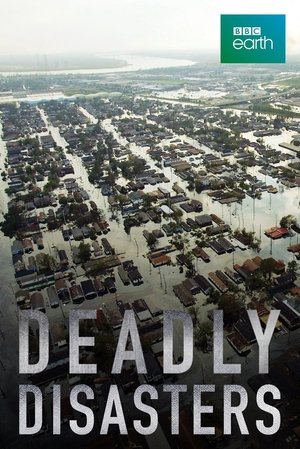
Deadly Disasters explores some of the most terrifying and destructive natural disasters to ever strike the planet, uncovering fascinating new details and packed with jaw-dropping footage.
The catastrophic floods of New York, Bangkok and New-Orleans have shed light on the extreme vulnerability of more than 130 coastal cities faced with the violence of the sea. The mega-cities are threatened by a series of unusual phenomena: a surprising subsidence of soils, an unexplained rising of the level of the sea in some parts of the world, an increase in the frequency of extreme climatic events and exponential urbanization. Considering that science is capable of anticipating dangers and of suggesting protections, why do such disasters occur so often? Can they be avoided?
Natural and man-made catastrophes retold by eyewitnesses and dramatic reconstructions.
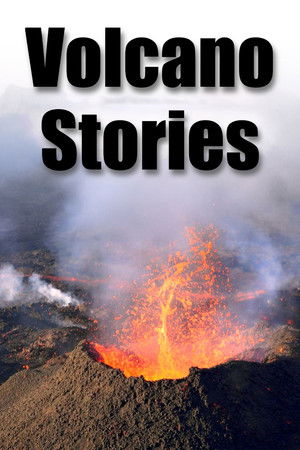
No two volcanoes are alike; each one has its own distinctive landscape, climate, and geological context. Just as unique are the people we meet along the way who help us comprehend how greatly our planet – and our lives – have been shaped by volcanic phenomena. For the scientific aspect of each episode, we explore the very diverse range of questions raised by volcanic phenomena in such varied fields as earth sciences, climatology, biodiversity, oceanography, geography, agronomics, and archaeology. The cultural part of the show delves into mythology, religion, philosophy, folk and artistic traditions, cooking, and ways of life.
Dr Xand van Tulleken and Raksha Dave tell the dramatic story of the Boxing Day Tsunami, which killed more than 250,000 people.
The definitive story of the deadly 2004 tsunami as it travels from country to country, with unseen archive video and untold stories of survival.
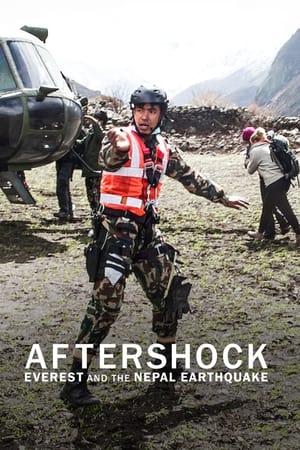
After a terrible earthquake in Nepal, locals and tourists join forces to face destruction in this gripping docuseries.
First-hand accounts of the planet's fiercest storms.
Storm chasers, survivors and first responders recount their harrowing experiences with volcanoes, tornadoes, hurricanes and earthquakes.
A series of looks into extraordinary natural disasters and their impact on the people around them.
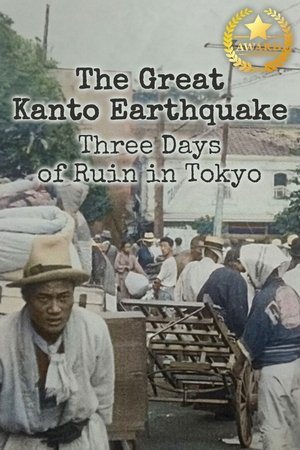
A century after the Great Kanto Earthquake, previously unknown details have been extracted from newly 8K remastered and colorized footage, vividly demonstrating how Tokyo citizens faced the disaster.
Japan has a long history of natural disasters. BOSAI explores how to overcome them and save lives with the power of science.
From the first dinosaurs to the last, this epic documentary series examines their 165 million years on Earth and the forces that shaped their evolution.
Following the biggest archaeological excavation in Pompeii for a generation. Exciting discoveries and fresco-inspired animations tell the story of life in Pompeii AD 79.
What Happened Next?
The untold human stories behind some of the world’s greatest disasters.
Superstorm is a three-part British docudrama miniseries written and directed by Julian Simpson, about a group of scientists that try to divert and weaken hurricanes using cloud seeding. Superstorm originally aired on BBC One for a period of three weeks, totaling three 59 minute episodes, from 15 April 2007 to 29 April 2007. Each episode was followed by a half-hour documentary on BBC Two on extreme weather monitoring and forecasting, called The Science of Superstorms. The series was also aired on the Discovery Channel in the U.S. and Canada during the summer of 2007. Superstorm is a co-production of BBC Worldwide, Discovery Channel and ProSieben, in association with M6 and NHK. Ailsa Orr and Michael Mosley, who made also Supervolcano, are the executive producers for BBC, while Jack E. Smith is the executive producer for Discovery Channel. The miniseries was released on DVD in the United Kingdom on 2 July 2007.
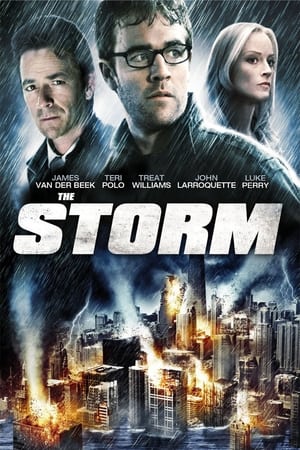
The Storm is a 2009 American science fiction disaster miniseries directed by Bradford May. Based on a previous teleplay by Matthew Chernov and David Rosiak, it was written by David Abramowitz and Dennis A. Pratt and revolves around a weather creation system developed by the Atmospheric Research Institute that threatens life on Earth when deployed by the military. However, while scientist Dr. Jonathan Kirk, Danni Wilson, and detectives Devon Williams and Stilman attempt to save the world, the former is hunted by hitmen. The first part of the film was broadcast on the NBC network July 26, 2009. The second part was broadcast on August 2, 2009.
Toko Ikuta lost her parents in a car accident at the age of 3. Afterwards, her uncle, who ran a barbershop in Morioka, raised her and she had a happy childhood. Toko Ikuta was active as a local idol and she dreamed of becoming an actress. At the age of 19, she is set to take an audition in Tokyo. The day before her audition, on March 11, 2011, the great Tohoku earthquake and tsunami hits Japan. In the autumn of 2011, Toko Ikuta works at a cafe. She goes with her Korean co-worker Han Yoo-Ri to do volunteer work in Kesennuma as the area recovers from the devastating tsunami. There, Toko Ikuta meets Kiyotaka Shimizu who is a university student from Tokyo and a member of a student volunteer group. While spending time together in Kesennuma, Toko Ikuta and Kiyotaka Shimizu develop feelings for each other.
A medical team from the mainland of China arrived at an island in the South Pacific Ocean in order to complete their mission. But they were met with a rare natural disaster. Thus, their race against time begins as they try to complete their rescue mission. But, not only do they need to complete their rescue mission, they'll soon reveal a sinister plot underneath the surface.