The film tells the story of Pir Sultan Abdal, a famous folk poet in Turkey, who criticized some Ottoman governors, Hizir Pasha in particular and as a result was hung by him.
The life of the revered 18th-century Armenian poet and musician Sayat-Nova. Portraying events in the life of the artist from childhood up to his death, the movie addresses in particular his relationships with women, including his muse. The production tells Sayat-Nova's dramatic story by using both his poems and largely still camerawork, creating a work hailed as revolutionary by Mikhail Vartanov.
'La Mamma Morta’ is an aria from the opera Andrea Chenier that is also well-known for its use in a memorable sequence in the Oscar award-winning Philadelphia. Thirty years on, this new short film from WNO includes a brand-new recording of the aria featured alongside recreated scenes that better encapsulate the perspectives of people living with HIV today. To mark World AIDS Day 2023, the Welsh National Orchestra released a special new version of La mamma morta, featuring WNO Orchestra, soprano Camilla Roberts and Nathaniel Hall from Channel 4’s It’s a Sin. Released as part of the last rendition in the Three Letters project, this film aims to tackle societal stigma around HIV.
This film is an attempt to disclose if Raul Brandão has left any trace, in Nespereira, Gumarães.
Documentary portrait of the poet Karla Erbová is a confession of a creative personality who, despite many twists and turns in life, remains true to her ideals and moral values. We witness the final year of the author's life, during which, even at the age of ninety, she continues to engage in public appearances and, above all, actively works on her craft. Through letters that Erbová wrote to her friend, the film offers an intimate, often self-deprecating reflection on old age, solitude, and relationships with loved ones, as well as an indomitable faith in poetry. The film "Ulita" not only highlights the pivotal moments of her life but also serves as a sociological exploration of the lives of the oldest generation.
A series of bawdy and satirical episodes written during the reign of the emperor Nero and set in imperial Rome. Like the more famous version made by Federico Fellini, an adaptation of Petronius' Satyricon.
After World War II a group of young writers, outsiders and friends who were disillusioned by the pursuit of the American dream met in New York City. Associated through mutual friendships, these cultural dissidents looked for new ways and means to express themselves. Soon their writings found an audience and the American media took notice, dubbing them the Beat Generation. Members of this group included writers Jack Kerouac, William Burroughs, Allen Ginsberg. a trinity that would ultimately influence the works of others during that era, including the "hippie" movement of the '60s. In this 55-minute video narrated by Allen Ginsberg, members of the Beat Generation (including the aforementioned Burroughs, Anne Waldman, Peter Orlovsky, Amiri Baraka, Diane Di Prima, and Timothy Leary) are reunited at Naropa University in Boulder, CO during the late 1970's to share their works and influence a new generation of young American bohemians.
Five gay Black men who are HIV-positive discuss how they are battling the double stigmas surrounding their infection and homosexuality.
Dania is 21 years old and grew up in a Christian community in the Faroe Islands’ Bible belt. She has just moved to Tórshavn and is seeing Trygvi, a hip-hop artist and poet locally known as Silvurdrongur (Silver Kid). He comes from a secular family and writes poems and texts about the shadow sides of humanity. Dania herself sings in a Christian band but is fascinated by Trygvi’s courage to write brutally honest lyrics. As she tries to find her place in the world and understand herself, she starts to write more personal texts. Her writings develop into a collection of critical poems called ‘Skál’ (‘Cheers’), about the double life that she and other youths must live in the conservative Christian world.
Arthur Rimbaud : Six mois en enfer
In Busto of a poet, the word is the real protagonist: the verses, reflections and texts of José Ángel Valente take shape through the poet's gaze around the lands, landscapes and monuments of Navarre, in a deep and magical journey. Image, word, music and silence converge and harmonize.
“I love poetry because it makes me feel like my mind expands.” In Regard Silence, that's the very first sentence expressed—in sign language of course. Watching the poems signed by deaf people in this film has a similarly mind-expanding effect. That’s because sign language—the Mexican version in this case—is a very different means of communication than written or spoken language.
Set in the backdrop of the picturesque Munnar, it tells the story of Iyob, a slave-turned-master.
A&E's long-running biography series takes a look at one of the 20th century's most emblematic figures, Ernest Hemingway. Through a collection of still photography, narration by granddaughter Mariel Hemingway, commentary from author A.E. Hotchner and publisher Charles Scribner, and readings from Hemingway's writing (including personal letters and unpublished works) by Scott Glenn, the film takes us from the man's Midwestern childhood roots up through the tragic suicide that serves as a bittersweet exclamation on what is otherwise considered to be a life of profound accomplishment.
‘Death Sounds a Quiet Gong’ was originally screened at Village Works (12 St. Marks Place, New York City, NY) on October 24, 2025. The poem was first published in the inaugural release of biannual literary journal the Tough Poets Review.
1936. Giovanni Comini, the youngest Federal in Fascist Italy, is summoned to Rome for a delicate mission: to surveil aging national poet Gabriele D'Annunzio, whose increasingly restless behavior Mussolini fears could damage his alliance with Nazi Germany. However, after spending time with D'Annunzio, Comini finds himself torn between loyalty to the Party and his fascination with the poet, who will put his burgeoning career at risk.
The life and literature of Mato Grosso do Sul poet Manoel de Barros. Alternating sequences of interviews with the poet, verses from his poetry, and statements of connoisseurs of his literature, the film portrays a revealing panel of the author's language. Manoel de Barros, age 91, with some 20 books published, lives in Campo Grande. Acknowledged, the winner of several literary prizes, he is the Brazilian writer who accounts for the greatest sale in poetry in Brazil.
Traces the Beats from Allen Ginsberg and Jack Kerouac's meeting in 1944 at Columbia University to the deaths of Ginsberg and William S. Burroughs in 1997. Three actors provide dramatic interpretations of the work of these three writers, and the film chronicles their friendships, their arrival into American consciousness, their travels, frequent parodies, Kerouac's death, and Ginsberg's politicization. Their movement connects with bebop, John Cage's music, abstract expressionism, and living theater. In recent interviews, Ginsberg, Burroughs, Kesey, Ferlinghetti, Mailer, Jerry Garcia, Tom Hayden, Gary Snyder, Ed Sanders, and others measure the Beats' meaning and impact.
Alexandre Dumas, at the height of his career, takes Auguste Maquet, his chief literary collaborator or 'ghost writer' ten years his junior, to meet a young unknown admirer, Charlotte Desrives. The two men are at the summit of their artistic collaboration for they have just published "The Count of Monte Christo", "Queen Margot" and "The Three Musketeers". If it's Maquet who writes the majority of the texts, both the honours and fame go to Dumas.
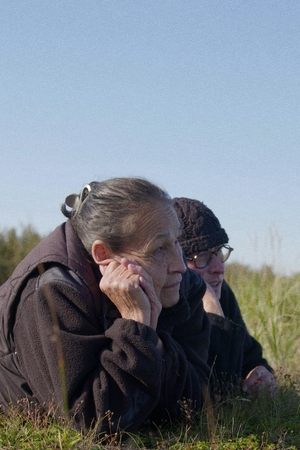
Lesley, in her 80s, and teenager Jay deliver spoken word poetry expressing their sense of belonging, home, and their vision for the future of the area where they live. One in a series of short films made in collaboration with residents of Ebbsfleet and its surrounding areas.