A young boy ponders the marvel of wheels.
A deer, disillusioned by the consumerism that defines his life. A lizard, ostracized from society, forever wandering. A chance meeting in the middle of a field. Who will survive? And who will transcend existence? Preserved by the Academy Film Archive in 2009.
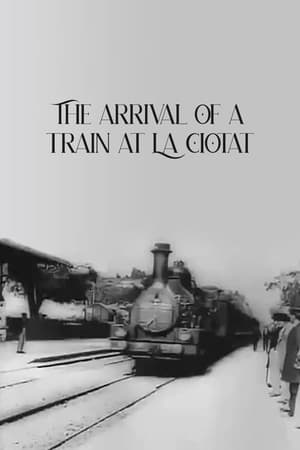
A group of people are standing along the platform of a railway station in La Ciotat, waiting for a train. One is seen coming, at some distance, and eventually stops at the platform. Doors of the railway-cars open and attendants help passengers off and on. Popular legend has it that, when this film was shown, the first-night audience fled the café in terror, fearing being run over by the "approaching" train. This legend has since been identified as promotional embellishment, though there is evidence to suggest that people were astounded at the capabilities of the Lumières' cinématographe.
La marchetta
A mesmerizing trip through the psychedelic vastness of space.
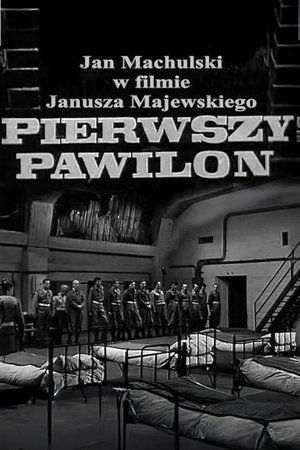
Warsaw's Central Railway Station. 'Someone has fallen asleep, someone's waiting for somebody else. Maybe they'll come, maybe they won't. The film is about people looking for something.
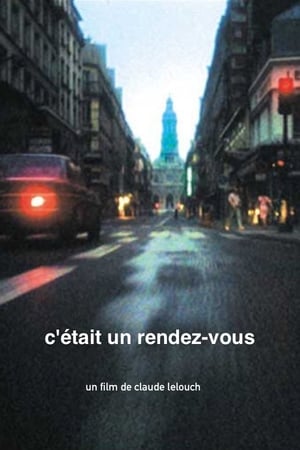
A high-speed drive through the streets of Paris.
A cut-out of Soviet leader Nikita Khrushchev sails over newspaper articles as they take place. Combines live photography and collage animation in one film.
One of the most exciting and memorable stories in the history of the World Trade Towers is that of Philippe Petit, a French man who walked a tightrope between the massive monuments in 1974. Narrated by Oscar nominee Jake Gyllenhaal, this is an animated adaptation of the lyrical Caldecott Award-winning book by Mordecai Gerstein. Directed and animated by Michael Sporn, with music by Michael Bacon (of the Bacon Brothers).
The film tells the back story about the characters and events leading up to the explosive oil truck heist in Fast & Furious.
A young llama named Koro discovers that the grass is always greener on the other side (of the fence).
Nazi Third Reich propaganda film that used architecture as a statement about "racial accomplishment," and so called "racial superiority." Hitler claimed that between 1934 and 1940, the Nazi rule of Germany had produced architectural uniqueness, and this film was produced to shown to attempt to validate that. The opening montage gives a survey of earlier Gothic and Baroque structures in the country as an example of "architectural superiority" that the German race was said to be the sole inventor of; then moves on to deride the recent construction of the Bauhaus school (with a racially motivated score of Jazz music) and an example of German "architectural decay." Then proceeds to show off buildings constructed by the Nazi and an architectural revival, to "last 1000 years," Film also spends a great of time dwelling on massive and "busy" monuments that had been erected all over the county.
A chain-smoking woman has an encounter with a vampire.
After a dreadful incident coupled with an ungovernable paroxysm of violence, a butcher will fall into a downward spiral that will burn to the ground whatever dignity still remained in him.
A knight returns home from the Crusades to find his village devastated by disease and his family gone. He roams the forest searching for them, until he finds a mysterious maiden who is being held prisoner by a black knight. In order to free her, he must confront her captor.
Filmed in IMAX, a young girl questions her grandfather about the alleged curse of King Tutankhamen. His response takes us up to the source of the nourishing river Nile, to the Great Pyramids of Giza, to the Valley of the Kings.
Pierre and Jacques are working as waiters at a restaurant where the cooks go on strike. When the two are forced to work as bakers, the striking cooks put dynamite in the dough, with explosive results.
The Tramp interferes with the celebration of several kid auto races in Venice, California (Junior Vanderbilt Cup Race, January 10 and 11, 1914), standing himself in the way of the cameraman who is filming the event.
Although only a dental assistant, Charlie pretends to be the dentist. After receiving too much anesthesia, a patient can't stop laughing, so Charlie knocks him out with a club.
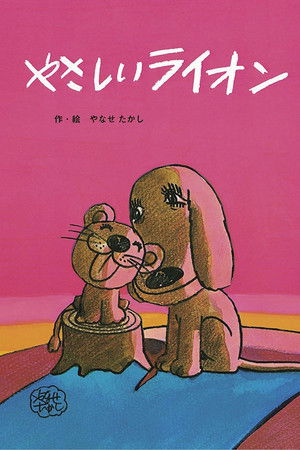
Dog racing is used as a metaphor for the futility of human existence.