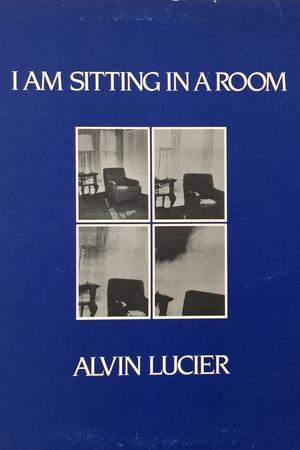
A ritual of grids, reflections and chasms; a complete state of entropy; a space that devours itself; a vertigo that destroys the gravity of the Earth; a trap that captures us inside the voids of the screen of light: «That blank arena wherein converge at once the hundred spaces» (Hollis Frampton).
A quick view of three remarkable organic gardens: Le Tomple, Le jardin du Mas d’Abri in the department of Gard and Le jardin des Sambucs in the department of Hérault. The film goes over their general layout along pathways amongst the vegetation, ponds and people or animals that happen to be there at the time.
Cartas de Arapuca
Standing near the reptile section in a zoo we can learn a lot about the animals on both sides of the separating glass.
Jan receives the group patch at the campfire, Herkules brews up some tea in the workshop and Sidney gets a mohawk haircut done by his father. The film shows fragments from an Oberhausen subculture in which symbols and practices of the outlaw motorbiker scene are transferred to cycling.
an experimental short shot completely in black and white and attempts a new technique.
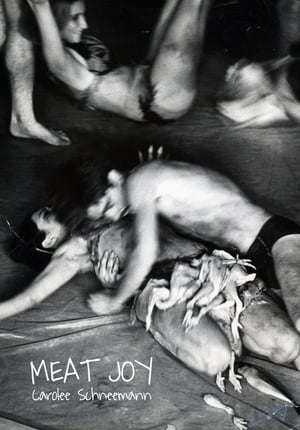
"Meat Joy is an erotic rite — excessive, indulgent, a celebration of flesh as material: raw fish, chicken, sausages, wet paint, transparent plastic, ropes, brushes, paper scrap. Its propulsion is towards the ecstatic — shifting and turning among tenderness, wildness, precision, abandon; qualities that could at any moment be sensual, comic, joyous, repellent. Physical equivalences are enacted as a psychic imagistic stream, in which the layered elements mesh and gain intensity by the energy complement of the audience. The original performances became notorious and introduced a vision of the 'sacred erotic.' This video was converted from original film footage of three 1964 performances of Meat Joy at its first staged performance at the Festival de la Libre Expression, Paris, Dennison Hall, London, and Judson Church, New York City."
Sunny. Semantic sequences guide the gaze, a gaze that is sometimes raised, propelled downwards, then too high or motionless in front of an unrecognizable and yet so familiar vision. The images, linked by echoes of chromatic palettes and linear layers, scroll to the rhythm of a voice, reminiscent of an incantation. Sacred.
Here is a crazy man who goes to the movies. Today's destination is 'Seoul Art Cinema' located in Jeong-dong, Seoul. Before passing through Independence Gate, climb the mountain and look at Seoul Art Cinema in the distance. Will he be able to watch the movie safely?
A dialogue and home video about belonging, from young people living in modern colonial society.
The Tiger God project originated during the artist’s residency at Cien Art Village in Hualien in 2021, inspired by a Sikawasay (Amis priest) who said a concrete tiger carried a soul. The work explores encounters between Han folk beliefs and Amis spiritual traditions, reflecting on suppressed indigenous histories in eastern Taiwan under colonial and religious forces. Nighttime fireworks symbolize external impacts on the land, linking concrete animals, mining, and colonial imagination. The ritual opera returns the footage to the land and gods, weaving ritual, research, and reflection into a narrative about silent objects and memory.
Fireworks
A sock puppet explores a family history told from the perspective of a mother and father.
An audiovisual essay constructed from Super 8 footage filmed during camera tests for the short film ‘La Trampa’. Through gestures, light, and silences, it reflects on what the image reveals and what it leaves unsaid.
An investigation about human intervention in nature, from the subjective point of view of the camera, the environment and its transformation are observed.
Filmed in Berlin, July 1990. Images of workers taking down the wall and street peddlers selling pieces of it to make a living.
Experimental short-film made by brazilian students about the trópicalia and cinema novo movement. The narrative revolves around the song Géleia Geral from the album Tropicália ou Panis Et Circensis and also around the political, artistical and social time from that period.
In the rural desert of Bolivia, where the most important presence is the wind moving between papa flowers and animals, the people who harvest the land, those who built the ancient artifacts and sacred objects and the musicians who play moseñada – songs linked to the first products of the harvest – on the streets of the city have one point in common: labor. With a successful inclusion of stories of enchanted lakes, legends that pass from mouth to mouth – or from orality to audiovisual, in this case – and give a fantastic aura to those lands, Luciana Decker Orozco not only manages to capture life without oscillations . field, but resorts to the incessant movement of images and sound accompaniment to define a sensory and transcendental experience for the viewer.
A long-form 'artist moving image' documentary film that sits in a fictitious conceit that begins in a distant future, inspired by Russell Hoban’s cult novel ‘Riddley Walker’. A medley of documentary, fantasy, song and dance: shot on a tapestry of celluloid film stocks and developed by hand.
Two instants separated by 99 days conflict with each other.