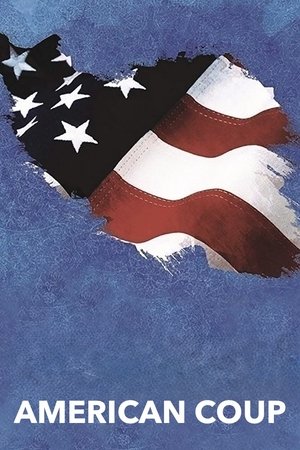
An investigation of government censorship in Iran.
This documentary was written with passion and love for cinema, and on the other hand, he blamed her. Our fictional character for this documentary talks about her passion for cinema and how it affected her life and recounts the decades that passed on the cinema one after the other.
A documentary featuring interviews with teachers and officials on the profession of teaching and what it means to them.
The Journey of a young man who is making a documentary about forgotten narratives around an old piano, takes him through an unknown path towards restoring history, culture and identity of his homeland, Iran, in dusty and abandoned objects.
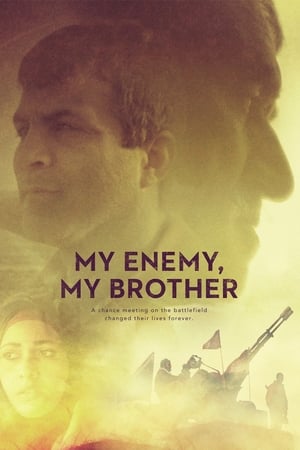
The eight-year Iran-Iraq War was one of the most brutal conflicts to devastate the region in the 20th century. Zahed was 13 years old when he enrolled in the Iranian army. Najah was 18 when he was conscripted into the Iraqi army, and he fought against Zahed in the Battle of Khorramshahr. Fast forward 25 years, a chance encounter in Vancouver between these two former enemies turns into a deep and mutually supportive friendship. Expanded from the 2015 short film by the same name.
In the French music world, the beginning of the 2000s was marked by the arrival of a young rapper, Diam's. Over the course of three albums, she has become a phenomenon in France, as well as in many countries around the world. Diam's has won some of the most prestigious awards in French music, graced the covers of countless magazines, and sold millions of records. However, in 2010, at the height of her fame, Diam's made a life choice that shocked the French: she converted to Islam. How did a tortured and suicidal artist find her way to peace? For the first time Diam's, known to her family as Mélanie, tells us the real story.
In this guided tour of a unique Persian carpet, a close-up of the delicate "spine" of a tree branches out into the discovery of a fantastical world.
In September 2022, a 22-year-old Iranian woman, Mahsa Amini, died in police custody. She had been arrested by Iran’s religious police, accused of not wearing her hijab properly. The authorities said she had died of a heart attack, but rumors spread that she had been beaten on arrest. Citizens took to the streets in their thousands in fury. This is an extraordinary and shocking insight into what has been happening across Iran, revealing a regime under huge pressure and resorting to extreme cruelty to control its citizens.
This film from Bill Moyers is the first documentary to focus exclusively on people formerly detained in New York City’s notorious Rikers Island Jail. They tell their compelling stories direct to the camera, revealing the violent arc of the Rikers experience – from the trauma of entry to extortion and control by inmates, to oppressive corrections officers, violence and solitary confinement.
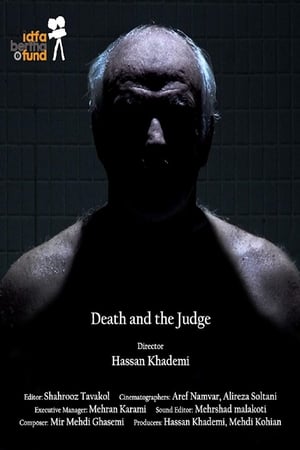
The documentary, " Death and the Judge", revolves around Iran's most famous criminal judge, Azizmohammadi. He served as a criminal judge for 45 years and issued about 4500 death sentences; a record in not only Iran, but also the world. This documentary looks into his personal and professional life as he is followed within his home with his family, in the court of law, and in his retirement days. The ultimate purpose of the documentary is to deduce the role of death in the judge's life as he either takes life away from criminals or death comes to his loved ones. During his retirement, he is once again given the choice between the life and death of a person, despite no longer being a judge.
A stark and graphic portrayal of the conditions that existed at the State Prison for the Criminally Insane at Bridgewater, Massachusetts, and documents the various ways the inmates are treated by the guards, social workers, and psychiatrists.
Two men, the hint of a sofa corner and a pile of letters. Using minimalist means, the film tells the story of two brothers caught between exile in a foreign country and resistance in the underground. It takes us back to the time when the revolution seized power in Iran and tells of life between the fronts. Daniel Asadi Faezi sketches the story of his father and his brothers - based on correspondence that has lain in the cellar for 30 years.
Nasim is a free climber, the only woman able to open new routes in Iran. She’s facing a double mountain to climb, both physical and cultural, as her passion collides with the strict policies concerning women freedom in her country. And she has a dream: open a new route in the Alps.
After five years studying in Paris, Arash has not adjusted to life there and has decided to return to Iran to live. Hoping to change his mind, his two friends Hossein and Ashkan convince him to take a last trip through France.
Video art of sculpture is the real life story of Rumi (Mevlana) and Shams Tabrizi. Rumi and Shams are well known international poets of Persian language. One day, Rumi invites Shams Tabrizi to his house, Shams throws the book into the pool of water and Rumi is worried and Shams returns the book to Rumi without any trace of water. The lost half of the sculpture in the film is a representation of the same concept. "Sculpture" has won more than 69 International Awards, third place (semi-final) in called Flickers' Rhode Island International Film Festival (Academy Award ® Qualifying, BAFTA Qualifying, Canadian Screen Award Qualifying) , Winner of the 2025 Jury Award for Best Short Documentary – Toronto International Nollywood Film Festival (TINFF) – A Canadian Screen Award-Qualifying Festival , Crown Point International Film Festival(Chicago),(US),Gold Star Movie Awards (US),One-Reeler Short Film Competition (US),Accolade Competition (US), and many other events.
Iran, January 16th, 1979. Shah Mohammad Reza Pahlavi flees after being overthrown. Ayatollah Khomeini returns to Tehran and proclaims the Islamic Republic on April 1st, 1979. In the same year, Saddam Hussein seizes power in Iraq and, after several border skirmishes, attacks Iran on September 22nd, 1980, initiating a cruel war that will last eight years. Since its outbreak, correspondent Saeid Sadeghi documented it from its beginning to its bitter end.
Starting with her own memories of working as an actress on Abbas Kiarostami's Ten, filmmaker Roya Akbari proceeds to elicit other testimonies on the masters of Iranian cinema from three people who are themselves among the foremost Iranian directors: Rafi Pitts on Parviz Kimiavi; Amir Naderi on Sohrab Shahid Saless; and Bahram Bayzai on Arby Ovanessian. Bayzai also analyses Haji Agha, the Cinema Actor (1933) by Ovanes Ohanian, considered the first feature film made in Iran.
On June 20, 2009, Neda Agha-Soltan was shot and killed on the streets of Tehran during the turmoil that followed the Iranian presidential contest. Within hours, images of her dying moments, captured on cell phones, appeared on computer screens across the world, focusing the world's attention on mass protests against the rigged elections in Iran. Featuring previously unseen footage of Neda with friend and family, as well as exclusive video of her recorded the day she died, "For Neda" debuts just before the anniversary of her death.
Fanizadeh documentary is about the famous actor of Iranian cinema Parviz Fanizadeh. This documentary film deals with his life and works. This documentary is based on the talks of characters from theater and cinema who worked directly with him. Among them there are Taghvai, Mehrjoui, Golestan, Kimiaiee, Nosrat Karimi, Behrouz vosoughi, Pari Saberi, etc.
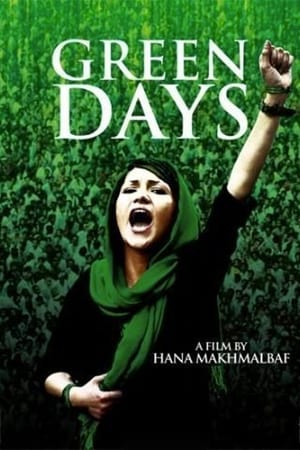
Green was the symbol of recognition among the supporters of Iranian presidential candidate Mir-Hossein Mousavi. This documentary-collage illustrates with animated blogs and tweets the story of democracy under fire and the dramatic events before and after the 2009 presidential elections in Iran.