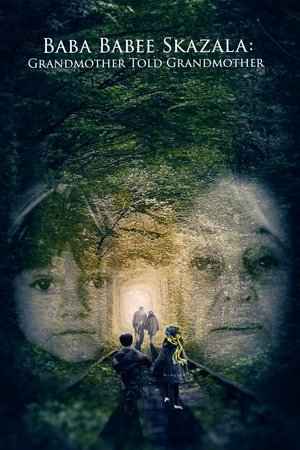
The village of Yahidne in northern Ukraine is coming back to life. Dogs are running around. Gardens and crops are green again. People support one another and families have reunited. In a movement of solidarity, local youth help rebuild what was devastated a year ago when Russian troops occupied the village imprisoning the villagers in the school's basement for a month. The villagers' attitudes alternate between their desire to move forward an remembering the horrors of the past. A heartwarming tribute to resilience and unity.
In 2022, Mantas Kvedaravičius went back to Ukraine, Mariupol, at the heart of the war, to be with the people he had met and filmed in 2015. Following his death, his producers and collaborators have put all their strength into continuing transmitting his work, his vision and his films. Also a PhD in anthropology, Mantas Kvedaravičius wished to testify as a filmmaker as far as possible from the agitation of the media and the politicians. With huge force and sensitivity, Mariupolis 2 depicts life as it continues amidst the bombing and reveals images that convey both tragedy and hope.
In the winter of 2002-'03, as the US was building its case to attack Iraq, people around the world responded with a series fo the largest peace protests in history. Shutdown: The Rise and Fall of Direct Action to Stop the War, is an action-packed documentary chronicling how DASW successfully organized to shut down a major US city and how they failed to effectively maintain the organization to fight the war machine and end the occupation of Iraq. Created by organizers involved with DASW, Shutdown combines detailed information on organizing for a mass action, critical interviews on organizing pitfalls, and the wisdom of hindsight. It is a must-see film for those engaged in the continuous struggle toward social justice.
The documentary project The Term was conceived in May 2012. When the directing trio commenced mapping the Russian sociopolitical landscape, Vladimir Putin had just settled into the Kremlin for his third term. The original experimental format of “documentary bulletins,” which were published daily online, allowed for wide-ranging content; in the feature film version, however, the filmmakers focused solely on the members of various opposition groups. Nevertheless, the work’s neutral position remains and viewers have to interpret the objectively presented situations for themselves. The main characteristics of this strongly authentic movie include close contact with the protagonists, precise editing, and an effectively controlled release of information.
John and Yoko in the presidential suite at the Hilton Amsterdam, which they had decorated with hand-drawn signs above their bed reading "Bed Peace." They invited the global press into their room to discuss peace for 12 hours every day.
In 2020 the Hungarian government announced the change of ownership at nine state universities in order to make them maintained by foundations. The so-called “restructuring” comprised the imposition of a board of trustees over the universities, the members of which being loyal supporters of the government holding stable positions in its economic halo. Only one of the nine institutions protested against the forced political takeover of the University of Theatre and Film Arts (SZFE). Our film presents one of the stories of the university blockade.
It’s the last dictatorship of Europe, caught in a Soviet time-warp, where the secret police is still called the KGB and the president rules by fear. Disappearances, political assassinations, waves of repression and mass arrests are all regular occurances. But while half of Belarus moves closer to Russia, the other half is trying to resist…
Anastasia Trofimova, a Russian-Canadian filmmaker, gains unprecedented access to follow a Russian Army battalion in Ukraine. Without any official clearance or permits, she earns the trust of foot soldiers and embeds herself over the span of a year with one battalion as it makes its way across Eastern Ukraine. What she discovers is far from the propaganda and labels pushed by the East or West: an army in disarray, soldiers disillusioned and often struggling to understand what they are fighting for.
Viktor, who was born deaf, worships the figure of the samurai warrior. When bombs start falling on his countryside home in Kharkiv, his quasi-romantic obsession with war is put to the test.
Tells the story of the tragic events in Ukraine in 1932-33, the genocidal Great Famine or the Holodomor, and one Welshman's attempts to tell the world what was happening.
Since the full-scale invasion of Ukraine, many in Russia's DIY punk scene fled to Tbilisi, Georgia. Mobilization only exacerbated that trend. This documentary follows the stories of some of those punks but also explores the complicated socio-economic effects they have on the city. The film is about the potential for punk and other similar subcultures to make connections even across otherwise tense political borders.
A year ago, on 29 December 2019, prisoners were exchanged with the self-proclaimed ‘LPR’ and ‘DPR’. Among the Ukrainians who returned home were journalist Stanislav Aseyev, tanker Bohdan Pantiushenko, and human rights activist Andriy Yarovoi. Four months earlier, on 7 September, Crimeans Oleg Sentsov and Oleksandr Kolchenko were released from Russian colonies. We spoke to the former prisoners about their first year of freedom.
Filmed in New York in the summer of 2006: a march across the Brooklyn Bridge in support of the Palestinian and Lebanese populations. Habibi means "beloved" in Arabic.
La Revuelta accounts for the tension experienced by those who, as of October 2019, came out to express their social discontent. The work has as its main stage, renamed by the people, as "Plaza de la Dignidad". It is a choral story, woven with the reflections of the protesters under the protection of the contextualization of a story in off that is unraveling the causes and effects of the outbreak. Thus, more than three years after the social demonstration, La Revuelta, is presented as a critical and contestative reflection, around the popular protest maintained by a people that took 30 years to awaken.
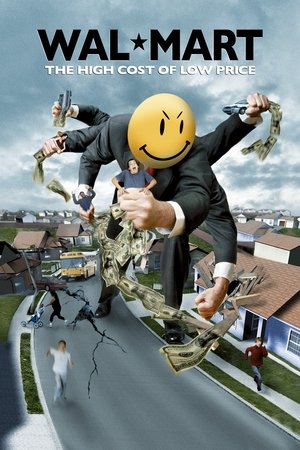
This documentary takes the viewer on a deeply personal journey into the everyday lives of families struggling to fight Goliath. From a family business owner in the Midwest to a preacher in California, from workers in Florida to a poet in Mexico, dozens of film crews on three continents bring the intensely personal stories of an assault on families and American values.
In 2010, the iconic Tote Hotel – last bastion of Melbourne’s vibrant music counterculture – was forced to close by unfair laws. Filmed over 7 years, “Persecution Blues” depicts the struggle of more than 20,000 fans – and the bands who inspire them – to preserve their history and protect their future, and puts the audience on the front line of an epic-scale culture war.
The film’s story is based on the fate of the Floriculture Pavilion of the former Exhibition of Achievements of the People’s Economy, and its elderly employee Valentyna Voronina, who maintains this space, investing her own life into it, until suddenly changes come to her. After forty-five years of work, she is asked to retire. But Voronina does not agree with that, because she thinks that all the plants will die without her. Meanwhile, a group of mysterious radioesthesists find a channel of positive energy right in front of the entrance to the pavilion.
Checkpoint Zoo documents a daring rescue led by a heroic team of zookeepers and volunteers, who risked their lives to save thousands of animals trapped in a zoo behind enemy lines in the Russian Invasion of Ukraine.
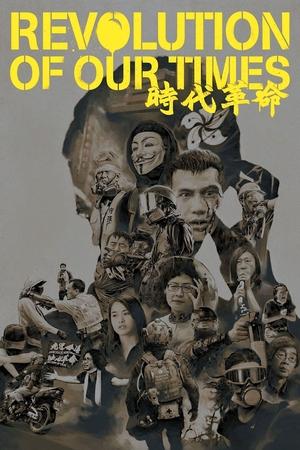
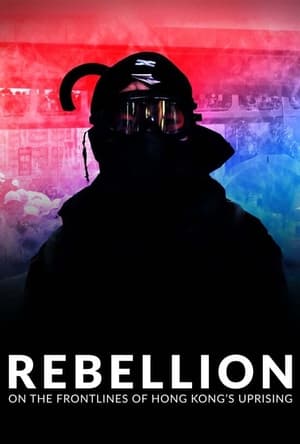
Behind the gas masks of Hong Kong’s democracy movement, the often very young activists are just as diverse as the youths of the rest of the world. But they share a demand for democracy and freedom. They have the will and the courage to fight – and they can see that things are going in the wrong direction in the small island city, which officially has autonomy under China but is now tightening its grip and demanding that ‘troublemakers’ be put away or silenced. Amid the violent protests, we meet a 21-year-old student, a teenage couple and a new father.
For 40 years, the community-organizing group ACORN advocated for America’s poorest communities, while its detractors accused it of promoting the worst of liberal policies. Riding high on the momentum of Barack Obama’s presidential victory in 2008, ACORN was at its political zenith when a hidden-camera video sparked a national scandal and brought it crashing down. The story involves voter fraud, a fake prostitute, and the rise of Breitbart.com.