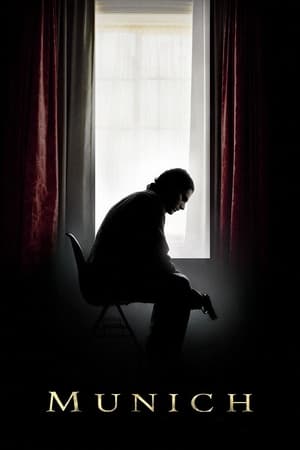
During the 1972 Munich Olympics, an American sports broadcasting crew finds itself thrust into covering the hostage crisis involving Israeli athletes.
Rebecca, an American who has been living in Jerusalem for a few months now, has just broken off her engagement. She gets into a cab driven by Hanna, an Israeli. But Hanna is on her way to Jordan, to the Free Zone, to pick up a large sum of money.
Salma Zidane, a widow, lives simply from her grove of lemon trees in the West Bank's occupied territory. The Israeli defence minister and his wife move next door, forcing the Secret Service to order the trees' removal for security. The stoic Salma seeks assistance from the Palestinian Authority, Israeli army, and a young attorney, Ziad Daud, who takes the case. In this allegory, does David stand a chance against Goliath?
Eyal, an Israeli Mossad agent, is given the mission to track down and kill the very old Alfred Himmelman, an ex-Nazi officer, who might still be alive. Pretending to be a tourist guide, he befriends his grandson Axel, in Israel to visit his sister Pia. The two men set out on a tour of the country, during which Axel challenges Eyal's values.
Two childhood friends are recruited for a suicide bombing in Tel Aviv.
During the 1972 Olympic Games in Munich, eleven Israeli athletes are taken hostage and murdered by a Palestinian terrorist group known as Black September. In retaliation, the Israeli government recruits a group of Mossad agents to track down and execute those responsible for the attack.
14-year-old Zain, a Palestinian swimming champion, faces war and man-made famine. He becomes the sole caregiver to his little brother. When aid drops into the sea, desperate for food, Zain is forced to swim - not for passion, but for survival.
Eleven directors from eleven countries each contribute an eleven-minute short reflecting on the events of 11 September 2001: A village teacher in Iran tries to explain to her young students what's happened; city kids in Burkina Faso think they've spotted Osama bin Laden; a deaf Frenchwoman in Manhattan writes a Dear John letter to a man who left that morning for work at the World Trade Center; a Chilean remembers Allende; events recall other deaths; a mother endures more than her son's death. Tones vary, as do the locales. Most concern coming to terms with the events of the day, but at least one confronts the viewer with tragedy and death.
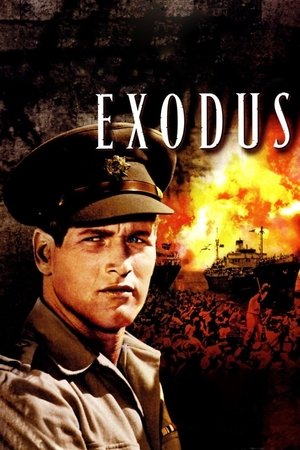
Ari Ben Canaan, a passionate member of the Jewish paramilitary group Haganah, attempts to transport 600 Jewish refugees on a dangerous voyage from Cyprus to Palestine on a ship named the Exodus. He faces obstruction from British forces, who will not grant the ship passage to its destination.
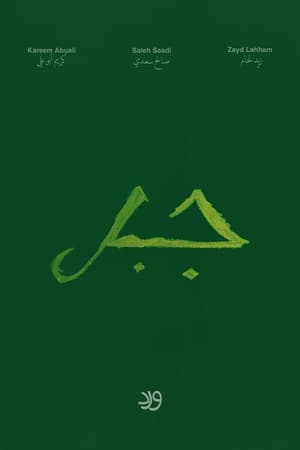
Ziad, a Palestinian day laborer, is denied entry into Israel for work that day. The East Jerusalem border guards offer no explanation. Not wanting to return home empty handed after promising his daughter meat for dinner, he needs to get creative. The journey back is long, and what he encounters in the dry mountains challenges his dignity.
A mismatched couple discovers that whatever can go wrong will go wrong during a family visit.
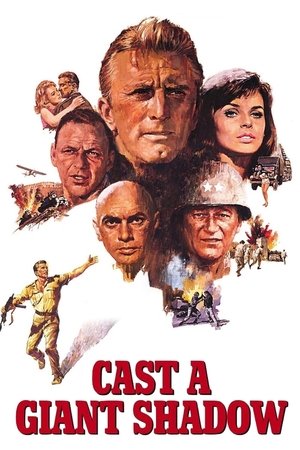
An American Army officer is recruited by the yet to exist Israel to help them form an army. He is disturbed by this sudden appeal to his Jewish heritage. Each of Israel's Arab neighbors has vowed to invade the poorly prepared country as soon as partition is granted. He is made commander of the Israeli forces just before the war begins.
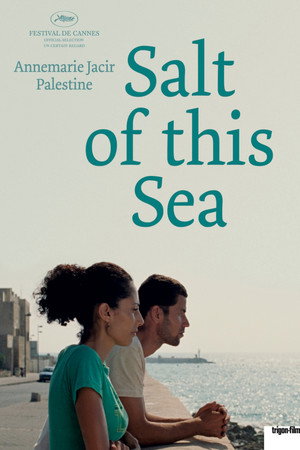
Born in Brooklyn to Palestinian refugee parents, Soraya decides to journey to the country of her ancestry when she discovers that her grandfather's savings have been frozen in a Jaffa bank account since his 1948 exile. However, she soon finds that her simple plan is a complicated undertaking — one that takes her further from her comfort zone than she'd imagined.
Samir, 43, is the owner of a shoe shop in Ramallah who has never seen the sea. He decides to sneak past Israeli borders with other Palestinian construction workers to fulfill his dream of seeing the sea.
Hussein, a Palestinian young man, receives a letter from the Israeli post office in which he must show up to pick up a mysterious delivery. What he finds out right there is that he has to pay US$ 20,000 to take it out.
Hasan Everywhere is an animation which broaches the subtlety of a relationship between a man and a woman who bear the passports of enemies, to sympathetically deal with the subjects of death, grief, lost opportunity; but mostly it seeks to demonstrate the possibility of friendship triumphing over the deepest of rifts between two people. In that regard it is most unusual among the standard fare of animated shorts.
Drunk and disillusioned Roman, Marcellus Gallio, wins Jesus' robe in a dice game after the crucifixion. Marcellus has never been a man of faith like his slave, Demetrius, but when Demetrius escapes with the robe, Marcellus experiences disturbing visions and feels guilty for his actions. Convinced that destroying the robe will cure him, Marcellus sets out to find Demetrius — and discovers his Christian faith along the way.
After years abroad in Italy, Shadi returns to his native Nazareth. But this is no spectacular homecoming. He's back somewhat begrudgingly to honour his "wajib" (or duty) to hand out invitations to his sister's wedding with his father. The simmering tension between the two — who are often stuck in a car, more often than not in traffic — builds, exposing the sometimes-comic chasms that exist between men who live in different worlds but share an unshakable bond.
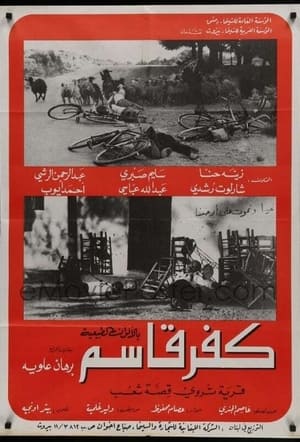
On the eve of the Israeli attack on Egypt in 1956, Israel declares martial law in all the occupied Arab territories without any previous notice. When the villagers of Kafr Kassem returned home from the fields, they were butchered and killed in what is known today as the massacre of “Kafr Kassem”.
A young Arab is caught between cultures as he is sent to a prestigious Jewish boarding school in Israel in the 1980s.