How did the rise of LGBTQ visibility, political progress, and digital technologies in the 2000s come together to offer the abundance of complex queer and transgender representations we see today? Media scholar Katherine Sender shows how LGBTQ visibility and political progress have combined with new digital media technologies and television platforms to produce an increasingly complex range of queer and transgender representations.
In the 50s and 60s, deep in the American countryside at the foot of the Catskills, a small wooden house with a barn behind it was home to the first clandestine network of cross-dressers. Diane and Kate are now 80 years old. At the time, they were men and part of this secret organization. Today, they relate this forgotten but essential chapter of the early days of trans-identity. It is a story full of noise and fury, rich in extraordinary characters, including the famous Susanna, who had the courage to create this refuge that came to be known as Casa Susanna.
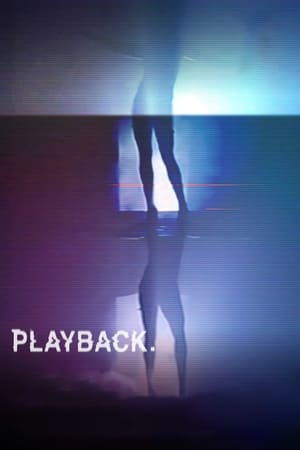
The interconnection between the philosophical film body and the trans human body is explored through the film’s materiality and the use of analogue techniques. In a deeply personal investigation, parallels are drawn between the procedures both bodies must undertake to reach their final form.
Trans and queer communities shaped carnival traditions in the Canary Islands, exploring their historical role in developing costumes, performances, and celebrations that define the region's festive identity.
Bambi Lake, a notorious San Francisco transgender performer and entertainer, takes us on a stroll down Polk Street, sharing anecdotes and the history behind her song Golden Age of Hustlers, which was written about her time as a street hustler in the mid-70’s.
In this intimate portrait addressed directly to Hélène Hazera, filmmaker Judith Abitbol revisits a key figure of France’s countercultures from the late 1960s to the 1990s. A member of the Gazolines and the FHAR (Homosexual Front for Revolutionary Action), Hazera was a tireless LGBTQ activist who founded Act Up’s Trans and AIDS commissions—one of her proudest achievements. Her true victory, however, was becoming the first transgender journalist at a major national newspaper (Libération), and later a producer at Radio France and France TV. Through her story, Abitbol reconnects with the insurrectionary spirit and creative chaos of those decades—an era when French culture was shaken by radical imagination, humor, and defiance. The film celebrates these modern Antigones who dared to live their desires beyond the reach of any law.
A dialogue and home video about belonging, from young people living in modern colonial society.
A short documentary about being trans in Ireland.
Trans Boxing is an art project in the form of a boxing club that was started in New York City in 2017 by Nolan Hanson. The project began as an effort to encourage the participation of transgender, non-conforming, and non-binary people in boxing. Over the years, an amazing community has been built around this sport. Trans Boxing offers training, education, and mentorship through weekly classes. They help others explore their strength both physically and mentally.
Describing herself as a 'street queen,' Johnson was a legendary fixture in New York City’s gay ghetto and a tireless voice for LGBT pride since the days of Stonewall, who along with fellow trans icon Sylvia Rivera, founded Street Transvestites Action Revolutionaries (S.T.A.R.), a trans activist group based in the heart of NYC’s Greenwich Village. Her death in 1992 was declared a suicide by the NYPD, but friends never accepted that version of events. Structured as a whodunit, with activist Victoria Cruz cast as detective and audience surrogate, The Death and Life of Marsha P. Johnson celebrates the lasting political legacy of Johnson, while seeking to finally solve the mystery of her unexplained death.
“Being French in 2024 means being able to serve as Prime Minister while openly gay.” With these words closing his policy speech on January 30, 2024, Gabriel Attal made history. The documentary *Homos en politique: le dire ou pas?* uses this milestone — the appointment and visibility of France’s first openly gay Prime Minister — as a springboard for a broader inquiry. Journalists Jean-Baptiste Marteau and Renaud Saint-Cricq travel across France to meet LGBTQ politicians of all generations, from Paris to rural towns. Eleven years after the protests against same-sex marriage, has France really changed? Through interviews with figures like Bertrand Delanoë, Sarah El Haïry, Jean-Philippe Tanguy, Franck Riester, and others, the film explores how coming out intersects with politics, homophobia, and representation — questioning whether saying “I’m gay” in politics is still an act of courage or simply a sign of the times.
A snowy landscape flowing outside the Shinkansen window. Miyu is heading to Nagoya to undergo her long-time dream of gender reassignment surgery. Miyu is a third-year student in the fashion design department. When she graduated, she aspired to go out into society as a woman both physically and mentally. Her dream will come true soon. A cafe bar in Kobe half a year ago. She is still chatting with her friends today. Her junior, Nao, and Mimu, who attends another university, are both transgender. “After all, love ends in sex, right? But we can’t have sex…
Originating in Curitiba in 2013 and spreading to Portugal, Spain, Mexico and Brazil, “Basket das Excluídas” consists of an LGBTQIA+ group gathering to play basketball on a public court in the city. They vogue and resist with their bodies around the city, challenging norms and celebrating diversity while engaging in a game that expresses identity and a form of resistance.
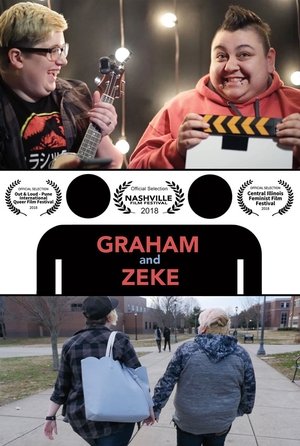
In Tennessee, and across the South, transgender people like Graham and Zeke face a daily struggle in their pursuit of equal protection under the law. From so-called 'bathroom bills' to laws restricting their ability to change their sex on legal documents, not to mention the personal and familial challenges as you transition, life is not easy nor fair for trans folk.
Tracing the U.S. military's long history of discrimination against the gay community and one couple's personal journey for acceptance.
Two men undertake a thought-provoking journey to parenthood. Not by adoption or surrogacy, but by Frankie, a trans man, carrying their baby. Made with support from NZ on Air.
Made as part of the Winnipeg Film Group's "Super 8 Special" film incubator. This picture was captured on super 8 film, drip dyed with a mixture of india ink and water collected from Lake Winnipeg, then digitized and captured on VHS.
For the last quarter century, Houston native Arden Eversmeyer journeyed across the country to record hundreds of oral "herstories" with a mostly invisible population that is rapidly disappearing. Old Lesbians honors Arden's legacy by animating the resilient, joyful voices she preserved in the Old Lesbian Oral Herstory Project, from first crush to first love, from the closet to coming out, and finally from loss to connection.
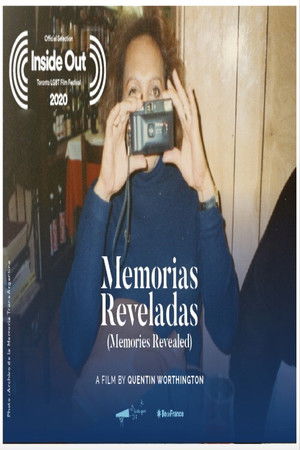
Over the course of 10 months, a camera travels to Buenos Aires, Argentina and Hanover, Germany to meet with Magalí, María Belén, Ivana and Carla, the founding members of the Archivo De La Memoria Trans Argentina, the first existing Trans Archive in the world. Taking the shape of a photo-novel, the documentary not only recounts the founding members lives as trans women under the Argentine dictatorship (1976-1983), the AIDS epidemy, state repression and mass assassinations but also years of fighting for their rights, sorority and the exaltation of life and laughter in times of death. Filming each one of them is filming them embracing their new role as curators, archivists and historians while a collection of 7,000 photos goes through the filter of their memories.
Trans man Stafford candidly tells the story of a memorable encounter he had at a sex club.