Series exploring the origins of human life, from African beginnings to Ice Age artists.
Notre part animale
A five-part series that features the latest research exploring how early humans evolved. See how the mixing of prehistoric human genes led the way for our species to survive and thrive around the globe. Archaeology, genetics and anthropology cast new light on 200,000 years of history, detailing how early humans became dominant.
Carl Sagan covers a wide range of scientific subjects, including the origin of life and a perspective of our place in the universe.
Andrew Marr explores how Darwin's theory of evolution by natural selection has taken on a life of its own far beyond the world of science.
Latest research has revealed that first mammals and first dinosaurs appeared on earth at about the same time and that the ancestral mammals underwent dramatic evolution while challenging the dinosaurs. It was these struggles that created the basic nature of all present mammals, including humans.
This remarkable science-history series investigates the blistering pace of human endeavour in space exploration, computing, energy, resources, Earth science and our understanding of the evolution of life itself.
This extraordinary series is a sweeping account of the rise of Earth’s continents. They are the product of a grand waltz of plate tectonics and the continual evolution of Earth’s crust. As landmasses assemble and separate, they fuel volcanoes and spark earthquakes, building mountains and tearing valleys. We see the Earth, eons in the making, through the eyes of geologists and other scientists.
Life Beyond explores humanity's future, the evolution of technology, and the mysteries of the universe. From AI and space exploration to philosophical reflections on existence, each chapter combines stunning visuals with emotional music, creating an immersive experience.
Hosted by Jason Silva, Origins: The Journey of Humankind rewinds all the way back to the beginning and traces the innovations that made us modern.
A mind-bending, thrilling journey exploring the fragility and wonder of planet Earth, one of the most peculiar, unique places in the entire universe, brought to life by the only people to have left it behind – the world’s most well known and leading astronauts.
All the incredible diversity of animal life sprang from a single organism. Every animal, no matter how weird, is related to every other. And behind each species is an incredible story of the millions of generations that gave rise to it - every animal we know and love today sprang from creatures that looked nothing like it.
The Genius of Charles Darwin is a three-part television documentary, written and presented by evolutionary biologist Richard Dawkins. It was first shown in August 2008 on Channel 4. It won Best TV Documentary Series 2008 at the British Broadcast Awards in January 2009.
The Voyage of Charles Darwin
Patrick Aryee checks out the biggest animals on Earth as he discovers why size matters in nature. Travelling to Asia, Australia, the Americas and Africa, he explains why these creatures evolved into giants and how crucial they are to their habitats.
The story of life, from the first primitive cells to the plants and animals that now live around us.
Traveling to the far corners of the world, we discover the extraordinary ways animals are adapting to our rapidly changing planet. We witness nature’s remarkable resilience, as our perception of evolution and its potential is forever transformed.
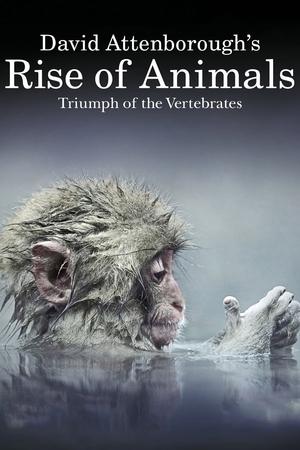
Sir David Attenborough goes back in time to the roots of the tree of life, in search of the very first animals, telling their story with stunning photography, state of the art visual effects and the captivating charm of the world’s favorite naturalist.
Physicist and professor Brian Cox travels across the globe to uncover the secrets of the most extraordinary phenomenon in the universe: life.
Since the Big Bang 13.8 billion years ago, light has sculpted the cosmos. It traverses the void, interacts with matter, and dances with shadows. It multiplies and proliferates, offering the world ever more complex and luminous structures. If it could speak, what would it tell us?