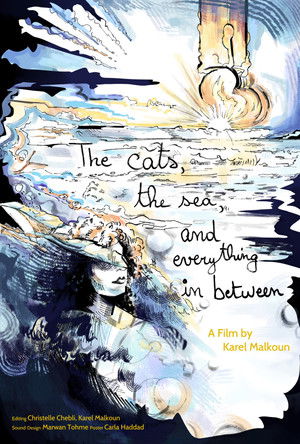
In 2022, when the economic crisis in her native country was at its peak, she decided to visit her family there. She turned her short trip into a collage-like diary in which she reflects on her relationship with her homeland, which is in a state of protracted decay. The film is composed of spontaneous snapshots capturing the author's stay, interspersed with inserted captions serving as personal, often poetically formulated comments and observations. As a result, the film does not hide its strongly subjective perspective, but at the same time builds on it to make an important statement that shows the transformation of Lebanese society in everyday details such as the appearance of the city itself or in the intimate sphere of the author's family life.
A Turkish woman in Brighton shares her visual diary. Witness her ups and downs, her intimacy and vulnerability. After revealing hers, the film invites you to confront your ‘tiny little things’. It presents a slice-of-life experience with an abstract flow and deals with one’s existence in this world. There is no escape from family and the things in your mind, even if you are thousands of miles away. The meaning changes constantly, and the camera becomes the extension of her mind. And somebody put that voice in her brain.
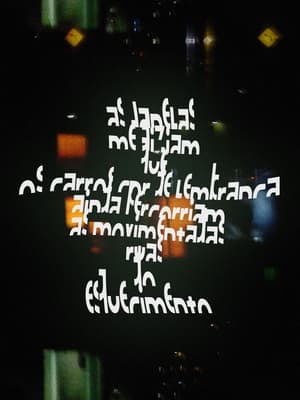
As Janelas Me Diziam Que Os Carros Cor De Lembrança Ainda Percorriam as Movimentadas Ruas do Esquecimento
The day with the sky neither too blue nor too grey. With a hint of red. The train crowded and the backpacks between the feet. The loves on every corner, the ones we pretend not to see.
A sitting man listens to his thoughts, but can't catch any of them.
A loose collection of scenes in Hong Kong shot over a five-year period, this film begins with the Umbrella Movement in 2014 and ends right before the summer of 2019, when large-scale social unrest and violent resistance erupted. The everyday scenes capture the ambience and the landscape of change in the city, standing as a quiet prelude to the ensuing conflicts.
An unhinged, diaristic examination of devastating friendship breakups.
Jonas Mekas assembles 160 portraits, appearances, and fleeting sketches of underground and independent filmmakers captured between 1955 and 1996. Fast-paced and archival in spirit, the film celebrates the avant-garde as its own “nation of cinema,” a vital community existing outside the dominance of commercial film.
Through phone call conversations, an aspiring Ilocano filmmaker relates to his mother working in Italy about his dreams and struggles while documenting the invisible betweenness of their language and distance.
Reminiscences of a trip to Čáslav
This short experimental diary film reveals my struggles with mental illness in my adolescence and queer adulthood while simultaneously reflecting upon my joyous childhood experiences. I investigate when and how my depression began and explain that my relationships with the people I love have supported me through my harder times. The film incorporates footage shot over May and June 2023 and archival home videos. Overall, I aim to resolve my "growing pains" through the medium of diary film and by reconnecting with my younger self.
A short documentary project that attempts to encapsulate what it looks and feels like to be an American Teenager in 2022.
This short, started early on into sobriety, finished about nine months in, is a collage of diaries and notes, collected from within addiction and into recovery.
Maria Lang is my very close filmmaker friend who lives in the southern german countryside. We see her gardening and visiting an exhibition of female impressionist painters.
Also known as Walden, Jonas Mekas’s first diary film is a six-reel chronicle of his life in 1960s New York, interweaving moments with family, friends, lovers, and artistic idols. Blending everyday encounters with portraits of the avant-garde art scene, it forms an epic, personal meditation on community, creativity, and the passage of time.
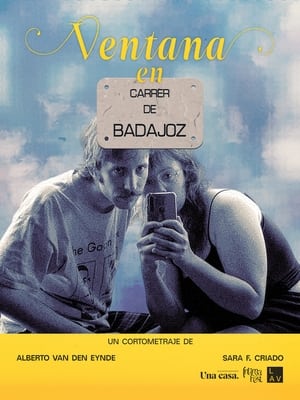
Sara and Alberto spend their days at home. They look out the window and watch: spring is approaching and the sun is setting later and later. Alberto entertains himself by playing with the light, the shadows and the nooks and crannies they leave on the living room. Sara goes out on the balcony in the evenings and examines the neighborhood with her camera. When they are in bed, they talk about what worries them. About job expectations. About being creative and why keep trying, if someone else has done it before you. About living in confinement, but at the same time, realizing that things haven't changed as much as they seem.
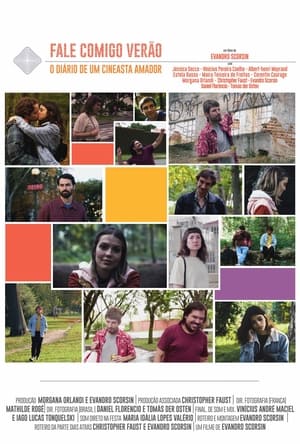
For years, together with his partners from the production company O Quadro, he has been betting on cinema as a tool to explore the typical issues of youth. In this film, Evandro Scorsin turns the cameras on himself as he deals with the dilemmas of the passing of time and the imposition of adulthood. In an exercise in autofiction where cinema and life merge, the film is also a cinematic love letter to the beloved masters (especially Nicholas Ray). Coming and going between two countries and times, it records the vertigo of displacement and the reinventions inherent to an immigrant experience.
An experimental coming-of-age odyssey through someone's troubled mind, going from country to country, landscape to landscape, growing up in the process. A documentary, travelogue, vlog, dream and self-portrait. A reflection on life, death and history.
Filmmaker Jon Beaton has always felt like an outsider. When TikTok’s powerful algorithm starts sending him content from the app’s autistic community, he has an epiphany – could this explain everything? My Diagnosis explores the tension between self-diagnosis and institutional validation through an intimate blend of personal vlogs and fictionalised recreations.
A filmed diary which chronicles two visits to the Olivas, a family of Spanish beekeepers from Salamanca, at the time of the honey harvest, in August and September. Their work and their itinerant life are seen from a friend's point of view.