Watch Gwi-Ma's flames rise and fall as a golden soundtrack burns bright. When darkness meets the light, this is what it sounds like.
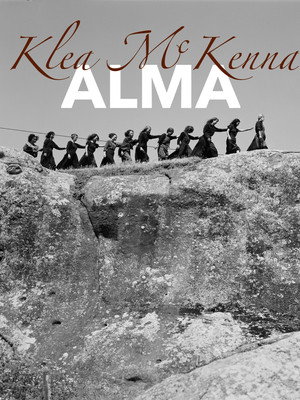
A non-narrative short film tracking the movement of a flock of women through a megalithic landscape. They appear to be working, enacting a cryptic ceremony with a sense of calm & purposeful labor. A score weaving together their breath & hums with sounds collected from the landscape: wind, Rattlesnake grass & their hands rubbing against stone. The women's gestures come from both work & dance – evoking the strange overlap between labor & ritual. This film began as a response to the physicality of daily life as a mother & the rhythm of these acts; the relentless repetition of parenting, working, tending the world with our bodies. This repetition can easily become vacant labor, but it can also transform into a kind of meditative, even transcendent ritual, a collective communion with the landscape & each other. ALMA offers itself as a companion piece to McKenna’s photographic rubbings, a glimpse into the same world from where her art arises.
Boundary-pushing Russian dancer and actress Ida Rubinstein selects renowned French composer Maurice Ravel to compose the music for her next ballet. Ravel ends up creating his greatest success ever: Boléro.
A chronicle of James Brown's rise from extreme poverty to become one of the most influential musicians in history.
Animator Ryan Larkin does a visual improvisation to music performed by a popular group presented as sidewalk entertainers. His take-off point is the music, but his own beat is more boisterous than that of the musicians. The illustrations range from convoluted abstractions to caricatures of familiar rituals. Without words.
a3 is an immersive audiovisual experience created by Amy Rodgers and Alejandro Rengifo, marking the final installment in a trilogy of electronic ambient compositions by Rodgers. Designed by Rengifo, the visualizer brings the soundscape to life through dynamic abstract forms that interact in precise harmony with the music, serving as an organic visual extension of the audio itself.
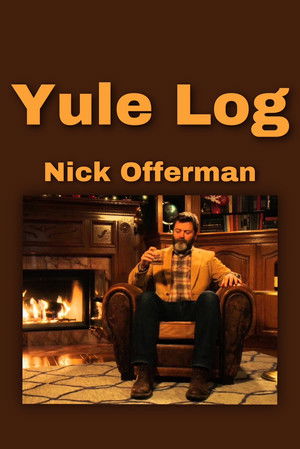
There is nothing more festive than a fire on a cold winter's night, watching a flickering flame rekindles the spirit of the holiday season. What’s more, the true sense of well-being and relaxation that this can induce is invaluable in the hustle and bustle during the holidays. Welcome to “Christmas Moods by the Fireplace”…pull up a chair, put your feet up and relax to soothing sounds mixed with images of mesmerizing dancing flames. This holiday yule log is everything you need to create the perfect fire in your own living room on your TV or computer, at a push of a button. It is perfect when it’s cold outside or you just want to curl up with the one you love for a special evening. Burning for a restful two hours, this program will not only help you to relax and put the trials and tensions of the day into perspective, it will also warm and comfort the soul in a way that you would not have believed possible from your television set.
This ain't your daddy's holiday special. Join The Ghoul, Wayne Newton, and a burning arm for the most festive 90 minutes of your life.
A film about friendship and the occasional loneliness.
The Yule Log is a television program originating in the United States, which is broadcast traditionally on Christmas Eve or Christmas morning. It originally aired from 1966 to 1989 on New York City television station WPIX, which revived the broadcast in 2001; the program has since spread to other television properties owned by WPIX parent Tribune Media. The program, which has run between two and four hours in duration, is a film loop of a yule log burning in a fireplace, with a traditional soundtrack of classic Christmas music playing in the background; it is broadcast without commercial interruption.
In a French nightclub, choreographed song and dance routines are performed, rather than a streamlined narrative. They tell the story of Parisian culture and politics from the 1920s—1980s. A disparate, anachronistic series of characters, including an ordinary waiter, a Nazi collaborator, resistance fighters, and 1960s student protestors gather to celebrate and satirize 20th century France's icons, demons, and social changes.
In 2019, Will Wood and the Tapeworms went into studio to record a collection of songs Wood had written since his sophomore effort "SELF-iSH." The record, entitled "The Normal Album," was a significant departure from his previous work - much like his previous work. The process of constructing this strange and polarizing experimental "avant-pop" album was documented by Jake Feldman and Danger Baby Films' Mike Diebold, and Will Wood was left with the footage to do with as he pleased.
On the day of a permanent goodbye, Blair struggles to reconcile a love that is still very much alive with the reality that she is the one being left behind in the life they built together.
A young woman moves to Toronto to make a life for herself in this exploration of memory conveyed through a split screen.
The short film captures the memory of an apartment and its surroundings: a young adult man lives his daily life, a journalist interviews a retired novelist who grapples with the idea of the end of the world, and two young boys searching for portals. Three storylines intertwine as the film progresses.
Desmayo Largueta
In the last 24 hours before Lucy moves away, her and her two best friends, Eva and Tess, must navigate everything they should and shouldn't have said to one another. They must do this all while either disastrously drunk, and/or tragically hungover.
A Puzzle. Triplets are celebrating their birthday. Two are waiting for the return of the third. What they don't know is that the voice outside the door doesn't belong to their brother.
A getaway driver reunites with his old girlfriend and remembers moments from the past. As they recall their moments inside the getaway car parked in front of a bank in Cabo Frio while a robbery takes place, they will reevaluate their ending.
My Body Feels with Me is a fragmented crip contemplation that emerged from two months of workshops with six women in Hyderabad, India. Together they explored how childhood violence lives in the body: across caste, class, gender, and disability. Rejecting trauma as spectacle or damage, the film transforms personal memory into a collective visual archive. Shot on a mobile phone, shaped by crip time, it asks how cinema might witness pain with care.