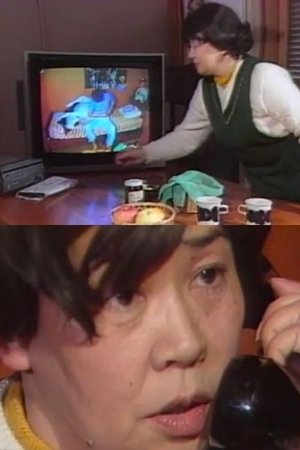
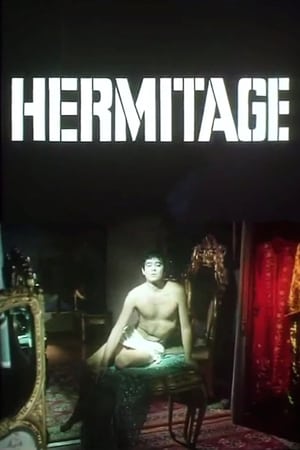
Hideo, a young man living away from his parents, is kept under constant surveillance by his doting mother via an omnipresent television monitor. Mama can only communicate with her beloved, absent son through the video screen.
A filmmaker recalls his youth in the town of Onomichi. In the present, he shoots a film in Onomichi alongside his cast, crew and family.
A young woman, injured and alone, desperately seeks refuge in an empty house before finding an abandoned train car. Haunted by surreal visions, she repeatedly collapses. At dawn, her motionless form draws the curiosity of local children, leaving her fate uncertain.
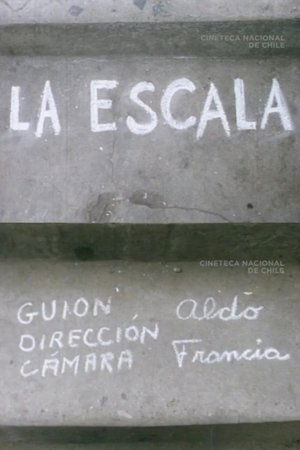
Experimental film by Aldo Francia that consists in diverse situations through the 123 steps of the Santa Justina staircase in the Cerro Larraín of Valparaíso.
An anthology of one-minute films created by 51 international filmmakers on the theme of the death of cinema. Intended as an ode to 35mm, the film was screened one time only on a purpose-built 20x12 meter public cinema screen in the Port of Tallinn, Estonia, on 22 December 2011. A special projector was constructed for the event which allowed the actual filmstrip to be burnt at the same time as the film was shown.
Glen doesn't dare tell his fiancée Barbara that he is a transvestite known as Glenda; in addition, Alan is undergoing medical treatment to become a woman named Anne; both stories are told by a psychiatrist.
Hermitage, defined by Bene as "a rehearsal for lenses", beyond any literal rendition - its narrative trace comes from one of his anti-novels, Credito Italiano V.E.R.D.I - displays his immediate attitude to thinking a cinematic language completely based on actor's movements and actions, and more specifically, on his presence and his schemes. Camouflaged or naked, still or moving, his body seems to play and be played at the same time, shifted by objective and subjective tensions, both metaphorically and visually speaking.
A Hollywood actor grows tired of making the same corporate movies, so he moves to Argentina to find more experimental and meaningful work.
Seeking fulfillment, a young drifter forgoes isolation to embark on a year-long murder spree.
Ion is a seemingly normal guy whose life goes by without a hitch. A phone call; a meeting with a friend; small, unimportant everyday situations. One day he gets into a car with two other people. They cross the border between Spain and France. The next morning, their lives will change forever.
A production company begins casting for its next feature, and an up-and-coming actress named Rose tries to manipulate her filmmaker boyfriend, Alex, into giving her a screen test. Alex's wife, Emma, knows about the affair and is considering divorce, while Rose's girlfriend secretly spies on her and attempts to sabotage the relationship. The four storylines in the film were each shot in one take and are shown simultaneously, each taking up a quarter of the screen.
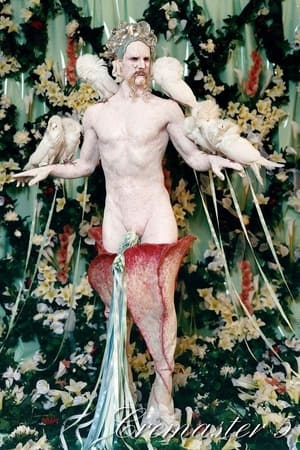
CREMASTER 5 is a five-act opera (sung in Hungarian) set in late-ninteenth century Budapest. The last film in the series, it represents the moment when the testicles are finally released and sexual differentiation is fully attained. The lamenting tone of the opera suggests that Barney invisions this as a moment of tragedy and loss. The primary character is the Queen of Chain (played by Ursula Andress). Barney, himself, plays three characters who appear in the mind of the Queen: her Diva, Magician, and Giant. The Magician is a stand-in for Harry Houdini, who was born in Budapest in 1874 and appears as a recurring character in the Cremaster cycle.
A lonely hairdresser watches the title sequence of "That Cold Day in the Park" then visits a local park to invite a down-and-out skinhead to his apartment. He draws the silent man a bath and talks to him as he soaks. He locks his guest in a bedroom. Next day, the skinhead leaves through the window and visits his sister, who's making a film called "Sisters of the SLA." He helps with a screen-test. The hairdresser has dreams and fantasies involving the skinhead, the skinhead returns to visit him, and then the filmmaker pays a call on the two men, exposing her brother as faking his silence and pretending a lack of sexual interest. Fantasies can come true.
A quirky woman who spends her free time as a pilot has her purse stolen; a mysterious man finds her wallet, and they embark on a peculiar romance.
Image analysis in slow motion. Distortion and reversed reality perspective.
In 1983, yacht sailor Will Parker leads an American crew financed by millionaire Morgan Weld to defeat during the America's Cup race against an Australian crew. Determined to get the prize back, Will convinces Morgan to finance an experimental boat designed by his ex-girlfriend Kate's new beau, Joe Heisler. When the boat is completed, the Americans head to Australia to reclaim the cup.
An experimental journey through a year in the life of the director, using his always playing playlist to cross the boundaries of fiction and documentary. Through scenes of both comedy and tragedy, realistic documentary footage and experimental sequences of the director's environment and daily life we get a sometimes estranging image of a young man and also an intriguing insight in his mindset and how this translates to the imagery on screen.
Follows various residents of the Chelsea Hotel in 1966 New York City.
Alban lives in a castle that he has just inherited in a small village in Charente-Maritime. Inside, the dilapidation has long since taken hold. He meets Jérôme, a young gypsy from the neighbouring town, with whom he has a sexual relationship. In this space that is impossible to rebuild, a strange intimacy is gradually invented, barely disturbed by the interruption of a young woman who has come to spend a few days in this residence.
Eleven young film-makers got together to collaborate in this atypical project. Atypical not only because of its technical specs, but because of its narrative structure. There are several scenes with only the city in common, and more as a conceptual presence at that than as a precise geography. None of those scenes contains a single "story": Each one of them is part of a larger situation that we cannot see, as though the beginning and end of each "story" had to be filled in by the audience.