The use of embryonic stem cells has ignited fierce debate across the spiritual and political spectrum. But what if we could create manmade stem cells - or find super cells in adults that could forever replace embryonic cells and remove the controversy? Today, we are on the brink of a new era - an age where we may be able to cure our bodies of any illness. Stephen HAWKING has spent his life exploring the mysteries of the cosmos, now there is another universe that fascinates him - the one hidden inside our bodies - our own personal galaxies of cells.
Of the Seven Wonders of the Ancient World, the Pyramid is the only one to survive. Many believe that even with our 21st-century technology, we could not build anything like it today. Based on the most up-to-date research and the latest archaeological discoveries, here is how the Pyramid came to be.
With the most tech startups and venture capital per capita in the world, Israel has long been hailed as The Startup Nation. WIRED’s feature-length documentary looks beyond Tel Aviv’s vibrant, liberal tech epicenter to the wider Holy Land region – the Palestinian territories, where a parallel Startup Nation story is emerging in East Jerusalem, Nazareth, Ramallah and other parts of the West Bank, as well as in the Israeli cybersecurity hub of Be’er Sheva. And we will learn how the fertile innovation ecosystem of Silicon Wadi has evolved as a result of its unique political, geographical and cultural situation and explore the future challenges – and solutions – these nations are facing.
David Attenborough takes us on a guided tour through the secret world of plants, to see things no unaided eye could witness. Each episode in this six-part series focuses on one of the critical stages through which every plant must pass if it is to survive:- travelling, growing, and flowering; struggling with one another; creating alliances with other organisms both plant and animal; and evolving complex ways of surviving in the earth's most ferociously hostile environments.
In 1973 Yorkshire public television made a short film of the Nobel laureate while he was there. The resulting film, Take the World from Another Point of View, was broadcast in America as part of the PBS Nova series. The documentary features a fascinating interview, but what sets it apart from other films on Feynman is the inclusion of a lively conversation he had with the eminent British astrophysicist Fred Hoyle.
A documentary chronicling the history of the telescope from the time of Galileo. Featuring interviews with leading scientists discussing Galileo's first use of the telescope to the latest discoveries in cosmology.
The universe, endless expanse. In this galactic double feature you will experience a breath-taking insight into our solar system. Up close, made for IMAX® Theaters and of course in 3D!
Founder of Wellness Engineering and New York Times Bestselling author Jonathan Bailor shares how personal tragedy led him to dedicate his life to finding a better way to eat, think, and live that reverses the causes and symptoms of diabetes and obesity (Diabesity). Featuring expert interviews on-location at Harvard Medical School with Dr. David Ludwig, Dr. JoAnn Manson, Dr. Kirsten Davison, and Dr. John Ratey, along with intimate testimonials of everyday Americans, we see the pain and struggle of the old-fashioned and ineffective “calories in, calories out” model, expose the lies that led to it, and provide a proven, practical, and pleasurable alternative. BETTER culminates in offering a proven path toward better living by introducing revolutionary methods to lower the body weight “Setpoint” through simple, evidence-based solutions that everyone can use to optimize their current diet to prevent and reverse many of today’s most common diseases.
One in three Americans is pre-diabetic. A huge percentage of them do not know that they are sick. Adult onset diabetes is no longer an illness for the obese and elderly. Millions of Americans who regularly exercise and eat a diet recommended by the USDA are classified as "skinny-fat". The connection between the standard American diet and numerous metabolic disorders is now an unspoken fact in most medical circles
A Cambridge geneticist dispels misconceptions about living with obesity and explores why the epidemic continues to expand across the UK and America.
Meet Nikola Tesla, the genius engineer and tireless inventor whose technology revolutionized the electrical age of the 20th century. Although eclipsed in fame by Edison and Marconi, it was Tesla's vision that paved the way for today's wireless world. His fertile but undisciplined imagination was the source of his genius but also his downfall, as the image of Tesla as a mad scientist came to overshadow his reputation as a brilliant innovator.
Every month, an estimated 200,000 Australians deliberately hurt themselves. They cut, scratch, burn and sometimes even break bones. It's called self-harm, and it peaks in teenagers and young people. The Silent Epidemic explores this dark and often secret behaviour, asking why more and more people are turning to self-harm as a way to cope with life. Interweaving their personal stories with scientific enquiry, The Silent Epidemic casts a unique lens onto what is fast becoming a problem that can no longer remain hidden. In response to the growing numbers, a group of Melbourne scientists are hunting for a radical solution to self-harm with a world-first experiment. The Silent Epidemic charts their progress: it is both a wake-up call, and ultimately, a story of hope. Written by Mark Hamlyn
Earth teems with a staggering variety of animals, including 9,000 kinds of birds, 28,000 types of fish, and more than 350,000 species of beetles. What explains this explosion of living creatures—1.4 million different species discovered so far, with perhaps another 50 million to go? The source of life's endless forms was a profound mystery until Charles Darwin brought forth his revolutionary idea of natural selection. But Darwin's radical insights raised as many questions as they answered. What actually drives evolution and turns one species into another? To what degree do different animals rely on the same genetic toolkit? And how did we evolve?
In this two-hour special, NOVA captures the turmoil that tore apart the community of Dover, Pennsylvania in one of the latest battles over teaching evolution in public schools. Featuring trial reenactments based on court transcripts and interviews with key participants, including expert scientists and Dover parents, teachers, and town officials, "Judgment Day: Intelligent Design on Trial" follows the celebrated federal case of Kitzmiller v. Dover School District.
The film interweaves the personal accounts of polio survivors with the story of an ardent crusader who tirelessly fought on their behalf while scientists raced to eradicate this dreaded disease. Based in part on the Pulitzer Prize-winning book Polio: An American Story by David Oshinsky, Features interviews with historians, scientists, polio survivors, and the only surviving scientist from the core research team that developed the Salk vaccine, Julius Youngner.
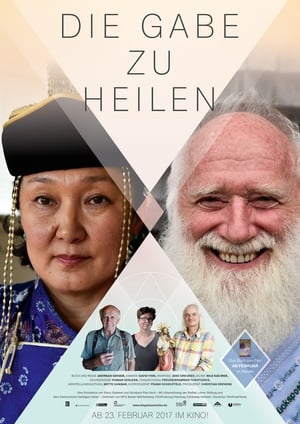
The film tells the stories of five people with special abilities who treat and heal their patients in an unconventional way. These charismatic healers from Germany, Austria and Switzerland are the subjects of this documentary which sets out to show how their old-school, arcane methods can serve as an addition to conventional, academic medicine.
"All sounds travel in waves much the same as ripples in water." Educational film produced by Bray Studios New York, which was the dominant animation studio based in the United States in the years surrounding World War I.
Darwin's great insight – that life has evolved over millions of years by natural selection – has been the cornerstone of all David Attenborough’s natural history series. In this documentary, he takes us on a deeply personal journey which reflects his own life and the way he came to understand Darwin’s theory.
Le Big bang, mes ancêtres et moi
Unlocking the Mystery of Life represents a unique programming opportunity for local stations. Its broadcast release coincides with the 50th anniversary of one of the greatest scientific breakthroughs in history-James Watson and Francis Crick's discovery that the DNA molecule carries hereditary information in the form of a code that many scientists have likened to computer software or a written language. This discovery (announced on April 25,1953) sparked a scientific revolution. But it also left a fundamental question unanswered. Where did the information in DNA come from? How did the software in the cell arise? Unlocking the Mystery of Life explores these questions through the stories of a growing number of scientists who no longer believe that natural selection or chemistry, alone, can explain life's origin. Instead, they think that the microscopic world of the cell provides evidence of purpose and design in nature.