Paul Joyce’s documentary profile of Robert Altman, with contributions from Altman, Elliott Gould, Shelley Duvall, assistant director Alan Rudolph and screenwriter Joan Tewkesbury. Originally broadcast on July 17th 1996 in Channel Four’s Cinefile series.
Chicas Malasaña en tierras gallegas
Noche de agosto sin luz
In one of those wonderful coincidences of history, lumière, the French word for “light,” was also the last name of brothers Auguste and Louis, whose brilliant invention, the cinematograph, helped to inaugurate the most beloved art form of the last 130 years. Institute Lumière director Thierry Frémaux uses Lumière, Le Cinema! to guide the viewer through over a hundred shorts—some famous, some forgotten, some never before seen—directed by Lumière and company. In the process, Frémaux illuminates how the brothers employed the camera as a creative instrument as they (and their operators) mastered framing, staging, and subject selection for quotidian and exotic microdocumentaries as well as the first ever fictional motion pictures. The result is not only a glorious re(telling) of the genesis of cinema but a profound meditation on the beautiful world captured—and the mysterious world imagined—by the Lumières.
A cheerful road movie all about Belgian films at Cannes over the past 70 years. Filmmakers from the past converse with those from the present to paint the portrait of a cinema that is both diverse and free. An account of Belgium’s participation in the greatest film festival in the world.
Ojo de Mujer is a documentary that features four Nicaraguan women filmmakers, whose testimonies allows us to learn about their begginings and how they have contributed to building a collective memory within their communities, leaving lasting roots for future generations of filmmakers in the country.
A thrilling comedic documentary attempting to uncover the mystery of who is responsible for one of the most infamous bloopers in cinematic history.
A group of elders spends their weekdays in a retirement home in Sandim, in the north of Portugal, where they talk, do arts and crafts, practice yoga and pray. We follow them between October 2012 and March 2013, when an economic crisis overshadowed Portuguese society and unemployment rates reached record levels. Meanwhile, arrangements are made for the Carnival ball. Will they bring the first place home this time?
Why is it prohibited to sit in food courts if you will not order foods? Why did Isko Moreno, newly elected Mayor of Manila, suddenly withdrew the licenses of bars near university establishments? What is life at night in Poblacion, Makati for Prostitutes? These are the questions that intrigued the group of students from Adamson University from tapping the nameless dilemma of the business industry and figuring in the end if they are ethical or not.
Explore the life of Flannery O’Connor whose provocative fiction was unlike anything published before. Featuring never-before-seen archival footage, newly discovered journals, and interviews with Mary Karr, Tommy Lee Jones, Hilton Als, and more.
Parole de citoyens - Immersion en Israël
Filmmaker Liam Le Guillou seeks out an occult curse to an answer to the question "is magic real?", forcing him to question the nature of reality and belief in this dangerous, never-before-seen, dark social experiment.
Archives from Swarm's Involving Heritage 2024 tour with Piri Reis in five cities on the island of Java.
An upcoming documentary on the Arizona screamo band Journal.
In the aftermath of war, an extraordinary professor brings hope to children haunted by trauma-induced nightmares.
Ojos Inocentes
By delving into the life of the girl behind the fighter, Shadow Boxing illuminates the heart of a true warrior, showcasing her courage and resilience long before she enters the ring.
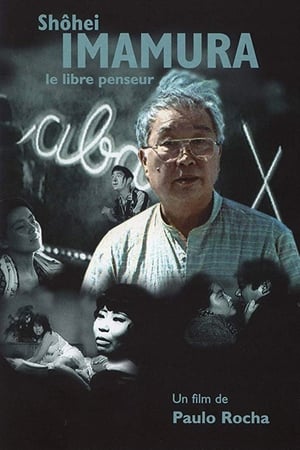
Documentary about Japanese film director Shohei Imamura.
The Executive Empress explores the entrepreneurial lives of several Florida women, who have turned their unique passions into successful businesses.
In the summer of 1975, the young director Steven Spielberg set new standards for cinema worldwide with an oversized shark bite, a plastic shark fin and an unmistakable two-note main theme composed by John Williams. With the horror from the deep, a man-eating, gigantic great white shark, the film of the same name became a similarly traumatic reference as Alfred Hitchcock's "Psycho": it triggered lasting primal fears across generations. On the beaches of the world, there was clearly a "before" and an "after". Steven Spielberg, who was only 28 at the time, not only set new standards for the thriller genre, but also hid his biting criticism of US capitalism in the 1970s behind it.