The Network is an exclusive group of the most professional and fearless corruption hunters in the world. It is twenty public prosecutors and investigators from Europe, US, Africa, Asia and Latin America that meet in order to support each other and find new tools in the struggle against corruption. They investigate some of the wealthiest, greediest and most influential leaders and enterprises in the world. The members have faith in a just world even if many corruption hunters have been killed.
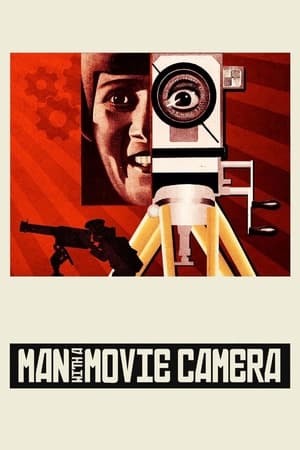
Film cameras cruise the Soviet Union's mighty Volga River, providing a view of the Russian people along its 2300-mile length, including looks at the fishing industry, a rural village, a manufacturing town and the wedding of two factory workers.
Byzance uses a text by Stefan Zweig to describe the Ottoman conquest of the city in 1453. Before he turned to feature filmmaking in 1968 with Naked Childhood, Pialat worked on a series of short films, many of them financed by French television. Byzance is one of Pialat’s six Turkish shorts.
All of Pialat's Turkish films are uniquely interested in the country — especially Istanbul — as it was, not just as it is at the precise moment that Pialat is filming it. History informs these films in a big way, with the voiceover narration (which incorporates excerpts from various authors) introducing tension between the images of the modern-day city and the descriptions of incidents from its long and rich history. Istanbul is probably the most conventional documentary of Pialat's Turkish series, providing a general profile of the titular city, its different neighborhoods, and the different cultures and ways of living that coexist within its sprawling borders. As the other films in the series also suggest, Pialat sees Turkey, and Istanbul in particular, as a junction point between Europe and the East, between the old and the new, between history and modernity.
Maître Galip is the most poetic and powerful of Pialat's Turkish Chronicles, using the poems of Nazim Hikmet to accompany a series of evocative images of ordinary working class people in Istanbul. This was the film that Pialat himself claimed was the most complete realization of what he was aiming for with his Turkish documentaries. It's not difficult to see why this was his favorite: here he abandons the historical commentary and documentary observation of the other shorts in favor of an emotional emphasis on the lives of the poor and the unemployed.
La Corne d'or is mostly concerned with religious ritual, examining the mosque (and former cathedral) discussed in Byzance. As a contrast against Istanbul's status as a center of historical religious conflict, Pialat — drawing here on texts by the French poet Gérard de Nerval — also describes the city as a place of strange ethnic and religious harmony, with representatives of various cultures and religions living in close contact. He emphasizes the city's hybrid culture, its blend of Southern European and Arab influences, reflected in both its people and its very construction.
Pehlivan focuses on a three-day wrestling competition, an ancient tradition that dates back over a thousand years to the time of the Ottoman Empire, originating in the games the soldiers would play to entertain themselves in between battles. Maybe that's why there's more than a hint of homoeroticism in the way the wrestlers oil themselves up with grease, making sure to cover every inch of their bodies so that their opponents will be unable to get a grip. Pialat's closeups emphasize the men's muscular bodies jammed together and sliding off one another, posed in intimate, twisted arrangements, struggling desperately for a grip on each other's bodies. Arms are jammed down pants, one of the only places there's some potential for a handhold, and the whole thing is very suggestive and sensual, a form of intimate male contact that's sanctioned as a show of strength and masculinity.
Short doc by Maurice Pialat. The first film in the series set at Turkey, Bosphore, is also the only one that was shot in color.
The riveting biography of 102-year-old CIA spymaster Peter Sichel, who unpacks the obscured roots of conflicts that plague today’s world and the toll espionage took on his personal life.
Featuring footage spanning from 1901 to 1985, this little-seen footage has been found from all across the UK. This programme allows an exploration into stories of migration, community and also the struggle against inequality, while also providing the opportunity to celebrate black British culture and life on screen. Films in the programme include: Miners Leaving Pendlebury Colliery (1901), Hull Fair (1902), For the Wounded (1915), From Trinidad to Serve the Empire (1916), Hello! West Indies (1943), Mining Review 2nd Year No. 11 (1949), To the Four Corners (1957), Black Special Constable (1964), Black Police Officers (1966), Cold Railway Workers (1964), Nigerian Wedding in Cornwall (1964), Coloured School Leavers (1965), London Line No. 373 (1971), African Student Families (1975), Liverpool 8 (1972), Blood Ah Go Run (1982), The Jah People (1981) and Grove Carnival (1981)
Gary is turning into a dinosaur, and Eric must find the cure. This becomes a globetrotting journey into everything dino while searching for the magic waters needed to stop Gary's odd transformation. Will Eric be too late? Get ready to meet the Garysaurus!
Recently widowed from a man 50 years her senior and bored to tears with covering ladies fashion, Lady Grace leaped at the chance to be the only woman onboard one of the media sensations of the decade. At journey's end she returned to America a star, thanks to her good looks and gutsy charm. But her reports on the ship's travels for the front pages of the Hearst press empire only told part of the story. In her diary she recorded a far more intimate journey-her struggle to get over her secret affair with shipmate, mentor, and married man Karl von Wiegand. Combining spectacular archival footage of the journey across New York, Siberia, Tokyo, and the Pacific with narration drawn from Drummond's articles and her private journals, this sweeping black and white documentary stands as a vision of technological marvels and global hope in that narrow window between world wars when everything seemed possible except true love.
A five-year visual ethnography of traditional yet practical orchestration of Semana Santa in a small town where religious woodcarving is the livelihood. An experiential film on neocolonial Philippines’ interpretation of Saints and Gods through many forms of rituals and iconographies, exposing wood as raw material that undergoes production processes before becoming a spiritual object of devotion. - A sculpture believed to have been imported in town during Spanish colonial conquest, locally known as Mahal na Señor Sepulcro, is celebrating its 500 years. Meanwhile, composed of non-actors, Senakulo re-enacts the sufferings and death of Jesus. As the local community yearly unites to commemorate the Passion of Christ, a laborious journey unfolds following local craftsmen in transforming blocks of wood into a larger than life Jesus crucified on a 12-ft cross.
How the spirit of unity, which buoyed Britain during the war years, carried through to create a vision of a fairer, united society.
Documentary looking at the life and career of 1930s film star Leslie Howard. It features exclusive home movie footage, including footage from the Gone with the Wind set. The film includes extensive interviews with Howard's daughter, Leslie Ruth "Doodie" Howard, and contributions from friends and colleagues.
The film is dedicated to the achievements of the Ukrainian SSR for the eleventh anniversary of the October Revolution.
Documentary featuring a jaw-dropping, behind-the-scenes look at the attempted comeback of Anthony Weiner in 2013 as he mounts a campaign for New York City mayor in the wake of his sexting scandal. Featuring unfettered access to the candidate and his campaign.
The Mayo Clinic tells the story of a unique medical institution that has been called a "Medical Mecca," the "Supreme Court of Medicine," and the "place for hope where there is no hope." The Mayo Clinic began in 1883 as an unlikely partnership between the Sisters of Saint Francis and a country doctor named William Worrall Mayo after a devastating tornado in rural Minnesota. Since then, it has grown into an organization that treats more than a million patients a year from all 50 states and 150 countries. Dr. Mayo had a simple philosophy he imparted to his sons Will and Charlie: "the needs of the patient come first." They wouldn't treat diseases...they would treat people. In a world where healthcare delivery is typically fragmented among individual specialties, the Mayo Clinic practices a multi-specialty, team-based approach that has, from its beginnings, created a culture that thrives on collaboration.
The final oral exam in history and social studies at one of Warsaw's high schools. The film illustrates the theatre of social life in Soviet Poland where one says different things on the stage and another behind the scenes.
Documentary that shows the events that culminated in the deposition of President João Goulart, on March 31, 1964, and the implementation of the military dictatorship in Brazil. Around 40 characters reveal behind the scenes and comment in detail on this important moment in Brazilian political history.