Nice looking Travelogue takes us to the Northeast corner of Wyoming as we visit Yellowstone National Park.
A scenic documentary record of a climb up to Mount Assiniboine, the 'American Matterhorn' in the Canadian Rockies.
A man’s journey to learn the story of his estranged father, a failed hitman killed several years ago. A man's journey to face the scattered members of his dysfunctional family and understand the life of his absent father, a failed hit man murdered years ago in a Mexican border town. While the story of the father takes shape, each family member comments on the behavioral patterns that influenced his criminal actions.
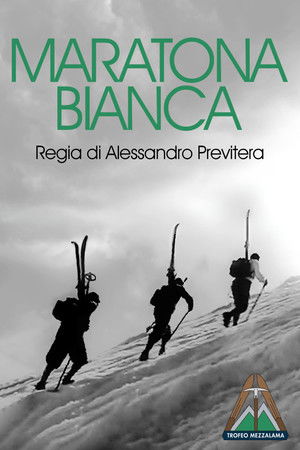
Documentary on one of the first editions of the Trofeo Mezzalama, the highest ski mountaineering race in Europe, at more than 4,200 meters above sea level, which takes place on the glaciers of Monte Rosa, from Breuil to Gressoney-La-Trinité, crossing the summits of Castor (4,199 meters) and Nez du Liskamm (4,100 meters). The film recounts the last hours of feverish preparation before the start, the teams preparing for the race linked in ropes, then follows the stages of the competition by following the groups of skiers from a plane. Created in 1933, the Trofeo Mezzalama was contested until 1938, before falling into oblivion during the war. A second version was organized from 1970 to 1973. A third biannual version has been organized since 1997.
A travelogue set in the jungles of Borneo.
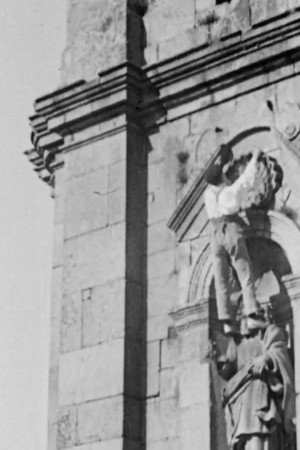
Escalada à Torre dos Clérigos
1906, produced by Charles Urban, cinematography by Frank Ormiston-Smith.
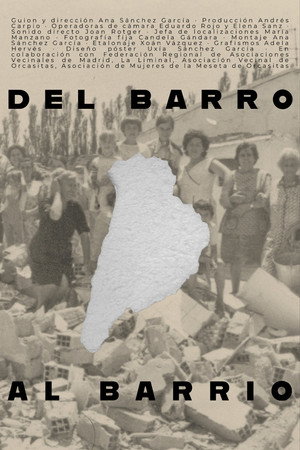
Del barro al barrio
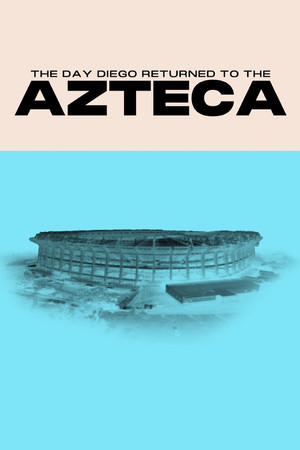
The Day Diego Returned to the Azteca, a new ESPN Films documentary revisiting Diego Armando Maradona’s only return to Estadio Azteca in 2000, 14 years after leading Argentina to its historic World Cup win. The film tells the extraordinary and little-known story of Diego Armando Maradona’s only return to Estadio Azteca after leading Argentina to the 1986 FIFA World Cup title. Maradona returned to the stadium in 2000 while traveling from Cuba to Mexico for Boca Juniors’ Copa Libertadores semifinal against Club América.
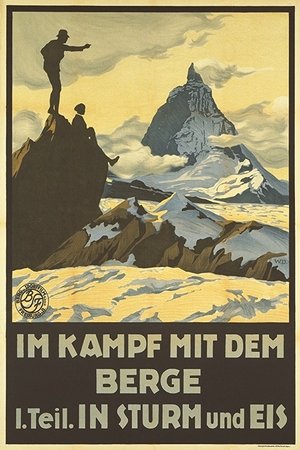
The film follows two mountain enthusiasts, battling through a glacier area in the Swiss mountains. The mountaineers are two very prominent skiers at the time, Hannes Schneider and Ilse Rohde, who climb the Lyskamm. The sublime beauty of the film is effectively staged. It pays attention both to the observation of nature and to capture the action and technical difficulty of mountaineering. This is a symphony that celebrates in images the beauty of the mountains with their majestic cloud formations and mountain vistas. It is the second film of the mountain film pioneer Arnold Fanck after his 'Das Wunder des Schneeschuhs' both filmed with the collaboration of Sepp Allgeiger. In 2013 the film was restored by the Friedrich Wilhelm Murnau Foundation and released in DVD.
Known also as 'The Crystal Ascension', the film chronicles an exploration of Mount Hood and its glaciers by a mountain-climbing party who explore the snowfields of the Eliot Glacier, the largest glacier on Mount Hood. It shows excellent close views of mountain glaciers and strange ice formations. The film was produced by Robert Cameron Bruce for the Education Films Corporation of America as part of the Bruce Scenic Series.
Ring Ring: ¡Hora de luchar!
Embark on a captivating journey that delves into the essence of Yucatecan Maya life in the 21st century. This feature-length documentary unfolds against the backdrop of Coba, the second largest Maya ceremonial center in the ancient world. From this archaeological marvel, the film ventures deep into the lush jungles and intimate villages, offering a poignant exploration of two indigenous families committed to preserving their rich heritage. At its core, Beyond the Ruins weaves a tapestry that illuminates the profound interconnectedness of existence, as mirrored in the ancient Maya philosophy of "in lak' ech, a lak' en" - where "I am you; you are me." The film not only resurrects a vibrant but often overlooked culture; it also invites viewers to contemplate the universal lessons embedded in Maya wisdom. Through this evocative lens, audiences discover not only a living legacy but also a source of inspiration to enhance their own quality of life.
A group of men shows the 'before and after' physical effects of a journey upon the Mount Aspiring area. Mount Aspiring (9,960 ft.), known as the Matterhorn of New Zealand, together with Mount French, mark the end of the Otago and Westland regions. The movie does not show scenes of the climbing itself, but collects the testimonies of the members of the group, led by Jack Aitken. The other members are Bill Young, Stewert J. Macdonald, Victor Bowden, and Roland Ellis.
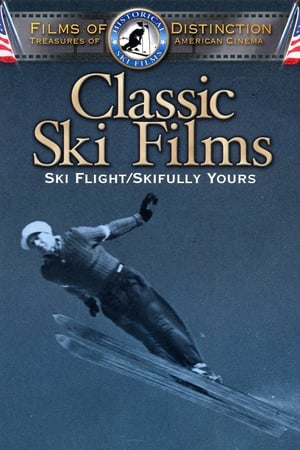
Shortened version of the film 'Snow flight' distributed by Warner Bros. The film was produced by Jerome Hill as 'a document of skiing according to the principles of Hannes Schneider.' It features Otto Lang, director of the Mt Rainier and Mt Baker ski schools. As the film opens, Otto emerges from a cabin beneath Table Mountain at the Mt Baker ski area with his canine friend. He applies wax-on climbing skins to his skis. Then he steps into his bindings and climbs to a scenic ridge. The narrator describes each technique in detail as Otto demonstrates again. Several of the maneuvers are done in slow motion on a slope meticulously packed by side-stepping.
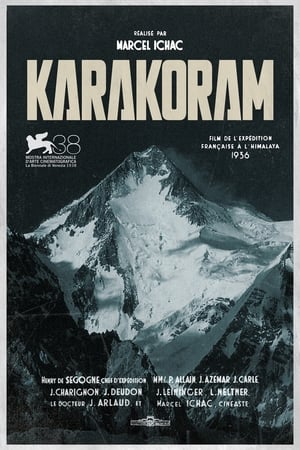
Account of the first French expedition to the Himalayas, which attempted to climb the hidden peak (Gasherbrum I) in 1936, from the preparations for the trip to the end of the ascent. After a long approach walk through quasi-desert regions, then on a huge glacier, the caravan of 700 porters arrives at the foot of Hidden Peak. The expedition was led by Henry de Ségogne, with Jean Charignon, Pierre Allain, Raymond Leininger, Jean Carle, Jean Deudon, Louis Neltner, Jacques Azémar, doctor Jeand Arlaud and director Marcel Ichac. Weather conditions, logistical problems and a strike among Sherpas forced the team to retire at 6900m on the south face. The film received the Silver Lion at the Venice Film Festival in 1938.
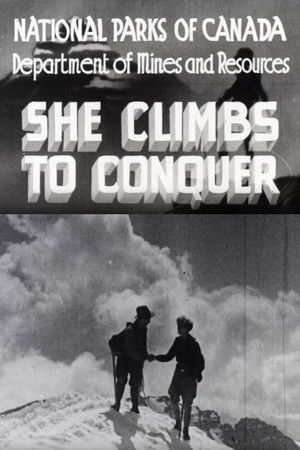
"She Climbs to Conquer" shot by W.J. Oliver, was a noteworthy film which gained well merited acclaim. Made in 1933 it pictured the climb of Georgia Engelhard, a professional mountain climber, from Abbot's Pass to the peak of Mount Victoria.
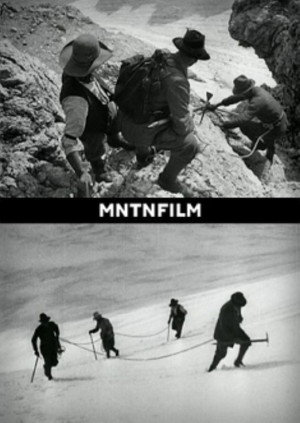
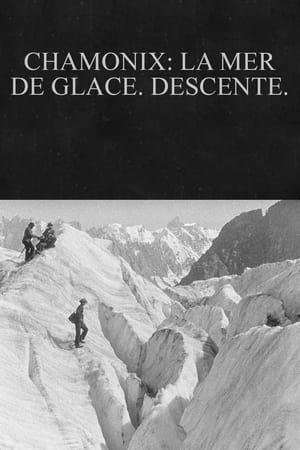
Four roped men descend through the seracs of the Mer de Glace. One of them falls and has to be hoisted. The shot belongs to a collection of scenes that were presented together as a kind of travelogue film under the title of 'Voyages animés' in a diorama pavilion in the Universal Exhibition of Paris of 1900. The mountaineering scenes in this series include four scenes in the Mer de Glace and one in the Meije glacier. These five scenes, under a minute long, are the first mountaineering images ever filmed. Several of the 'Voyages animés' scenes were included in the Lumière catalog in 1901 under the title of 'À travers la France'.
Danube upstream from Vienna, with its images of monasteries and castles. It's hard for an American to realize the age of civilization in Europe. This Burton Holmes travelogue hints at it.
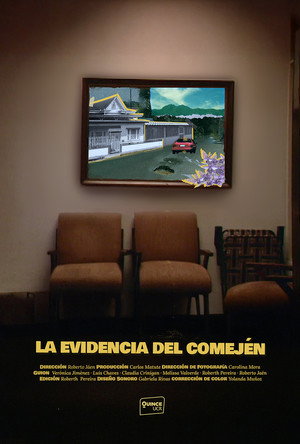
What is the middle class? Is it a set of encyclopedias, the tupper ware in the freezer, tha family vacation, working as a babysittter? Is it something that is no longer here? Is it the bus, the park near my childhood house, the evidence of the termites?