Inspired by an exclusive interview and performance footage of Chavela Vargas shot in 1991 and guided by her unique voice, the film weaves an arresting portrait of a woman who dared to dress, speak, sing, and dream her unique life into being.
Don Emilio is a humble, 63-year-old man who lives in the Amazon rainforest, seven miles from the city of Iquitos, Peru. For all of his adult life he has worked as a curandero and vegetalista, a traditional healer. He estimates that in his career he has treated more than 2,500 clients. Through the camera lens of anthropologist Luis Eduardo Luna, Don Emilio tells us about his practice, his beliefs, his community, and his life. He shows us how he prepares ayahuasca and other herbal medicines. Finally, we see Don Emilio treat a man who has come to him for help, and hear from a poor woman who has brought her infant son for medical care.
Wildlife filmmaker Filipe Deandrade hosts a journey into one of the most biologically diverse countries in the world, Costa Rica.
In June 2010, French actress Marion Cotillard spent a week in the heart of the tropical forests of the Democratic Republic of Congo with members of Greenpeace France and Greenpeace Africa. She delivers in video a strong testimony on the looting of Congolese forests which benefits a few industrial groups, often European.
The silent majority is the Costa Rican peasantry, which has been the object of traditional contempt and which has manifested itself in various forms: unfair salary compensation, bad prices for their agricultural products, financing difficulties, land grabs, precarious housing and educational conditions. health. Precariousness, peasant migrations and the depletion of the agricultural frontier are also analyzed in the film.
This film was originally made for the International Conference on Human Settlements (HABITAT) which was held in Vancouver, Canada. Taking as an example the production and marketing of bananas and the prevailing conditions in the world market - dominated by the virtual monopoly of three multinational companies -, it is shown how as a result of this monopolistic domination, the Costa Rican State has stopped receiving equitable taxes for what that, in the end, the housing and public services offered by the country are characterized as those of an underdeveloped society. The attempt made since 1974 by a group of banana-producing countries, aimed at improving sales prices to multinationals and raising taxes; The resulting “banana war” are examples of the enormous efforts that small banana countries have to make to achieve greater justice in the prevailing market conditions.
Filmed in the jungles of Peru, shaman Don Jose Campos introduces the practices and benefits of Ayahuasca, the psychoactive plant brew that has been used for healing and visionary journeys by Amazonian shamans for at least a thousand years.
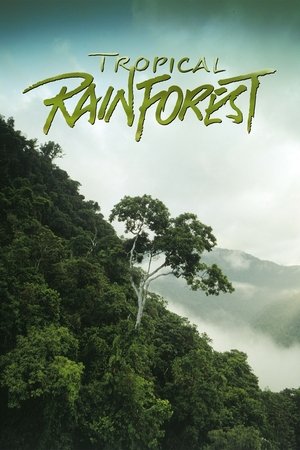
The story of the evolution of tropical rain forests, their recent and rapid destruction, and the intense efforts of scientists to understand them even as they disappear. This film gives viewers a better appreciation of the importance of tropical rain forests on a global scale.
In times of global ecological crisis, Costa Rica seems to be an oasis for its rich biodiversity. Nacho traces a route to learn about agroecological projects, discovering what the indigenous communities call "good living" Could this be the solution?
Descend into the mists of Costa Rica's cloud forest. Feel the swirling moisture nourish this lush ecosystem as a surround sound symphony of life fills the room. Experience the Oso Peninsula's lowland Rainforest where brillant scarlet macaws and sleeoy sloths dwell in on the the most bio-diverse places on Earth. Feast your eyes on brilliant golds and reds against an infinite backdrop of lush green. Your senses become intoxicated with the sweet, heady nectar of the jungle. Catch bright strokes of color streaking across tropical skies! Iridescent butterflies flit through the air like flowers on wings.
The forest is like an organism, ancient and full of mechanisms. Its plants need water and are temperature-dependent. Nevertheless, it survives in a wide variety of locations around the world. How does it manage to adapt to even the most adverse conditions?
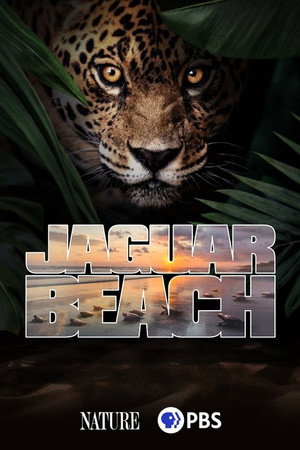
By some measures, it’s a tiny country, just .03% of the Earth’s landmass. But when it comes to wildlife, Costa Rica is an ecological giant, bursting with a density of species and diverse habitats unparalleled anywhere else in the world.
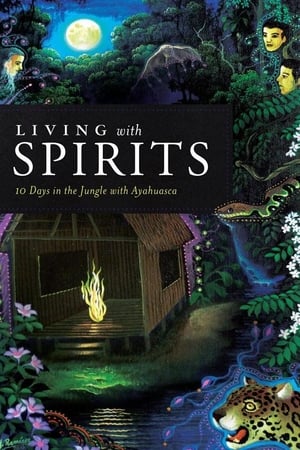
After years of suffering from post-traumatic stress disorder, six US veterans of the wars in Iraq and Afghanistan travel to Peru on a quest for healing. With the help and guidance of three brothers who are traditional healers, they take ayahuasca and other plant medicines during a 10-day retreat in the Amazon rainforest.
The tropical climate and contrasted topography of Costa Rica has fostered exceptional biodiversity, hosting wildlife from both North and South America. From the peaks of the volcanoes down to the Pacific and Caribbean shores, and amidst the dense Cloud forest, the country is home to the most remarkable mammals, beautiful birds, and astonishing reptiles… all in for a beauty contest!
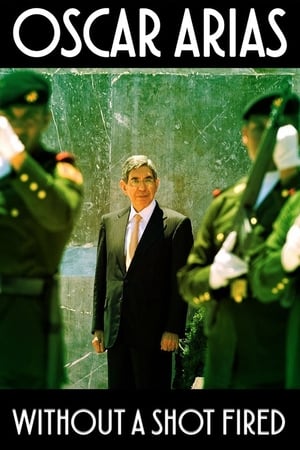
In war-torn Central America there is a country with no dictator and no army, a country at peace with itself and its neighbors. It is the oldest democracy in Latin America. This film explores the history of Costa Rica and the reasons it has been able to exist as a neutral country firmly committed to social welfare and free elections. Costa Ricans live without an army, preferring to invest their resources in hospitals and schools rather than machine guns and tanks. The film explores the issue of Costa Rica's neutrality in the face of its dependence on U.S. aid.
A portrait of Peruvian curandero Agustin Rivas-Vazques, revealed primarily through stationary-camera interviews.
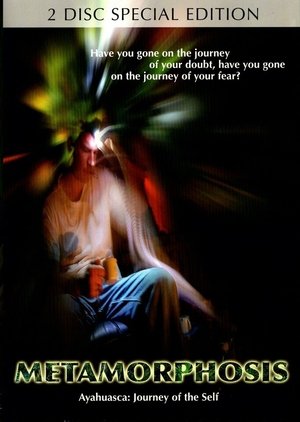
The secrets about unlocking the mysteries of consciousness by plant-drugs. The related chances and risks involved in this shamanism. While filming Blueberry, the Secret Experience, Jan Kounen met the Shipibo healers of the Peruvian Amazon and discovered their sacred plant: Ayahuasca, the spirit vine. Deeply affected by this experience, he decided to return to Peru to shoot a documentary on the plant and the medicinal rites of the shamans. To this end, he filmed the natives but also met neurologists, philosophers, artists, and chemists working on this subject. He notably interviewed Jean Giraud, the illustrator of Blueberry, and Kary Mullis, winner of the 1993 Nobel Prize in Chemistry. More than a traditional documentary, the film is an invitation to travel, a half-open door to another world or another perception of reality. The secrets about unlocking the mysteries of consciousness by plant-drugs. The related chances and risks involved in this shamanism.
On a quest for emotional healing and spiritual awakening, a naturopathic doctor and an accountant join others in the Peruvian Amazon to drink a psychedelic brew called ayahuasca.
Visão do Paraíso
Cost Rica is one of the most diverse places on Earth. This exploration features Costa Rica's unique animal inhabitants, including various monkeys, birds, frogs, even caimans and fruit-eating bats.