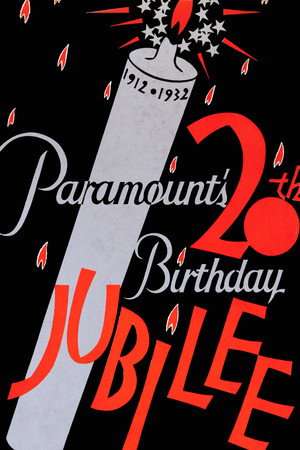
The first half is a salute to John Wesley Powell, the first man to explore the Colorado River. Walt Disney presents a behind-the-scenes look at the filming of Ten Who Dared on the same waters. Then the True-Life Adventure Featurette: Bear Country is shown.
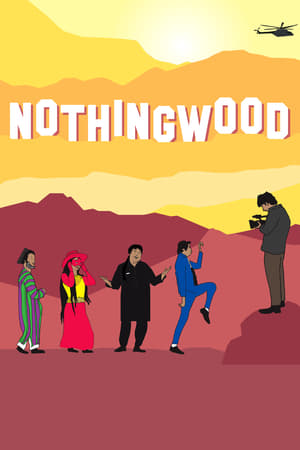
The film follows the story of a San Francisco Pentecostal minister Richard Gazowsky on his quest to shoot a groundbreaking fantasy film called Gravity: The Shadow of Joseph (described by him as "Star Wars meets The Ten Commandments"). The film follows him and members of his church as they go through pre-production and fly to Alberobello, Italy, for initial shooting that turns out to be marred with difficulties.
Acclaimed Finnish director Rauni Mollberg made several scandalous yet widely appreciated films. Former co-worker Veikko Aaltonen’s eye-opening documentary The Dinosaur looks at the relentless, often disturbing directing techniques behind Mollberg’s art and success.
What makes European cinema so special? Find out in Paul Joyce’s feature-length documentary, Pictures of Europe, which examines the differences between American independent and Hollywood movies and films from European directors. Featuring luminary iconoclasts from European cinema such as Agnes Varda, Bernardo Bertolucci and Pedro Almodovar, as well as American counterpoints from Paul Schrader, and those who have crossed back and forth, such as Paul Verhoeven
Documentary about the original 1986 film Critters. Features interviews with actors Dee Wallace, Don Opper, Terrence Mann, and Lin Shaye; producer Barry Opper; writer Brian Muir; critter designers and voice actors; and many more.
The international success of the film Das Boot by Wolfgang Petersen made U-96 one of the most famous submarines in cinematic history. But the true story of one of Hitler's most fearsome U-boats and its crew goes far beyond fiction. For the first time, this documentary sheds light on the reality behind the fiction through exclusive interviews with the makers and actors of Das Boot, as well as the last survivors of the time. In doing so, this documentary explores how Hitler's propaganda images may have influenced the visual and narrative force of Das Boot.
Memories from the making of the classic Milos Forman film "Ragtime".
In 1982, Wim Wenders asked 16 of his fellow directors to speak on the future of cinema, resulting in the film Room 666. Now, 40 years later, in Cannes, director Lubna Playoust asks Wim Wenders himself and a new generation of filmmakers (James Gray, Rebecca Zlotowski, Claire Denis, Olivier Assayas, Nadav Lapid, Asghar Farhadi, Alice Rohrwacher and more) the same question: “is cinema a language about to get lost, an art about to die?”
A bunch of British working class amateur filmmakers with nothing left to lose tackle one of Hollywood's greatest musicals in order to save their beloved Club. Britain’s oldest amateur filmmaking club struggles to survive, as its members grow old amid flickering memories and hardships. In the northern industrial town of Bradford, England, a handful of diehard amateur filmmakers desperately cling to their dreams, and to each other, in this warm and funny look at shared artistic folly that speaks to the delusional dreamer in us all.
In 1928, as the talkies threw the film industry and film language into turmoil, Chaplin decided that his Tramp character would not be heard. City Lights would not be a talking picture, but it would have a soundtrack. Chaplin personally composed a musical score and sound effects for the picture. With Peter Lord, the famous co-creator of Chicken Run and Wallace & Gromit, we see how Chaplin became the king of slapstick comedy and the superstar of the movies.
When World War II broke out, John Ford, in his forties, commissioned in the Naval Reserve, was put in charge of the Field Photographic Unit by Bill Donavan, director of the soon-to-be-OSS. During the war, Field Photo made at least 87 documentaries, many with Ford's signature attention to heroism and loss, and many from the point of view of the fighting soldier and sailor. Talking heads discuss Ford's life and personality, the ways that the war gave him fulfillment, and the ways that his war films embodied the same values and conflicts that his Hollywood films did. Among the films profiled are "Battle of Midway," "Torpedo Squadron," "Sexual Hygiene," and "December 7."
The story of the making and subsequent success of The Day of the Beast, the Spanish cult film directed by Álex de la Iglesia and released in 1995.
Documentary which follows Bo Widerberg during the making of 'Man on the Roof', 'The Butt' and a failed theater production.
As artificial intelligence becomes ever more sophisticated, the film industry is split between enthusiasm at what the technology can achieve and concern over the future for human workers in the industry. Will actors and actresses be replaced by machines? An overview on the coming wave of AI in cinema.
Pixar director Peter Sohn takes viewers on a humorous personal journey through the inspiration behind Disney and Pixar’s feature film “Elemental.” “Good Chemistry: The Story of Elemental” traces his parents’ voyage from Korea to New York, explores his dad’s former grocery shop in the heart of the Bronx, and delves into his choice of a career in animation, rather than the family business.
Documentary showing one day of work of over 90 actors and filmmakers from French cinema on the same day. On 27 March 2002, 27 teams filmed actors, directors, producers and technicians at work, from Hawaii to Paris and from New York to Lisbon.
Homo Cinematographicus is a human species whose unit of measurement and point of reference is the cinema and its derivative, television. Filmed at the 1998 Cannes Film Festival, the film offers an unspecified number of statements, talking about memories and a thousand fragments of stories, titles and film scenes, the warp of a gigantic collective Chanson de geste.
Brought to life through archival material and the reflections of over 40 colleagues, friends and fans, BLOOD & FLESH is much more than the story of a moviemaking life most unusual. It beautifully captures the worlds of outsider filmmaker communities that existed in California in the ’70s, and the weird ways they intersected with Hollywood mainstream and union indies. On Adamson shoots, regular Orson Welles crew and cinematographers like Gary Graver, Vilmos Szigmond and Lazlo Kovaks worked alongside Bud Cardos — and at one point, Charles Manson! Director David Gregory (founder of Severin Films, director of LOST SOUL: THE DOOMED JOURNEY OF RICHARD STANLEY’S ISLAND OF DR. MOREAU) spent years making this film, speaking to everyone down to the cops who investigated Adamson’s murder, vividly encapsulating both a bold life and tragic demise, with alien conspiracies, go-go dancers and Colonel Sanders coming in along the way. If you’ve got even a passing interest in cinema, you want to see this
French documentarist Sonia Kronlund follows actor and director Salim Shaheen, an Afghan movie star who produced more than 110 low-budget movies in a country devastated by war.
How are the sex scenes filmed? What tricks are used to fake the desire? How do the interpreters prepare and feel? Spanish actors and directors talk about the most intimate side of acting, about the tricks and work methods when narrating exposed sex. In Spain the general rule is that there are no rules. Each film, each interpreter, faces it in very different ways.