A comic study of 20th-century history, reconstructing the life of writer, creator and professional prisoner Tulse Luper. Born in 1911 Newport and last heard of in 1989, Luper’s life is pieced together from the evidence found in 92 suitcases scattered across the globe. In the first of three parts, we follow Luper through three distinct episodes: as a child during the First World War; as an explorer in Mormon Utah; and as a writer in Belgium during the rise of fascism.
A comic study of 20th-century history, reconstructing the life of writer, creator and professional prisoner Tulse Luper. Born in 1911 Newport and last heard of in 1989, Luper’s life is pieced together from the evidence found in 92 suitcases scattered across the globe. In the second of three parts, we follow Luper as he works in a cinema, giving him ample opportunity to cross paths with virtually every artistic device and dramatic character known to man.
A comic study of 20th-century history, reconstructing the life of writer, creator and professional prisoner Tulse Luper. Born in 1911 Newport and last heard of in 1989, Luper’s life is pieced together from the evidence found in 92 suitcases scattered across the globe. In the final installment, Luper continues his adventures as a professional prisoner during the later years of the Second World War and the Cold War.
A comic study of 20th-century history, reconstructing the life of writer, creator and professional prisoner Tulse Luper. Born in 1911 Newport and last heard of in 1989, Luper’s life is pieced together from the evidence found in 92 suitcases scattered across the globe. A Life in Suitcases condenses the six-hour trilogy into a single two-hour feature, and in doing so, accentuates the project as a filmic essay in multiple narratives, listings, sidebars, footnotes, commentaries and anecdotes; a project for an Information Age ready to understand that there never is a phenomenon called History, there can only be Historians, gatekeepers to vested interests.
Professor Philip Goodman devotes his life to exposing phony psychics and fraudulent supernatural shenanigans. His skepticism soon gets put to the test when he receives news of three chilling and inexplicable cases -- disturbing visions in an abandoned asylum, a car accident deep in the woods and the spirit of an unborn child. Even scarier -- each of the macabre stories seems to have a sinister connection to the professor's own life.
An anthology of eleven vignettes featuring star-studded casts of extremely unique individuals who all share the common activities of conversing while drinking coffee and smoking cigarettes.
Every night, in danger of being beheaded, Scheherazade tells King Shahryar unfinished tales to continue them the following night, hence defying his promise of murdering his new wives after their wedding night. Scheherazade tells King Shahryar her stories but these are not those in the book. As in the book, these stories are tragic and comical, with rich and poor, powerless and powerful people, filled with surprising and extraordinary events.
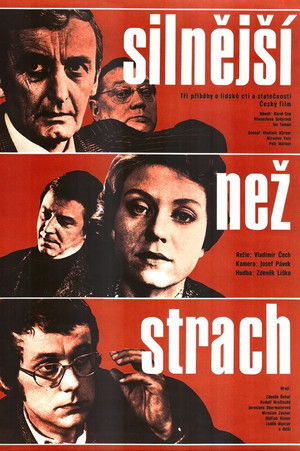
Three stories (Gabriela, Eda and Jana), two of which are dedicated to girls. They share a common motif of disillusionment when the protagonists encounter scorn and disinterest.
Nanni Moretti recalls in his diary three slice of life stories characterized by a sharply ironic look: in the first one he wanders through a deserted Rome, in the second he visits a reclusive friend on an island, and in the last he has to grapple with an unknown illness.
A strange mortician tells four horrific tales to three drug dealers that he traps in their local funeral parlor.
A two-part feature directed separately by Shimizu and his colleague Keisuke Toyoshima. Unrelated to each other, both have a common goal: to bring ghosts and aliens together in pure, referential and absurdistic delirium, including neo-Nazi specters, zombie yakuzas and nasty aliens.
Ten short pieces directed by ten different directors, including Ken Russell, Jean-Luc Godard, Robert Altman, Bruce Beresford, and Nicolas Roeg. Each short uses an aria as soundtrack/sound, and is an interpretation of the particular aria.
Eight visually rich vignettes drawn from Kurosawa’s own dreams—fox weddings and vanished orchards, a soldier’s ghosts, a walk through Van Gogh’s canvases, nuclear nightmares, and a water-mill utopia—meditate on childhood, art, mortality, and humanity’s uneasy bond with nature.
New York, I Love You delves into the intimate lives of New Yorkers as they grapple with, delight in and search for love. Journey from the Diamond District in the heart of Manhattan, through Chinatown and the Upper East Side, towards the Village, into Tribeca, and Brooklyn as lovers of all ages try to find romance in the Big Apple.
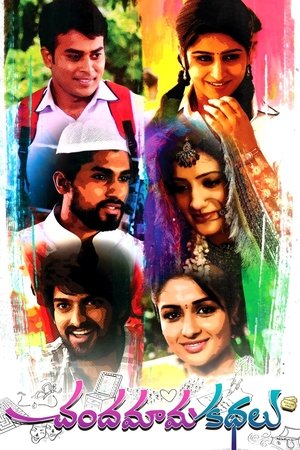
Chandamama Kathalu is an upcoming Telugu anthology film directed by Praveen Sattaru and produced by Chanakya Bhooneti.The film has eight sub-stories revolving around love.The lives of the central characters in the sub-plots get intertwined with each other.Lakshmi Manchu, Aamani, Naresh, Krishnudu, Chaitanya Krishna, Abhijeet, Naga Shaurya, Vennela Kishore, Amitha Rao and Richa Panai play the lead roles.[4] Mickey J Meyer composed the music.The shooting was wrapped up in December 2013.
In three separate segments, set respectively in 1966, 1911, and 2005, three love stories unfold between three sets of characters, under three different periods of Taiwanese history and governance.
The common denominator of the five stories, preceded by a brief prologue by Artem Benki, is the setting of a giant open-pit mine in the Podkrušnohoří region in northwestern Bohemia and its surroundings, including the dominant feature of the landscape, the ruined Jezeří Castle.
The second Gulf War from 1990 to 1991 represents in the collective Arab memory a turning point in regards to the Arab nationalism’s self-perception as well as a moment of deep historical and existential insecurity. Five Arab directors discuss the events from their personal perspective.
Queer Boys and Girls on the Shinkansen brings together ten filmmakers and artists who consistently affirm what it means to be gay or lesbian in their work. Habakari chose ten filmmakers to make a five-minute work each, developed around a gay or lesbian theme, and compiled the resulting shorts in random order to create this omnibus film. The result is a queer film, by queer filmmakers, for a queer audience. Each short is its own short story, and the styles range from drama and experimental film and animation. (2024 complete version includes all eleven films, 65 mins.)
An early satirical anthology of socially conscious shorts.