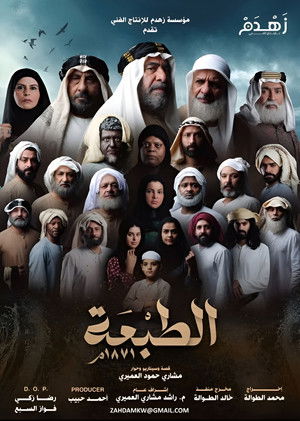
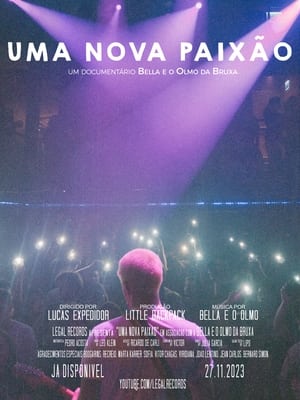
As farm animals are prohibited anywhere in Recife, everyone who gets about by horse is made invisible from the point of view of the law. Only by dealing with the race as if it were scene from a movie – by being able, therefore, to have it considered as being to some extent a piece of "fiction" - is what would make the event feasible and fit to obtain the authorizations needed to make it happen from the official point of view.
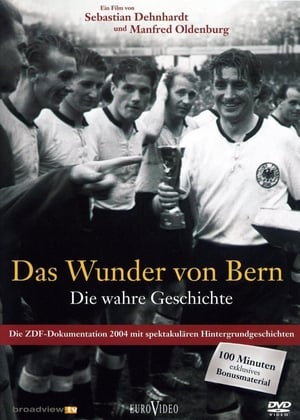
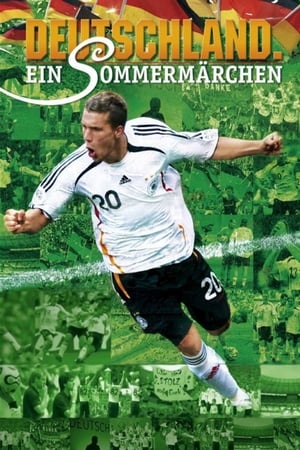
A documentary of the German national soccer team’s 2006 World Cup experience that changed the face of modern Germany.
A detailed account of each of the details of the Malvinas War based on interviews, dramatic scenes, maps and other elements of historical roots without ignoring the historical antecedents from the 18th century that ended in this confrontation.
Documentary about the song “You'll Never Walk Alone,” the most famous sports anthem of the world.
Traffic on the B61 road, which connects Rotterdam to Warsaw and cuts through the German spa town of Bad Oeynhausen, is permanently gridlocked. The promised cure is a bypass whose construction is documented for a period of eight years: the efforts of the mayor, police, fire brigade and construction companies, the delays in the construction of the northern bypass and above all the reactions of the affected residents.
Filmmaker Alain Resnais documents the atrocities behind the walls of Hitler's concentration camps.
The long awaited documentary about Sepultura's incredible journey from Brazil to the world.
Football is much more than a simple game. It is a passion that connects people from all over the world. The players themselves have the unique ability to capture the hearts of fans and create a deep emotional connection with them. One of these outstanding players, who impresses not only with his footballing brilliance, but also with his impressive personality and life story, is Jakub Blaszczykowski. In this documentary about Jakub, also affectionately known as "Kuba", Jan Dybus tells the inspiring story of a man who consciously decided to pursue a career in football.
501 goals from 50 of Liverpool's greatest goalscorers. Red's striking legend John Aldridge is your host as he counts down the players and goals that have made Liverpool into the one of the most successful English football clubs.
This documentary highlights the evolution of Brazil's Circo Voador venue from homespun artists' performance space to national cultural institution.
Starting with a Nazi plan to steal the Rimet Trophy from Italy during World War II, the story unfolds like a great caper film. Our hero, Ottorino Barassi, a mild-mannered Italian soccer official, tries to protect a valued treasure.
Paddy McGuinness celebrates the humour, imagination and blockbuster entertainment that footie ads have brought viewers over the last 30 years.
Hard to imagine, but true: According to current estimates, out of 500,000 active male football professionals worldwide, under ten (10) are openly homosexual. While homosexuality hardly plays a role in other areas of life today, the topic seems to be completely taboo in professional football. The feature-length documentary THE LAST TABOO lets those who broke exactly this taboo tell their very personal stories alongside Thomas Hitzlsperger. Like the British professional footballer Justin Fashanu (*1961 in London; † 1998 in London), who broke this taboo for the first time in 1990 and paid for it with his life. His niece Amal tells his story. Marcus Urban, on the other hand, was about to make the jump to the Bundesliga as a teenager and, by deciding to come out, he also went against his big dream. The stories of the US professional Collin Martin and the British player-coach Matt Morton, on the other hand, suggest that normality is not far away.
A docu-film that traces the victorious ride of Mancini's Azzurri, from the debut match to the final against England. A troupe lived with the Azzurri for a month, to bring the spectators into the lives of the players and all the members of the staff, between training sessions, matches, travels and celebrations. An adventure told through the voices of the protagonists, who confided dreams, joys, pains and hopes to the cameras. "Blue Dream, the road to Wembley" is the completion of a project started a year ago together with the FIGC, to tell the national team's approach to the European Championships through the 4 episodes aired in the days immediately preceding the European Championship, bringing the new television language of the docu-series to one of the most important time slots of the first generalist network. "Blue Dream, the road to Wembley" is a project of the New Formats Development Department
Max S. reveals how he built a drug empire from his childhood bedroom in this story that inspired the series "How to Sell Drugs Online."
"The Last Season" follows the stadium's last year, the fans' communal last look, the witnessing of the wrecking ball and the great fall of the Memorial Wall.
A filmmaker investigates his childhood memory of Brazil’s 1994 World Cup win, reflecting on capitalism and pop culture through a moody ’90s aesthetic.
The impeachment and removal from office of Brazilian President Dilma Rousseff in 2016 was triggered by a corruption scandal involving, among others, her then vice-president Michel Temer. Director Maria Augusta Ramos follows the trial against Rousseff from the point of view of her defence team. This is a courtroom drama that unfolds slowly: the appearances of the various parties gradually turn the proceedings into something akin to theatre. Inside the courtroom, grand emotions are played to full effect whilst, on the other side of the doors, lobbyists and supporters pace the corridors. Meanwhile, outside, in front of Brasília’s modernist government buildings, demonstrators are chanting like a Greek chorus. Only the main character, Rousseff herself, remains professional and aloof.
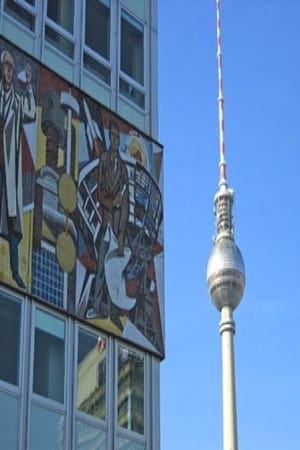
Weltkulturerbe Deutschland
The war in the Ukraine has changed the way many European countries view Russian politics. Suddenly it became clear how dependent countries had become on Russian gas imports for decades and what Vladimir Putin was up to. However, no country needs more gas than Germany. It was only after Russia's invasion of the Ukraine that the German government realized that Russia had long used gas as a weapon to impose its will on states. The instrument created for this purpose is the natural gas production company GAZPROM. So how did Germany become so dependent on Russian gas? The documentary shows how, over several decades and several changes of government, a broad alliance of politicians and business representatives did everything possible to secure Germany's energy supply with cheap Russian gas, while the Kremlin's foreign policy became increasingly aggressive and the warnings of experts went unheeded.