During a bus trip, thoughts, dreams and memories mix together as the day dawns
Perhaps the first experimental color film made in Uruguay, Color was the work of a pioneering woman filmmaker, still a teenager at the time of the film's completion. Millán had a number of vérité shorts under her belt by this point, but none in such gorgeous color.
An experimental film about the relation of Time and Space.
Changing the usual perspective when watching a film—the viewer is no longer in front of the images, but beneath them. The translucent silhouette of two people having sex makes it feel as if you are lying directly under a glass bed, watching a couple explore each other with intimacy and curiosity.
After concluding the now-legendary public access TV series, The Pain Factory, Michael Nine embarked on a new and more subversive public access endeavor: a collaboration with Scott Arford called Fuck TV. Whereas The Pain Factory predominantly revolved around experimental music performances, Fuck TV was a comprehensive and experiential audio-visual presentation. Aired to a passive and unsuspecting audience on San Francisco’s public access channel from 1997 to 1998, each episode of Fuck TV was dedicated to a specific topic, combining video collage and cut-up techniques set to a harsh electronic soundtrack. The resultant overload of processed imagery and visceral sound was unlike anything presented on television before or since. EPISODES: Yule Bible, Cults, Riots, Animals, Executions, Static, Media, Haterella (edited version), Self Annihilation Live, Electricity.
Education is a caged bird. This short film pays homage to experimental cinema, which is characterized by the absence of narrative, lack of focus, paint or scratches on the screen, abrupt cuts and asynchronous sound. With the aim of redefining our way of seeing, exploring new spatial and temporal concepts.
With the lack of personal video archive, Youhanna (the filmmaker) creates false memories using lost home videotapes shot between the 1990s and 2000s in Europe, Africa, and Asia, with the help of an Artificial intelligence programme, until a real, personal video archive surfaces, transporting him into the past to relive one more memory with his late mother.
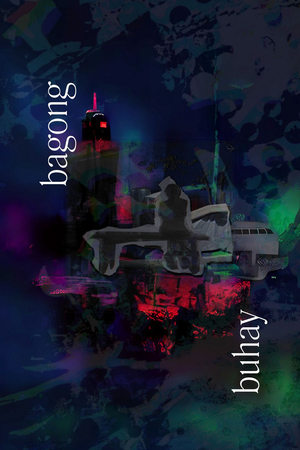
"Bagong Buhay" is a short experimental film that dispels the common belief that packing up and moving to a new place will magically improve one's quality of life. The film challenges this presumption by portraying two contrasting ways of life through objects and locations, encouraging viewers to think critically about the complexities of what makes a better life. In the Philippines, it's believed that relocating to a new area will bring about positive changes in one's existence. True satisfaction is a complex and multifaceted notion, and "Bagong Buhay" encourages us to ponder that relocating to a new place is not a surefire way to attain it.
Percieve the images how you will; Wander is designed at having a different influence over each audience member and provoking self-reflection and deep thought. There was no singular intended storyline.
A mysterious entity closes in around John, keeping him trapped inside his house. The only thing protecting him from being crushed is the egg timer ticking down on his kitchen table.
Super 8mm by Paul Clipson. Sound by Jefre Cantu Ledesma.
Film by Paul Clipson. Music by Jefre Cantu Ledesma.
Super 8 films by Paul Clipson. Sound by Jefre-Cantu Ledesma.
Super 8mm, 21 min., b&w, music by Jefre Cantu-Ledesma.
Film by Paul Clipson. Music by Jefre-Cantu Ledesma.
Music by Jefre-Cantu Ledesma. Film by Paul Clipson with Trevor Montgomery.
A girl with a mysterious background arrives at the city, whose existence gradually becomes as light as the floating air. In the dark night of a chaotic age, must we live like spectres?
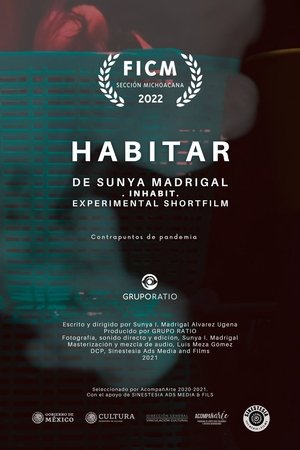
An oneiric moment in the contradictory sensations that arise when experiencing the COVID-19 pandemic.
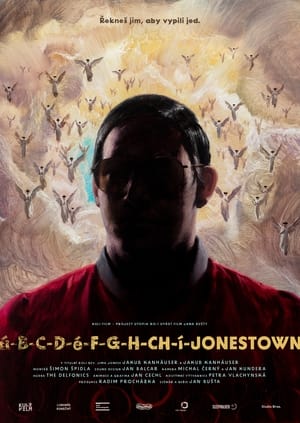
A children's film about the largest mass suicide of the 20th century reconstructs the 1978 event. The Reverend Jim Jones forced nearly a thousand followers of his People's Temple sect to drink poison in the settlement of Jonestown, Guyana, South America. A third of them were children. Jan Bušta gives sadists, voyeurs, and necrophiliacs one minute to leave the cinema. His self-reflective documentary, which is the result of ten years of time-lapse filming, does not depict dramatic scenes. To the sound of an audio recording from that fateful day, we see a collage of child ghosts preaching about escaping the corruption of the world.
Here, where even monsters are political, the topography has its own memory. It has the mythological blues. Meanwhile, old gods are upset with us, and I am upset with my father.