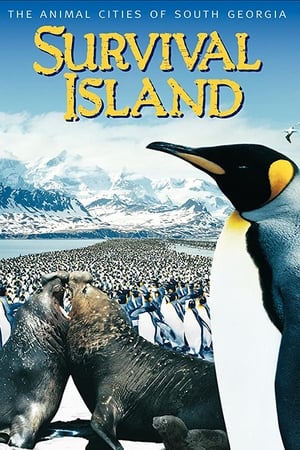
Standing almost alone in the great Southern Ocean, South Georgia island plays host to some of the largest concentrations of animals anywhere on Earth during the spring and summer months. This is the story of these vast animal cities, and of the order that lies beneath their seeming chaos.
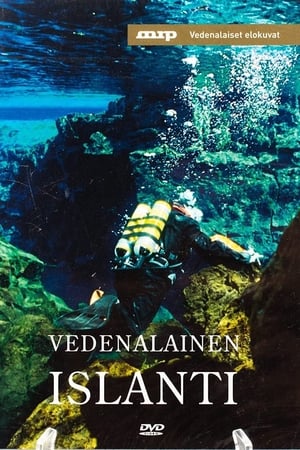
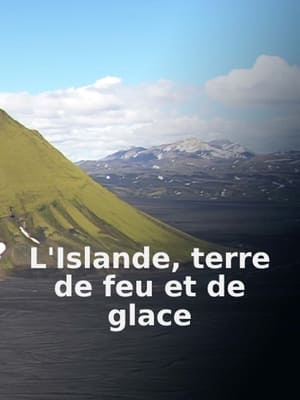
Marko Röhr's film crew takes the viewer to Europe's last unexplored area: Iceland's unique underwater world. We explore the geysers of boiling waters and the crystal clear lakes off the coast of Iceland. We dive under the icebergs, into the tears between the continental plates and into the deep caves.
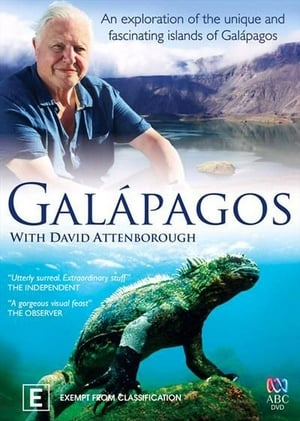
Two hundred years after Charles Darwin set foot on the shores of the Galápagos Islands, David Attenborough travels to this wild and mysterious archipelago. Amongst the flora and fauna of these enchanted volcanic islands, Darwin formulated his groundbreaking theories on evolution. Journey with Attenborough to explore how life on the islands has continued to evolve in biological isolation, and how the ever-changing volcanic landscape has given birth to species and sub-species that exist nowhere else in the world. Encompassing treacherous journeys, life-forms that forge unlikely companionships, and survival against all odds, Galápagos tells the story of an evolutionary melting pot in which anything and everything is possible.
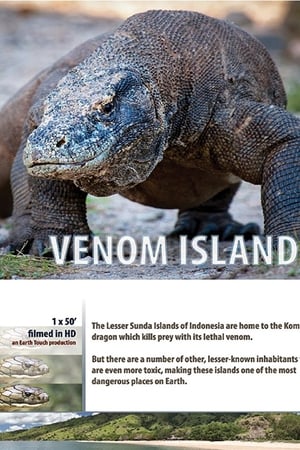
Venom expert Dr. Bryan Fry embarks on a dangerous island journey to uncover the deadly secrets of vipers, stonefish and the formidable Komodo dragon.
Hong Kong started and flourished as a fishing port in the past, and its people have long been committed to worshipping ancient deities for their blessings. With over a hundred Tin Hau temples (Goddess of Sea) in Hong Kong, there are three on Lamma Island alone, located respectively in Sok Kwu Wan, Luk Chau and Yung Shue Wan. The film documents the states of Tin Hau temples on the island and beyond, as an attempt to contextualise the everyday practice of the fishing community, islanders and city dwellers visiting the temples.
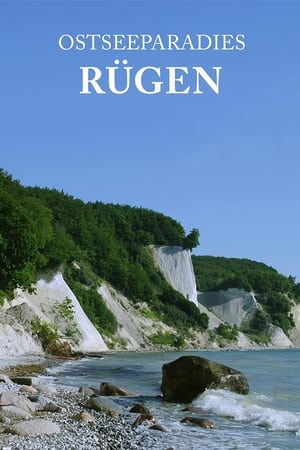
The white chalk cliffs of Rügen are among the most impressive natural monuments on earth, which the painter Casper David Friedrich immortalized for posterity as early as the 19th century. Germany's largest island with its seaside resorts from the Gründerzeit, its smaller side islands and peninsulas that give it its shape, its lagoon-like Bodden waters, the dense beech forests, the yellow rapeseed fields and the meadows, the shady tree avenues and the white sandy beaches is not only a magnet for tourists, but also a unique natural paradise in the middle of the Baltic Sea, a habitat for the rare white-tailed eagle, fallow deer, raccoon dogs and badgers as well as a resting place for huge swarms of migratory birds such as geese and cranes that can be heard trumpeting from afar. In this nature documentary, the unique landscapes and the diversity of the animal world of Rügen are captured with beautiful pictures during the changing of the seasons.
A quiet island, lost in the pacific ocean. Nothing worth of interest, until the day a stroke of luck, phosphate, provided by the island's coral core, led the country to incredible heights: in 1975, it became the second richest country per inhabitant in the world after Saudi Arabia... Only to plunge into ruins a few years later.
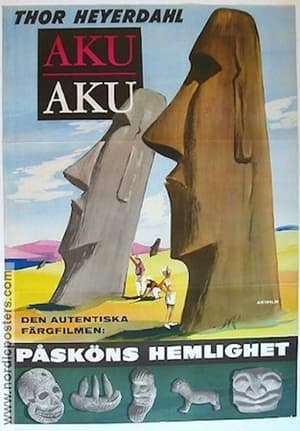
Documentary following the 1955–1956 Norwegian Archaeological Expedition's investigations of Polynesian history and culture at Easter Island.
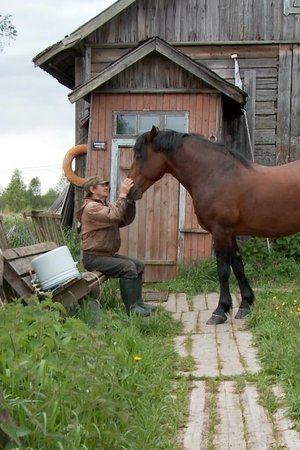
Two men, a Finn and a Belarusian live alone, on a lake's island.
The story of the ancient and sacred Gureombi Rock. The story of the people of Gangjeong Village who rise up against the construction of a US/Korea Naval base on their holy and precious land. The winds of peace, like the winds of Jeju Island, are blowing.
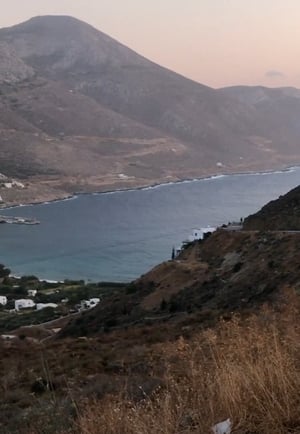
On the island of Amorgos, during summer. Small monuments were erected at the scene of a fatal accident: a photograph, a few words, flowers, religious or pagan objects. The deceased "stayed there": dead in transit, on a road, frozen forever.
Christmas Island, Australia is home to one of the largest land migrations on earth—that of forty million crabs journeying from jungle to sea. But the jungle holds another secret: a high-security facility that indefinitely detains individuals seeking asylum.
Rodney is an American dreamer. His glass is not only half full, but it's half full of the finest wine you've ever tasted. But when the great recession wipes out his construction business in Central Florida, his family faces a nightmare of debt. One evening around a campfire, Rodney hears a story from an old, bare-footed hippy that just might solve his family's problems. There's an island. There's a map. And there's buried treasure...$2 million dollars just waiting for someone to dig it up. Rodney is hooked. But there's just one slight, itty-bitty problem...he doesn't have a shovel. Oh, and the $2 million dollars just happens to be in cocaine form.
A documentary on the life of the people of the Aran Islands, who were believed to contain the essence of the ancient Irish life, represented by a pure uncorrupted peasant existence centred around the struggle between man and his hostile but magnificent surroundings. A blend of documentary and fictional narrative, the film captures the everyday trials of life on Ireland's unforgiving Aran Islands.
The vessel is Infinity, a 120-foot hand-built sailboat, crewed by a band of miscreants. The journey, an 8,000 mile Pacific crossing from New Zealand to Patagonia, with a stop in Antarctica. Unlike all the other boats heading to the Southern Ocean, Infinity is no ice-reinforced super-yacht crewed by professional sailors; rather, Infinity lives in the moment and sails on a whim. What can be found in abundance on board is blood, sweat, enthusiasm, risk tolerance, disdain for authority, and an ample supply of alcohol – all in all a mad voyage of reckless adventure just for the sheer joy of it. Along the way the crew will battle a hurricane of ice in the Ross Sea, assist the radical environmental group Sea Shepherd in their fight with illegal whalers, and tear every sail they have. At the heart of their journey is a quest for awe and a sense of wonder with the raw power of the natural world.
In the jungles of the Solomon Islands, a remote archipelago in the South Pacific, a biologist is attempting to do something Charles Darwin and Ernst Mayr never accomplished: catch evolution in the act of creating new species. Albert Uy is on the verge of an amazing discovery in the Solomon Islands, but there's a threat looming on the horizon. The islands' resources are being exploited, putting all local wildlife at risk. It's a race against time to gather the evidence necessary to prove the existence of a new species before it's lost forever.
This documentary picks up after the horror has ended. Almost 500 teens are in grief as 69 of their friends have fallen. They've been shot dead. How could this island ever become a safe place again? Here, we see how Utøya was first the safest place on Earth to the most terrible and how it was restored and stands as a beacon of hope for the survivors and the Norwegian people.
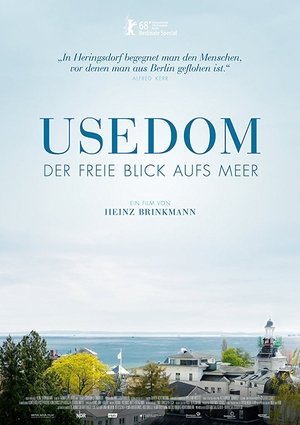
For Berliners, the Baltic island of Usedom was once the most luxurious destination for excursions within striking distance of the city. This is where imperial Germany’s grand health resorts of Bansin, Heringsdorf and Ahlbeck were built. Heinz Brinkmann, who was born in Heringsdorf, traces the eventful history of his island.
The passage of time is spellbinding in this cinematic tour de force about the Wadden Sea. A film that inhales and exhales along with the tides as it explores the fragile relationship between man and nature.
During the summer of 2018, hundreds of earthquakes shook the summit of Kiilauea, sparking the volcano's largest eruption in 200 years. To some, it was a disaster. To others, it was the goddess Pele's way of creating new aina (land). The Hawaiian peoples' resilience and cultural unity is a lesson in the true spirit of Aloha.