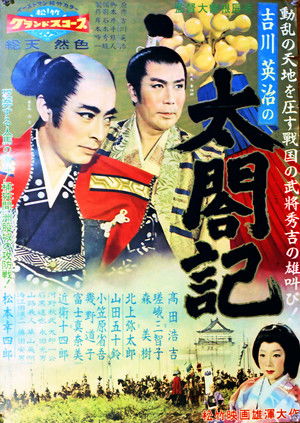
Lord Oda Nobunaga plans to control Japan where rival warlords battle by waging war against several clans. His vassal Araki Murashige stages a rebellion and promptly disappears.
Five swordsmen are murdered and hung from a tree and the chase is on to find the killers. Two magistrates pursue the leads to solve the crime and it leads to a potential conspiracy to kill the Shogun.
Four people recount different versions of the story of a man's murder and the rape of his wife.
Ninomiya Kinjirou is a biopic follows the life of the eponymous character, an 18th century peasant boy who worked to rescue over 600 poor villages and hamlets from financial ruin by developing new economic policies.
The Fox Dancing in the Dusk
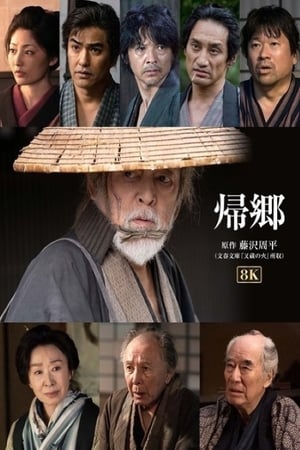
広重ぶるう
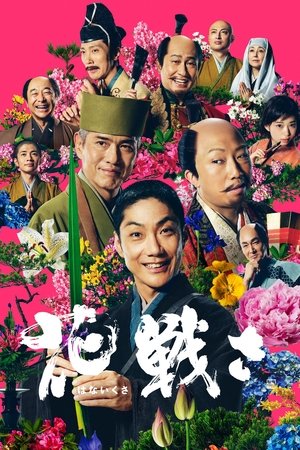
Sen no Rikyu (Ebizo Ichikawa) is the son of a fish shop owner. Sen no Rikyu then studies tea and eventually becomes one of the primary influences upon the Japanese tea ceremony. With his elegant esthetics, Sen no Rikyu is favored by the most powerful man in Japan Toyotomi Hideyoshi (Nao Omori) and becomes one of his closest advisors. Due to conflicts, Toyotomi Hideyoshi then orders Sen no Rikyu to commit seppuku (suicide). Director Mitsutoshi Tanaka's adaptation of Kenichi Yamamoto's award-winning novel of the same name received the Best Artistic Contribution Award at the 37th Montréal World Film Festival, the Best Director Award at the 2014 Osaka Cinema Festival, the 30th Fumiko Yamaji Cultural Award and the 37th Japan Academy Film Prize in nine categories, including Best Art Direction, Excellent Film and Excellent Actor.
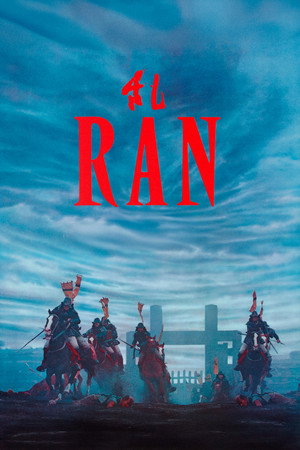
Shakespeare's King Lear is reimagined as a singular historical epic set in sixteenth-century Japan where an aging warlord divides his kingdom between his three sons.
In a poor district of Edo lives a young samurai named Soza. He has been sent by his clan to avenge the death of his father. He isn't an accomplished swordsman however, and he prefers sharing the life of the residents, teaching the kids how to write etc. When he finally finds the man he is looking for, he will have to decide whether he follows the way of the samurai or chooses peace and reconciliation.
Set at the end of the Sengoku period to early Edo period, "Sanada Ten Braves" follows 10 members of a ninja group who all serve under samurai warrior Yukimura Sanada.
Set during Japan's Shogun era, this film looks at life in a samurai compound where young warriors are trained in swordfighting. A number of interpersonal conflicts are brewing in the training room, all centering around a handsome young samurai named Sozaburo Kano. The school's stern master can choose to intervene, or to let Kano decide his own path.
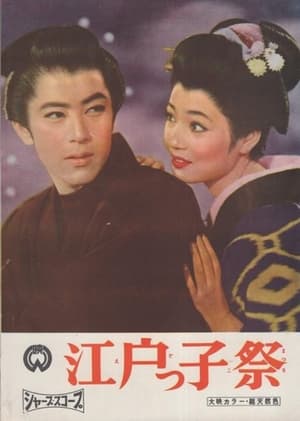
Young Lord Genjiro, who abandoned his castle to live as a commoner in Edo, returns home to restore peace amidst disruption over an inheritance dispute. Warned by a fortune-teller that he would die by the sword, the young lord must courageously battle 30 or 40 men who attack without warning. Meanwhile, his love affair with Kocho, a singer who is also a skilled archer.
The background to and depiction of a watershed battle in Japanese history, at Sekigahara in 1600, when Tokugawa Ieyasu's Army of the East defeated the Army of the West of Ishida Mitsunari. The story includes the intrigues and shifting loyalties of the various retainers, family members, and samurai.
His skill and courage were the best in Japan! The life story of Jirocho, a man who protected people on the Tokaido Road. The fearless Kinnosuke Nakamura enthusiastically plays the young Jirocho from Shimizu in this chivalrous story.
He was married to his lover's butterfly and started a new residence. But good things do not last. In his uncle, Uzaemon in Kawashima, Yoshiji Akaji, Yoshimoto's lender, and Kanehira Akagi, the older brother of the former loan of Mishima, played a challenge. It is said to open the ladies' room to the settlement of Wada island. Although Jiro headed to Shigetsugu for arbitration, he was forced to surrender. In such a case, Jiro became chased by Kinpei and others.
At Sakurada Gate in 1860, the shogun’s chief minister and his retinue of bodyguards are ambushed and annihilated. Bearing the responsibility and shame for this failure is Shimura Kingo, master swordsman and chief of the guard. Forbidden to take his own life in atonement, he is instead tasked with hunting down the remaining assassins; however, fate intervenes and now only one is left. Devoted to his late lord and his duty, he relentlessly pursues the sole remaining assassin for the next thirteen years. But times are changing in Japan and the way of the sword has become outlawed. What does this mean for Kingo?
In Tensho 9, as Oda Nobunaga nears the unification of Japan, he assigns trusted generals to conquer remaining regions. Meanwhile, a peasant farmer named Sahei, resembling Nobunaga, is chosen by Hideyoshi and Sen no Rikyu to act as Nobunaga’s shadow. Furious at the idea of a double, Nobunaga confronts Sahei, who courageously performs the "Atsumori" dance, impressing Nobunaga enough to accept him as his Kagemusha. Sahei’s first test as the shadow warrior comes at a memorial service for the Oda family.
The mother of a feudal lord's only heir is kidnapped by the lord. Her husband and his samurai father must decide whether to accept the unjust decision, or risk death to rescue her.
In a world where vendettas are officially sanctioned, the people sometimes needed help in carrying out their vengeance. Sanada Hiroyuki stars as Sukeroku the Helper, a ‘cool and rambling yakuza’ that has made a business out of helping victims carry out their revenge. When he returns to his hometown to pay a visit to his mother’s grave he meets a deadly ronin who carries a secret which eventually leads him into a vendetta of his own.
Miyamoto Musashi is challenged by a series of opponents in this follow up to Miyamoto Musashi's Kongoin Ketto (1942, also called Nitoryu Kaigen) also directed by Ito Daisuke.