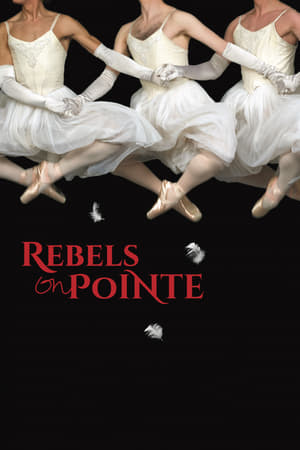
A documentary film that highlights two street derived dance styles, Clowning and Krumping, that came out of the low income neighborhoods of L.A.. Director David LaChapelle interviews each dance crew about how their unique dances evolved. A new and positive activity away from the drugs, guns, and gangs that ruled their neighborhood. A raw film about a growing sub-culture movements in America.
The film traces Sam McKinlay’s early days as a punk skateboarder through his academic development as a conceptual artist into a highly esteemed noise practitioner whose work bridges the gap between the gallery world and the sleaze of exploitation film imagery. It documents the physical processes of his work and the distillation of visuals into sound, most notably addressing the appeal of abstraction—from the cheap effects of old monster movie makeup to the ‘masks’ created by the heavy cosmetic makeup of 1920s flapper culture and actresses like Pamela Stanford in Jess Franco’s Lorna the Exorcist (The Rita has albums or EPs named after several eurotrash actresses, including The Nylons of Laura Antonelli (2009) and Monica Swinn/Pamela Stanford (2016)).
Alexis, a talented and proud student of the National Ballet School of Cuba, spends his life practicing chassé and entrechats with his girlfriend and dance partner Yelenia. However, when his family moves to Florida to be reunited with his sister, he must adjust his expectations and dreams to a radically new environment. Alexis, facing rejection and homesick for his native Cuba, feels lost and alone. He must find his way in the world of American ballet while remaining faithful to his roots.
Santiago Mitre co-directs his first movement following The Student together with choreographer Onofri Barbato. Although it would have been more accurate to say “his first film-story-adventure-movie-great movie following The Student”, the word movement fits perfectly in Los posibles, the most overwhelmingly kinetic work Argentine cinema has delivered in many, many years. The film deals with the adaptation of a dance show directed by Onofri together with a group of teenagers who came to Casa La Salle, a center of social integration located in González Catán, trying to find some refuge from hardship. Already entitled Los posibles, the piece opened in the La Plata Tacec and was later staged in the AB Hall of the San Martín Cultural Center. Now, it dazzles audiences out of a film screen, with extraordinary muscles and a huge heart: Los posibles is a rhapsody of roughen bodies and torn emotions. Precise and exciting, it’s our own delayed, necessary, and incandescent West Side Story.
A prominent Russian ballet dancer and teacher Alexander Shiryaev had another talent hidden for almost a century. Archive materials that date back to 1906 reveal his bold experiments at stop-motion and paper animation.
Cinéma vérité celebrating Les Ballets Trockadero de Monte Carlo, a drag ballet company founded in the wake of the Stonewall Riots.
A filmed version of Aaron Copland's most famous ballet, with its original star, who also choreographed.
Anma (The Masseurs) is a representative and historical work by the creator of Butoh dance, Tatsumi Hijikata in his early period in the 1960s. The film is realized not only as a dance document but also as a Cine-Dance, a term made by Iimura, that is meant to be a choreography of film. The filmmaker "performed" with a camera on the stage in front of the audience. With the main performers: Tatsumi Hijikata and Kazuo Ohno, the film has the highlights such as Butohs of a soldier by Hijikata & a mad woman by Ohno. There is a story of the mad woman, first outcast and ignored, at the end joins to the community through her dance. Inserted descriptions of Anma (The Masseurs) are made for the film by the filmmaker, but were not in the original Butoh. The film, the only document taken of the performance, must be seen for the understanding of Hijikata Butoh and the foundation of Butoh.
Released on DVD as part of The Criterion Collection's "Martha Graham: Dance on Film" collection.
Dance for All
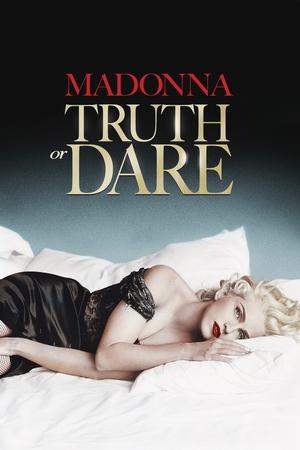
From the rains of Japan, through threats of arrest for 'public indecency' in Canada, and a birthday tribute to her father in Detroit, this documentary follows Madonna on her 1990 'Blond Ambition' concert tour. Filmed in black and white, with the concert pieces in glittering MTV color, it is an intimate look at the work of the icon, from a prayer circle before each performance to bed games with the dance troupe afterwards.
Upon hearing that farmers in Indiana had taught their llamas to participate in an informal square dance, filmmaker Cevin Soling decided to raise the bar and see if llamas could be trained to perform in a major theatrical production of Swan Lake. The performance fuses high and low brow forms of art including a new rendering of the Tchaikovsky score. The vision takes Soling on a journey to the world of ballet, llamas, and jug bands.
The adventurous life of Natacha Rambova (1897-1966), an American artist, born Winifred Kimball Shaughnessy, who reincarnated herself countless times: false Russian dancer, silent film actress, scenographer and costume designer, writer, spiritist, Egyptologist, indefatigable traveler, mysterious and curious; an amazing 20th century woman who created the myth of Rudolph Valentino.
The senior year of a girls’ high school step team in inner-city Baltimore is documented, as they try to become the first in their families to attend college. The girls strive to make their dancing a success against the backdrop of social unrest in their troubled city.
A testimony to the performance of ritual dances. Although they were performed only during the so-called “unbaptized days”, the 12 days between Christmas and Epiphany in the Orthodox Christianity, these dances are associated by some researchers with the Roman rosaries, the cult of the dead. Ritual clothing and the use of wooden swords to disperse the demons are important props in the dances that are believed to protect the folks from temptations and demons until they are baptized.
Piel dolor (Skin Pain) explains how power is structurally sustained in violence. Its nature and the relationships it establishes in society are based more on the imposition and use of force than on building consensus, dialogue, and respect for diversity. In that sense, power is a behavior that seeks dominance through force and man as a gender, becomes an instrument of violence that is exercised against the weakest. Extinguishing the socially constructed violence means eliminating the current power and its historical sustenance, questioning the source of origin, religion, ideology, the system and its values. Is that utopia possible?
Poetic documentary about works of several artists from ideas to “births” of works of art.
Moving Together is a celebratory love letter to music and dance that brims with kinetic life and energy. This documentary explores the intricate collaboration between dancers and musicians, moving seamlessly between Flamenco, Modern, and New Orleans Second Line.
Habiter le mouvement (un récit en 10 chapitres)
For two hundred years, the Shakers have been America's most successful utopian society. While seeking harmony, order and perfection in every aspect of their lives, they built minimalistic furniture and buildings that influenced modern design. The Shakers wrote songs of exquisite beauty and danced to the point of ecstasy during their religious meetings. Inspired by this music and dance, choreographer Tero Saarinen created Borrowed Light, a dance piece about communal life and individual sacrifice. Shot in Finland and the United States, featuring interviews and excerpts from Borrowed Light, this documentary explore the cultural legacy of this religious group devoted to creating heaven on earth.