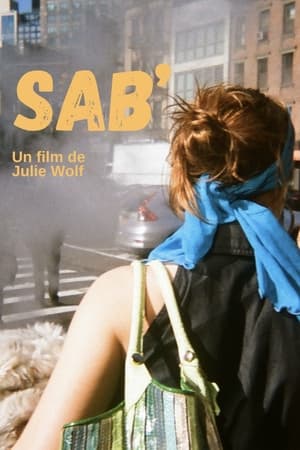
A 16 year old girl recalls the last moments of her summer vacation, spent with friends in the Laurentians north of Montreal. She reminisces about their talks on life, death, love, and God. Shot in direct cinema style, working from a script that left room for the teenagers to improvise and express their own thoughts, the film sought to capture the immediacy of the youths presence their bodies, their language, their environment.
Vienna’s Prater is an amusement park and a desire machine. No mechanical invention, no novel idea or sensational innovation could escape incorporation into the Prater. The diverse story-telling in Ulrike Ottinger’s film “Prater” transforms this place of sensations into a modern cinema of attractions. The Prater’s history from the beginning to the present is told by its protagonists and those who have documented it, including contemporary cinematic images of the Prater, interviews with carnies, commentary by Austrians and visitors from abroad, film quotes, and photographic and written documentary materials. The meaning of the Prater, its status as a place of technological innovation, and its role as a cultural medium are reflected in texts by Elfriede Jelinek, Josef von Sternberg, Erich Kästner and Elias Canetti, as well as in music devoted to this amusement venue throughout the course of its history.
A documentary about Antti Jalava, a Swedish-Finnish writer who was among the first to write about the immigrant experience in Sweden.
The Pickle Family Circus was founded by Lorenzo Pisoni's parents in 1974. The film documents the spirit, the lunacy, the daring, the danger and the dynamics of growing up in a circus family.
Yellowtail is the story of a young Native American cowboy searching for meaning as his chaotic lifestyle begins to wear on him both physically and mentally. To find his purpose the young man has to reflect on his upbringing as a native to become the spiritually connect man he was meant to be.
A whimsical blend of live action and animation, "Saludos Amigos" is a colorful kaleidoscope of art, adventure and music set to a toe-tapping samba beat. From high Andes peaks and Argentina's pampas to the sights and sounds of Rio de Janeiro, your international traveling companions are none other than those famous funny friends, Donald Duck and Goofy. They keep things lively as Donald encounters a stubborn llama and "El Gaucho" Goofy tries on the cowboy way of life....South American-style.
On the Guajira peninsula in northern Columbia the old traditions of the indigenous Wayuu still hold sway. As soon as they begin menstruating, young women have to go and spend a year in a simple hut where only a few women are allowed to visit them. Contact with men is taboo. The grandmother is chiefly responsible for preparing the girl for her role as a woman during this period of seclusion. Pili is 12 years old when, for her grandmother's sake, she decides to follow this custom. But does she really know what she is taking on?
STREET SMART: LESSONS FROM A TV ICON is a feature documentary about Sonia Manzano — known to millions as “Maria” from SESAME STREET. The film follows Sonia’s remarkable journey, from a young girl in the South Bronx finding refuge in television, to becoming the first Latina on American TV in a regular role, through 44 years on screen on SESAME STREET, and now as a creator of ALMA'S WAY. Featuring interviews with luminaries, original animation, and scripted scenes that blend humor and heart, this inspirational documentary invites viewers to learn once again from this beloved icon.
This documentary film explores the world of the bow and the extraordinary masters who make them. The bow is the Cinderella of the orchestra—the overworked and overshadowed ally to its more glamorous partners. Few people, even among lovers of classical music, think of the bow as an instrument in its own right, but players of stringed instruments see them differently. To musicians, the bow is as essential to expressing the soul of the music as the violin or cello. The film follows the journey of the “silent servant” of the music world—from the workshops of the virtuosos of the trade, to the birthplace of the bow in France, and to Brazil, home to the imperiled tree from which the world’s finest bows are made.
The Documentary tells the story of Jane Vanini from the author's reflections on her militancy-building process. Starting with the meeting of the two during the “Jornadas de 2013”, we will look at Jane's path as we follow steps, from her hometown, Cáceres, to Concepcion, in Chile. It is the possibility of discussing this journey from a personal point of view that makes this project unique and takes us to social, political and human borders. This window is opened to us through Jane's 41 letters to her family, allowing us to glimpse nuances of her intimacy and militancy choices. It was while researching Jane's militancy that the author debated these reflections on his own militant career and the context in which it takes place. Telling Jane's trajectory, going through her family and religious formation and its implications for her activism was one of the moments of encounter between these two days.
A group of teenagers who have been selected to participate in a recreational white water rafting trip. All of the kids selected have AIDS or have been infected with the HIV virus. At some point during the trip, all the kids tell their stories and share their feelings about what their lives have been like since being infected with the virus and how they struggle to live normal lives with a hope of a cure in the future.
A high-school folk dancing group heads to Latvian School Youth Song and Dance Festival, an event that takes place every five years and is part of the Latvian national identity – this is the culmination point of five years of work. Away from their homes and parents, they spend seven days and nights together. They are 18 and have just graduated, and this seems to be the last idle summer of their lives. Dreams mix with boredom, silly jokes with serious conversations. Taking care of one another creates affection and grows into a collective power. There are thousands like them at the festival. Every individual sensation turns into a common celebration that becomes more than just a tradition.
The Amazon is the river of superlatives: the longest - 7,025 km, the most powerful, the most indomitable - no dam possible over hundreds of kilometres. Its waters cross the largest tropical forest in the world: the Amazon, “the lungs of the earth”. Going against the current of this gigantism, this documentary is betting on approaching this extraordinary natural space through one of its tiniest productions: the cocoa bean. Scientists, chocolate makers, producers and farmers, many are those who, faced with the deforestation of this unique ecosystem, use this chocolate seed to recreate, on a small scale, human exploitations in harmony with nature. This film tells us about the fight of those who decided to make cocoa the spearhead of environmental defense in Brazil.
Four teens from around the world step off the path they were told to follow — and take the road less travelled.
From the Italian 'saltare in banco' – which literally means 'to jump on a bench' – Saltimbanco explores the urban experience in all its myriad forms. Between whirlwind and lull, prowess and poetry, it takes spectators on an allegorical and acrobatic journey into the heart and soul of the modern city.
Icarus is the main character of Varekai, who falls to the ground, breaking his legs as he does. He is suddenly in a strange, new world full of creatures he has never seen before. Parachuted into the shadows of a magical forest, a kaleidoscopic world populated by fantastical creatures, this young man sets off on an adventure both absurd and extraordinary.
A young girl has already seen everything there is to see and her world has lost all meaning. Her anger shatters her world and she finds herself in the universe of QUIDAM, where she is joined by a playful companion, as well as another mysterious character who attempts to seduce her with the marvelous, the unsettling and the terrifying.
Alegría is a mood, a state of mind. The themes of the show, whose name means "jubilation" in Spanish, are many. Power and the handing down of power over time, the evolution from ancient monarchies to modern democracies, old age, youth - it is against this backdrop that the characters of Alegría play out their lives. Kings' fools, minstrels, beggars, old aristocrats and children make up its universe, along with the clowns, who alone are able to resist the passing of time and the social transformations that accompany it.
Sound is a journey. Each note opens a door, closes another. Instruments chart the course. Through a poetic and immersive lens, Sou Jazz shines a light on musicians from the Paraisópolis community, reaffirming the social and transformative power of art. The film invites viewers into a reflective, sensory exploration of the relationship between jazz and life on the margins.
A young man decides to join the army. He becomes the drummer in the military band, and his everyday life is now a combination of military training and music. What does the Argentine Army do these days, more than thirty years after the dictatorship? What does it mean to be a soldier in a country without wars?