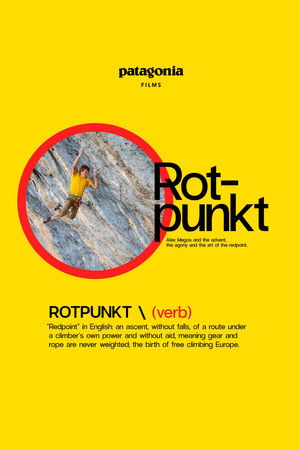
Rotpunkt documents the advent, the agony and the art of the redpoint through Alex Megos’s efforts to redefine the boundaries of the form. The film traces the redpoint—which transformed rock climbing from an engineering problem into a brilliant test of mental and physical strength—from its origins with a ragtag bunch of tights-wearing revolutionaries in rural Bavaria, to its golden era with Wolfgang Güllich, to its new ideal in the German phenom Megos as he battles to unlock new levels of human potential.
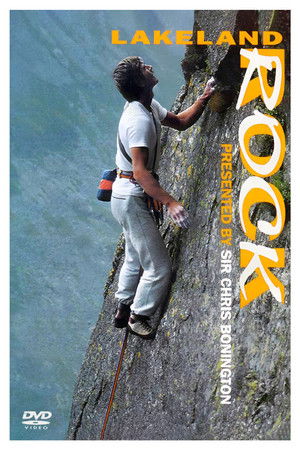
First broadcast on Channel 4 in 1985, Lakeland Rock is a classic of climbing. Presented by Sir Chris Bonington, this 1990 documentary comprises four films that retrace five iconic routes, each representing a major milestone in a sport that reflects the social transformations of Great Britain. From the 1940s, when working-class people began climbing mountains, to the 1980s, marked by technological advancements, the rise of female climbers, and the soaring difficulty of sport climbing with its near-Olympic levels of physical preparation. In three of the films, the climbers recreate their first ascents, with a tribute to their deceased climbing partners, Don Whillans and Bill Peascod. Also included is the first filmed ascent of "Incantations" on Gable Crag by Pete Whillance and Dave Armstrong, which, rated E6 6b, was considered at the time to be the most difficult route in the Lake District.
A young woman of the Tarahumara, well-known for their extraordinary long distance running abilities, wins ultramarathons seemingly out of nowhere despite running in sandals.
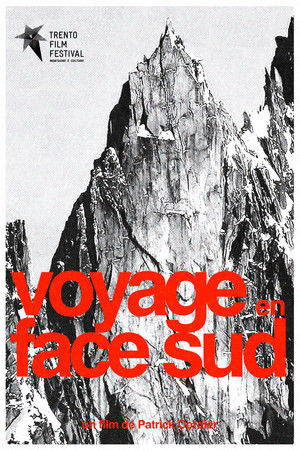
Voyage en face sud (Journey to the South Face) is a mountaineering documentary by Patrick Cordier and Jacques Ramouillet that shows the first solo ascent of the south face of the Aiguille du Fou in 1976 by Patrick Cordier himself. The climb was filmed by Jacques Ramouillet from a nearby ridge. Pierre Torlasco was tasked with belaying Jacques Ramouillet while he filmed. For this filmed ascent, Patrick Cordier opted for the dress code of his time—white clothing, bell-bottom trousers, and a headband—rather than the traditional mountaineering attire. The film was presented at the Trento Film Festival in 1977 and at the Gala de la Montagne (Mountain Gala) at the Salle Pleyel in Paris.
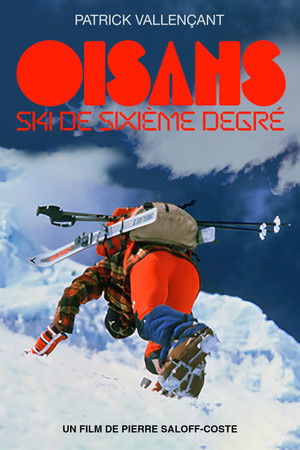
In 1975, Patrick Vallençant skied in some very challenging couloirs in the Oisans region: the north couloir of the Col du Diable, the north couloir of the Coup de Sabre, the couloir of the Pic sans Nom, the Barre Noire couloir in the Écrins massif, and the Gravelotte couloir on the Meije. He was accompanied by Jean-Marc Boivin, P. Guillet, P. Perrier, Gérard Pétrignet, Jacques Ramouillet, Pierre Saloff-Coste, and Joseph Spagnolo. In the second part of the trip, Vallençant completed a circuit of the Meije in three mixed-mountain ascents and, above the avalanche debris, skied off-piste through the steep couloirs and glaciers of the Oisans. He then climbed the routes to the summit of the Meije alone, following the stages of a high-mountain itinerary from the Refuge de l'Aigle.
Achour is thirty. Night and day, he walks. Rebellious soul, he crisscrosses Alger and its neighborhoods, stays at friends' houses and often leaves the city to meet the nearby montain in Kabylia, his alter-ego. In this environment his resistance continues, mobile and ascending. Algerian hardcore-punk musician, Achour once screamed his anger against the country's regime and sang "Anarchytecture". But the movement died down, friends went their separate ways. His Facebook wall became his notebook, his window open to the world. It represents a scream aimed towards the echo of the mountains, between virtual wall, infinite facades of large complexes and the strata of mineral cliffs. A scream comes back at us.
The true story of Joe Simpson and Simon Yates' disastrous and nearly-fatal mountain climb of 6,344m Siula Grande in the Cordillera Huayhuash in the Peruvian Andes in 1985.
We travel to Janja's hometown in Slovenia to try and learn her secrets, and paint an intimate portrait of this young champion as she tries to make history by sweeping an entire season of bouldering World Cups.
A documentary about the Liechtenstein football team, one of the Europe's ultimate underdogs.
In 1961 the southern face of the Central Pillar of Mont Blanc was still unclimbed. Two roped parties of climbers decided to come together to attempt to open a new route. Four days of violent storms caught the climbers just 80 metres from the summit. Of the seven climbers, only three returned home. One of the most intense and dramatic events in the history of climbing relives on the big screen, thanks to accounts and images of the feat.
Mountaineers Roberto Sorgato and Ignazio Piussi relive their 1961 adventure: the first winter ascent of the north face of Cima Ovest di Lavaredo, a formidable Dolomite wall reaching 2,973 meters. During this expedition, Sorgato accidentally fell 60 meters while the climbers were preparing their third bivouac and found himself suspended in mid-air by a rope. Through sheer perseverance, ingenuity, and courage, he managed to pull himself back to his partner. The film, shot eleven years later, is a reenactment with the protagonists playing themselves. The difficulties this climb presents, even for the most experienced climbers, are irrefutably highlighted. The film received the Genziana d'Oro award at the Trento Film Festival in 1973.
Dibona, The Alpine highline project
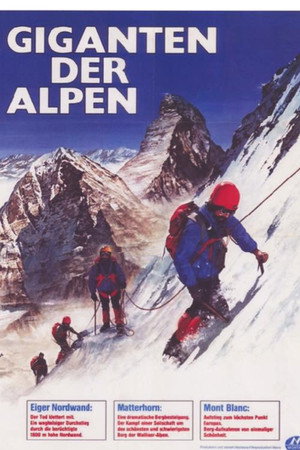
Giants of the Alps “Mont Blanc, Eiger North Face, Matterhorn”
A mountaineer and audiovisual director begins a trip through Argentina to reconvene with the two friends with whom he tried to make a summit in the Himalayas. Alone and with them, he will try to understand what happened to Dario, the fourth friend, who decided to keep going up, the only one who did not return alive from the expedition.
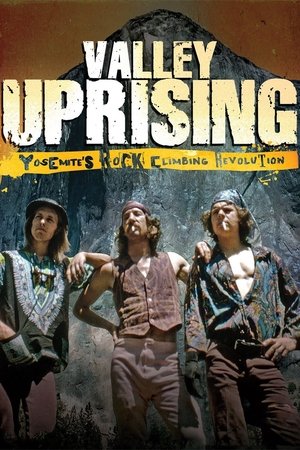
In the shady campgrounds of Yosemite valley, climbers carved out a counterculture lifestyle of dumpster-diving and wild parties that clashed with the conservative values of the National Park Service. And up on the walls, generation after generation has pushed the limits of climbing, vying amongst each other for supremacy on Yosemite's cliffs. "Valley Uprising" is the riveting, unforgettable tale of this bold rock climbing tradition in Yosemite National Park: half a century of struggle against the laws of gravity -- and the laws of the land.
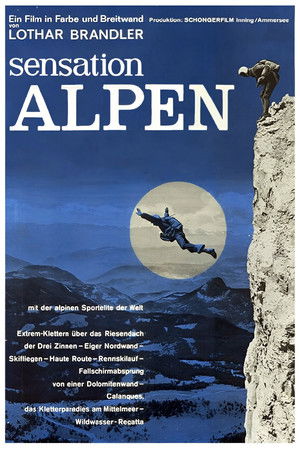
From Trento to Chamonix, via Zermatt; from the Morgiou cove to the Eiger's north face; from Planica to the Lavaredo peaks, the Alps are depicted, illustrated, and magnified in all their unique and sublime beauty, through the sports practiced there and the most typical customs and traditions of their inhabitants. A helicopter rescue and a parachute jump from the Red Wall by Wolfgang Weizenbocks are experiences not to be missed.
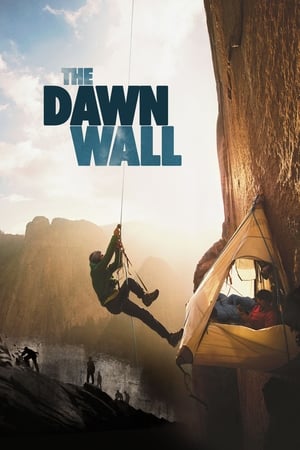
In an unbelievable story of perseverance, free climber Tommy Caldwell and climbing partner Kevin Jorgeson attempt to scale the impossible 3000ft Dawn Wall of El Capitan.
The extraordinary, complex, nuanced, restless, and rebellious personality of Walter Bonatti is recounted in a docufiction that traces the life of the greatest mountaineer of all time, without neglecting his overwhelming love story with movie star Rossana Podestà.
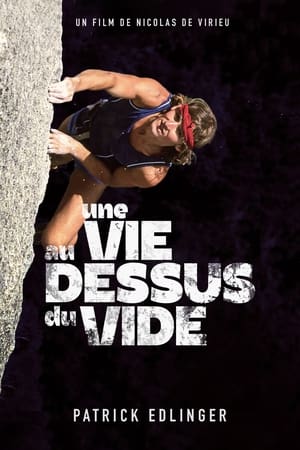
Une Vie Au Dessus Du Vide (A Life Above the Void), directed by Nicolas de Virieu, is a documentary that recounts the journey of Patrick Edlinger, an exceptional climber, through a parallel between the strong media impact he had, unmatched to this day, and the evolution, or rather the explosion, of climbing activity during the 80s/90s. Rare excerpts from mainstream programs (television news, Champs-Élysées, Le Grand Échiquier, Les Carnets de l'Aventure...) also remind us what a great star he was, all interspersed with interviews with Seb Bouin, Jean-Paul Lemercier, Arnaud Petit, Antoine Le Menestrel and Gérard Kosicki.
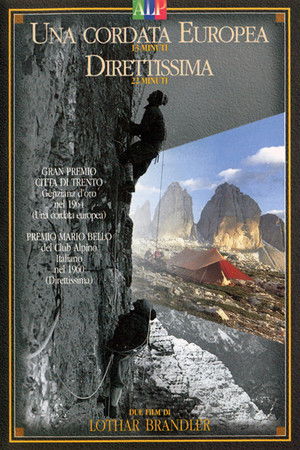
Three famous climbers, the Frenchman Pierre Mazeaud, the German Winfried Ender and the Italian Roberto Sorgato, meet up at the bottom of the Tre Cime di Lavaredo and decide to join together in a single roped party, climbing the 'Direttissima' on the north face of the Cima Grande di Lavaredo. The beautiful film illustrates with precise sequences the climb of the route, that was opened in 1958 by the filmmaker himself, Lother Brandler. The film wants to highlight the idea of frienship, cooperation, fraternity and peace showing three men from historically-confronted nationalities roped and working together as a single team. The film won the Grand Prix at the Trento Film Festival in 1964.