An anthology of one-minute films created by 51 international filmmakers on the theme of the death of cinema. Intended as an ode to 35mm, the film was screened one time only on a purpose-built 20x12 meter public cinema screen in the Port of Tallinn, Estonia, on 22 December 2011. A special projector was constructed for the event which allowed the actual filmstrip to be burnt at the same time as the film was shown.
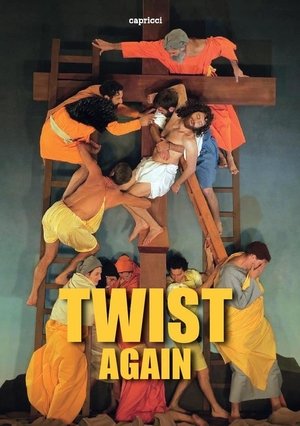
Rosso Fiorentino's painting "The Deposition of the Cross" comes to life. The Christ is gradually removed from his cross by the biblical characters who surround him.
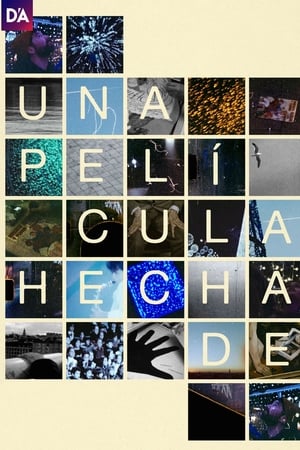
In Vigo, Spain, during Christmas, Ángel, a Spanish filmmaker, walks through the crowded streets while thinking about a possible movie made of…
La Maison en Petits Cubes tells the story of a grandfather's memories as he adds more blocks to his house to stem the flooding waters.
A bride walks on the desert. She takes off her bridal ornaments and turns into a harlot. A multitude of people crawl on their bellies, become sick and soon die. A volcano erupts. White ashes of lahar cover the earth. The bride remembers her betrothal and repents--symbolically paving the way for the resurrection of her people. A final bridal march into a new heaven and earth takes place.
Features four distinct, bizarre, existential tales about people whose lives are in transition, who are each asking questions about themselves, their environments, and about God(s).
This independent film follows the actions and inner thoughts of four unusual individuals as they go about their lives in Tokyo, occasionally meeting up with one another. Their thoughts tend to focus on questions of death, existence, and the conflict of society against the individual. All of the action is performed silently, with narration dubbed over.
After ending a very close relationship, Manuel falls into melancholy and begins to rethink his way of loving. Within his thoughts are the social problems that surround him. He realizes that with these comes a rethinking of what love is. An idea that we have been carrying for a long time: the idea that to love is to possess.
A filmmaker recalls his youth in the town of Onomichi. In the present, he shoots a film in Onomichi alongside his cast, crew and family.
(Some of us) Still run down the same [mental&emotional] streets we revered/reproached/replaced as children.
Return to 'burn' only to find out you're already in that urn.
Alban lives in a castle that he has just inherited in a small village in Charente-Maritime. Inside, the dilapidation has long since taken hold. He meets Jérôme, a young gypsy from the neighbouring town, with whom he has a sexual relationship. In this space that is impossible to rebuild, a strange intimacy is gradually invented, barely disturbed by the interruption of a young woman who has come to spend a few days in this residence.
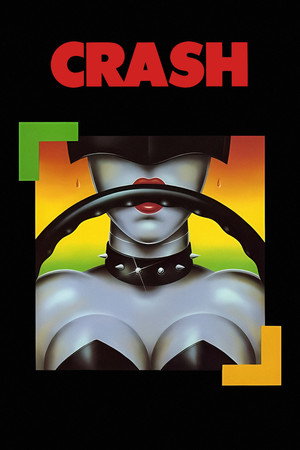
A surreal, moody short about the fetishisation of automobiles and auto accidents.
This highly stylized, critically acclaimed film from the 70's mixes silent film cards, a soundscape, color, opera music and atmosphere to explore the Freudian truths about men's fear of women that Wedekind powerfully exposed. A kinetic melodrama of the rise of a femme-fatale and her fate at the hands of Jack-the-Ripper. Rethinking Pabst's silent film and Alban Berg's opera.
An ahistorical re-enactment of the strange and curious events that led up to the untimely demise of our nation’s sixteenth president.
“A deadpan video art reworking of 1982's highest-grossing movie, EXTRA TERRESTRIAL peels away layers of sentimental narrative goo from its source, exposing a hard core of anxiety, loneliness and dread. Shifting the focus from character to interior, Ben Russell and Rhyne Piggott mine the landscape of a beige-carpeted ranch style house for new insights into the architecture of suburban alienation.” - Anne Reecer, Cinematexas
Shot in the abandoned buildings of Gary, Indiana and the cornfields of Western Illinois, The Twenty-One Lives of Billy the Kid presents a fractured historical narrative without any real protagonist, one in which the titular character goes mostly unseen - Billy the Kid as the always-off-screen assailant, as a ghost’s laugh, as a shadow on the road.
Beyond all human restraint lies one's lugubrious layers of paint.
"In medical terminology, absence of genitalia in females is referred to as "gynatresia". In other words, an extreme defect that goes beyond a mere illness" Adachi's follow-up to Bowl using the figure of a woman suffering from an unusual sexual aliment has often been taken as a controversial allegory for the political stalemate of the Leftist student movement after their impressive wave of massive fiery protests failed to defeat the neo-imperialist Japan-US Security Treaty. The ritualistic solemnity of the charged sexual scenes contribute to the oneiric qualities of Closed Vagina which Adachi would later insist was an open work, not meant to deliver any kind of deliberate political message. - Harvard Film Archive
There is nothing left to do but complain.