Electro-Pythagorus is an intimate and subjective portrait of the late Martin Bartlett, the Canadian electronic music pioneer who studied with Pauline Oliveros, David Tudor, John Cage, and Pandit Pran Nath. His contribution as an interdisciplinary composer, educator, and founding member of Western Front, though undoubtedly extensive, is in danger of being erased from cultural memory since his death from AIDS in 1993. Navigating an array of archival materials including letters, correspondences, notebooks, personal photos, and a huge body of unreleased music and field recordings held at the archives of Simon Fraser University, Electro-Pythagoras is a journey through the evolution of Bartlett’s musical time and space, softly guided by Luke Fowler’s insightful camera and montage—creating an experimental portrait that defies one-dimensionality.
The Dangers of the Fly is an educational film made by Ernesto Gunche and Eduardo Martínez de la Pera, also responsible for Gaucho Nobility (1915), the biggest blockbuster of Argentinean silent cinema. De la Pera was a talented photographer, always willing to try new gadgets and techniques. This film experiments with microphotography in the style of Jean Comandon's films for Pathé and it is part of a series which included a film about mosquitoes and paludism and another one about cancer, which are considered lost. Flies were a popular subject of silent films and there are more than a dozen titles featuring them in the teens and early twenties.
Cómo empezar una película sobre Javier Aguirre
Documentarian Jose Sanchez-Montes turns his attention towards the late Cuban musician Ignacio Villa, known throughout the world as Bola de Nieve (Snowball), with this 2003 biographical documentary entitled simply Bola de Nieve. A master pianist, Bola de Nieve was a mainstay through the middle portion of the 20th century, with his music almost omnipresent in South America cinema throughout those formative decades. With Bola de Nieve's famous statement "I'm a sad person, but my songs sound happy" in mind, Sanchez-Montes also looks at the influence of the musician's African heritage and homosexuality upon Bola de Nieve's unique musical style.
"Green Day: The Early Years" chronicles the rise of the world's most influential punk band, from their origins playing shows at Berkley's notorious Gilman Street venue in the late 80s, through the release of the platinum-selling Dookie in 1994.
In the small town of Kansk, the Krasnoyarsk Territory many years in a row there is an international festival of short experimental films, which has a strong reputation throughout the world. "Russia as a dream" is an international project, shot by a team of authors and united directors, artists, poets. Each of the guests of the 14th International Kan Video Festival held in 2015 was invited to participate in the creation of a general film, the theme of which was the relationship of man and landscape, civilization and nature, reality and sleep.
SATAN'S GUIDE TO THE BIBLE is an animated documentary. Join Satan as he shares Bible secrets, secrets the students' pastor learned at Christian seminary but is afraid to share. Thankfully, Satan's not afraid of losing his job. Satan has amassed an impressive list of biblical scholars ready to reveal the "standard stuff" taught in Christian seminaries: Bart Ehrman (UNC Chapel Hill), John J. Collins (Yale), Dale Allison (Princeton Seminary), Susan Niditch (Amherst), Ron Hendel (UC Berkeley), and Hector Avalos (Iowa State). This is established seminary curriculum about biblical history, biblical morals, authorship claims, and early Christianity — a curriculum never shared with the congregation. Darkly comedic, but thoroughly researched, SATAN'S GUIDE TO THE BIBLE is a fascinating journey into the secrets of the world's best-selling book.
Documentary examining the work of sculptor Richard Lippold, particular his sculpture of the sun at the Metropolitan Museum of Art.
A documentary about the centuries-old story of one of the biggest clubs in Brazilian football. From its foundation, the early years, the continental and world titles and the achievementes of its greatest stars.
6-18-67 is a short quasi-documentary film by George Lucas regarding the making of the Columbia film “Mackenna's Gold”. This non-story, non-character visual tone poem is made up of nature imagery, time-lapse photography, and the subtle sounds of the Arizona desert.
How does Genesis relate to the "real world?" Does it matter whether one believes in Creation or Evolution? Watch this unique and important message for today and understand why the Genesis Creation account is foundational to Christianity.
Martin Scorsese is among those paying tribute to Gene Tierney, the Academy Award-nominated American actress who was a leading lady in Hollywood throughout the 1940s and '50s.
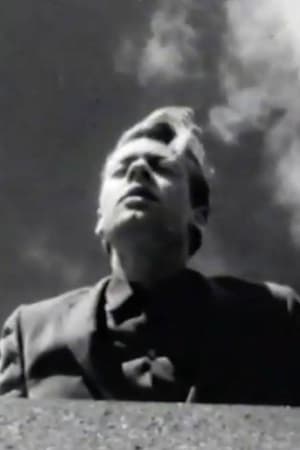
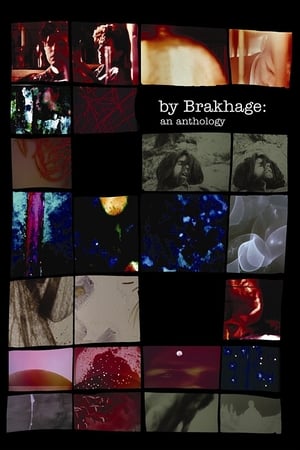
This film describes a psychological state "kin to moonstruck, its images emblems (not quite symbols) of suspension-of-self within consciousness and then that feeling of falling away from conscious thought. The film can only be said to describe or be emblematic of this state because I cannot imagine symbolizing or otherwise representing an equivalent of thoughtlessness itself. Thus the actors in the film, Jane Brakhage, Tom and Gloria Bartek, Williams Burroughs, Allen Ginsberg, Peter Olovsky and Phillip Whalen are figments of this 'Thought-Fallen Process', as are their images in the film to find themselves being photographed."
This film speaks of archaic peoples, their customs and mores, in an attempt to make the last snapshots of their traditional lifestyles before they are gone for good.
In 1967, experimental filmmaker Jorgen Leth created a striking short film, The Perfect Human, starring a man and women sitting in a box while a narrator poses questions about their relationship and humanity. Years later, Danish director Lars von Trier made a deal with Leth to remake his film five times, each under a different set of circumstances and with von Trier's strictly prescribed rules. As Leth completes each challenge, von Trier creates increasingly further elaborate stipulations.
The Great Northwest is a documentary film based on the re-creation of a 3,200 mile road-trip made in 1958 by four Seattle women who thoroughly documented their journey in an elaborate scrapbook. Fifty years later, Portland artist Matt McCormick found that scrapbook in a thrift store, and in 2010 set out on the road, following their route as precisely as possible and searching out every stop in which the ladies had documented. Patiently shot with an observational, cinema-vérité approach, The Great Northwest is a lyrical time- capsule that explores how the landscape, architecture, and culture of the Pacific Northwest has changed over the past fifty years.
Additional materials for "Major Grom: Plague Doctor" (2021).
A girl reads during a bus ride
A made for TV BBC documentary exploring Jack Donovan's antique automaton collection. The documentary focuses on the toys themselves, displaying their range of movements in plain settings while the narrator weaves stories and comments about them to the synth sounds of library music.
In this explosive episode, Steve Quayle, Timothy Alberino, and Tom Horn pick up the trail of the Anasazi Indians in the Desert Southwest of the United States. Their groundbreaking investigation reveals a dark and gruesome secret concerning the sudden annihilation of this mysterious tribe, and a cover-up of gigantic proportions. What they discover will demand the re-writing of American history! Join Timothy Alberino as he explores the enigmatic island of Sardinia in the Western Mediterranean Sea where the skeletal remains of giants are still being extracted from the tens of thousands of megalithic towers and tombs all over the island, and hear the jaw-dropping testimony of those who were hired by the government to dig them out. Discover why Sardinia was ground-zero for the man-eating Canaanite giants that ravished the Promised Land before their expulsion by “Joshua the Robber”.