Iggy Pop reads and recites Michel Houellebecq’s manifesto. The documentary features real people from Houellebecq’s life with the text based on their life stories.
When asked a question on politics, late Palestinian poet Mahmoud Darwish once answered: “I write about love to expose the conditions that don’t allow me to write about love.” In TWO TRAVELERS TO A RIVER Palestinian actress Manal Khader recites such a poem by Mahmoud Darwish: a concise reflection on how things could have been.
A journey among the forgotten: U.S. citizens experiencing homelessness, forced to live in extreme marginalization. Giving voice to these wounded souls is the unmistakable sound of Tom Waits.
As Black and LGBTQ+ History Month begin this February, material science clothing brand PANGAIA leads celebrations with a poetic film that honors these two communities. Following a year of isolation, and with it a deeper understanding of the importance of outdoor spaces and the environment, Wè is a portrait of the self-love and acceptance we have learned to show others and gift to ourselves.
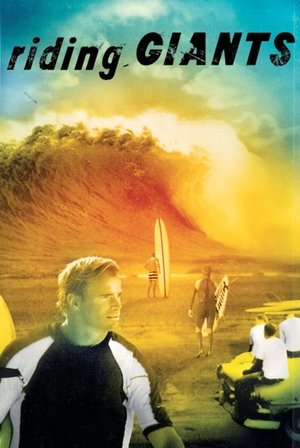
Riding Giants is story about big wave surfers who have become heroes and legends in their sport. Directed by the skateboard guru Stacy Peralta.
Peggy Robles-Alvarado is a Jerome Hill Foundation Fellow in Literature, a Latinx Playwrights Circle Fellow, and a three-time International Latino Book Award winner who authored Conversations With My Skin, and Homage To The Warrior Women. In this film by New York-based filmmaker Matt Haller, she recounts the grief and pain of losing her father, interwoven with her Puerto Rican heritage.
Celebrated as one of the masters of the short story, Frank O'Connor was also an important translator of classical Irish poetry. Cork poet and writer Liam O'Muirthile tells O'Connor's forgotten story. He argues you cannot understand O'Connor's voice in English without understanding his natural writing voice, which is rooted in Irish.
This documentary highlights the evolution of Brazil's Circo Voador venue from homespun artists' performance space to national cultural institution.
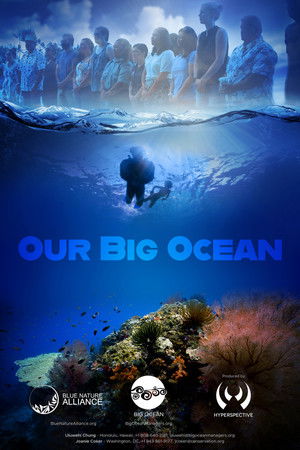
Documentary focused on underwater shootings and hawaiian dances.
A transgender Native Hawaiian teacher inspires a young girl to fulfill her destiny of leading the school's male hula troupe, even as she struggles to find love and a committed relationship in her own life.
American Aloha: Hula Beyond Hawai’i shows the survival of the hula as a renaissance continues to grow beyond the islands. With the cost of living in Hawai'i estimated at 27 percent higher than the continental United States, large numbers of Hawaiians have left the islands to pursue professional and educational opportunities. Today, with more Native Hawaiians living on the mainland than in the state of Hawai'i, the hula has traveled with them. From the suburbs of Los Angeles to the San Francisco Bay Area, the largest Hawaiian communities have settled in California, and the hula continues to connect communities to their heritage on distant shores.
A child of the Beat Generation, Gérald Leblanc conjoined urban-ness and American-ness, wandering and belonging, far beyond the boundaries of taboo. In so doing, he helped propel Acadia into the modern era.
Poet John Betjeman is shown visiting locations including Vauxhall Park, Aldersgate Street station, Camden Town and Hatfield, where he recites a handful of his poems.
The Hawaiian Islands, located 2,000 miles from the U.S. West Coast, primarily rely on agriculture for their economy, as they lack significant minerals and manufacturing. Sugar cane and pineapple are the two main crops. Sugar cane, first cultivated in Hawaii over a century ago, is harvested after 1.5 to 2 years of growth, with fires used to clear leaves before gathering. Pineapples are planted using a paper mulch technique, and the ripe fruit is quickly processed for canning. Shipping plays a crucial role in transporting these products to the mainland U.S. and bringing necessary goods to Hawaii, making it vital for the islands' prosperity.
Told by her daughter Wendy, MINK! chronicles the remarkable Patsy Takemoto Mink, a Japanese American from Hawai'i who became the first woman of color elected to the U.S. Congress, on her harrowing mission to co-author and defend Title IX, the law that transformed athletics for generations in America for girls and women.
"Before I left today, I almost forgot to answer a lot of e-mails."
Hawaii, with its tropical rainforests and diverse coral reef is a spectacular natural paradise for travellers, surfers and all fans of breathtaking sandy beaches and lush green mountains. But life on the American island chain also has a dangerous side: permanently active volcanoes, lava caves, and even burning lava pours into the sea! Here you can see black smoke rise up, spray the red-hot magma into the sky and feel how the earth trembles. Located on the Pacific plate is unusual for volcanoes, Hawaii is thus researchers a fascinating destination. At Kilauea, the most active volcano on earth, the inhabitants have to live in constant danger found over the centuries cope. Lava Land - Glowing Hawaii takes you into the world of researchers and residents on the Big Iceland, the largest island of Hawaii.
After World War II a group of young writers, outsiders and friends who were disillusioned by the pursuit of the American dream met in New York City. Associated through mutual friendships, these cultural dissidents looked for new ways and means to express themselves. Soon their writings found an audience and the American media took notice, dubbing them the Beat Generation. Members of this group included writers Jack Kerouac, William Burroughs, Allen Ginsberg. a trinity that would ultimately influence the works of others during that era, including the "hippie" movement of the '60s. In this 55-minute video narrated by Allen Ginsberg, members of the Beat Generation (including the aforementioned Burroughs, Anne Waldman, Peter Orlovsky, Amiri Baraka, Diane Di Prima, and Timothy Leary) are reunited at Naropa University in Boulder, CO during the late 1970's to share their works and influence a new generation of young American bohemians.
When the Kahuku sugar plantation and mill shut down in the 1970's, workers who lived in plantation housing had to decide how to hold the community together and create something new out of an industry that had come to an end. This is the story of their successful transition from plantation to self-governing community.
Fernanda Pivano: A Farewell to Beat