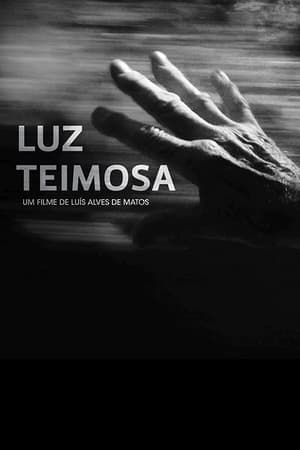
Documentary examining the work of sculptor Richard Lippold, particular his sculpture of the sun at the Metropolitan Museum of Art.
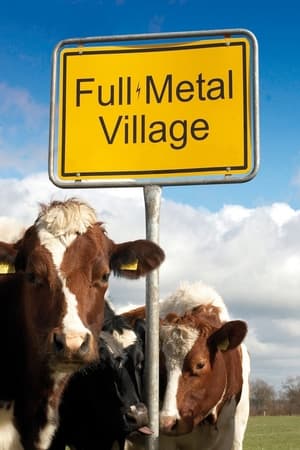
Germany's first Open Source movie. A gonzo style documentary.
From Vogue magazine fashion photographer to filmmaker, painter and sculptor, Bailey is the working-class Londoner who befriended the stars, married his muses (Jean Shrimpton, Catherine Deneuve, Marie Helvin) and captures the spirit and elegance of his times with his refreshingly simple approach and razor-sharp eye. He is also the man whose life and work inspired one of the cult movies of the sixties, Michelangelo Antonioni's Blow-Up, and who has constantly travelled the globe either with the most beautiful models or chronicling the contemporary reality of Papua New Guinea, Brazil, Vietnam, Afghanistan and other countries with ground-breaking reportages. Above all, Bailey is a romantic with a delightful sense of humour approaching his 73rd year and showing no sign of slowing up. Director Jérôme de Missolz has created an engaging portrait of this very private man who bared the soul of the swinging sixties and seventies with his photographs and films.
1917, The Train from Hell is an historical documentary about a train accident during WW1.
Les dieux de Molenbeek
The first part of the documentary about the work of the Czech painter Mikoláš Alš called "The Song of Life", which focuses on the part of his work that draws its themes from life in the village.
Painter Françoise Gilot shared Pablo Picasso's life from 1943 to 1953. This union nourished their respective artistic creations.
Vízie z Inferna-umenie proti zabúdaniu
Documentary that exposes the secret world of these unknown tax havens. There is a global network of tax-free storage facilities valuable goods, catering to the super rich - and it's virtually unknown, until now. Freeports feature highest security levels, confidential record keeping and an offshore legal status and are a huge potential for tax savings. The film investigates their rise, who is using them, and why.
Arturo Urbiola, independent singer/songwriter, talks about the influence music has had on his life, it's impact, and what's in store for his artistic career after becoming a father.
A poem about mania written by Omar Zefier. His second film.
The story of how newspapers were distributed during the Blitz, stressing the importance of an accurate and objective press on the home front.
Luis Bunuel, the father of cinematic Surrealism, made his film debut with 'Un Chien Andalou' in 1929 working closely with Salvador Dali. Considered one of the finest and controversial filmmakers with, 'L’Age d’Or' (1930), attacking the church and the middle classes. He won many awards including Best Director at Cannes for 'Los Olvidados' (1950), and the coveted Palme d’Or for 'Viridiana' (1961), which had been banned in his native Spain. His career moved to France with 'The Diary of a Chambermaid' with major stars such as Jeanne Moreau and Catherine Deneuve.
Max Gimblett: Original Mind documents the life and process of eccentric, creative genius Max Gimblett. One of New Zealand’s most successful and internationally prominent living painters, Gimblett has been working in America since 1962. The filmmakers spent a week in Gimblett’s Soho loft where he and his devoted studio assistants generously revealed the techniques and philosophy behind his beautiful art.
An intimate portrait of Eric Carle, creator of more than 70 books for children including the best-selling "The Very Hungry Caterpillar". At 82, Eric is still at work in his studio making books and creating art. As he methodically layers a tissue paper collage of the caterpillar, he describes the feeling he achieves working in his studio, the sense of being at peace, all alone, when everything grows quiet and it is just himself and his work. The film taps into that deep creative need in each of us, a spirit that started in Eric as a very young child and is unceasing today.
This ninety-minute film takes audiences on an epic journey across nine countries and over 1,400 years of history. It explores themes such as the Word, Space, Ornament, Color and Water and presents the stories behind many great masterworks of Islamic Art and Architecture. Narrated by Academy Award winning performer Susan Sarandon, this dazzling documentary reveals the variety and diversity of Islamic art. It provides a window into Islamic culture and brings broad insights to the enduring themes that have propelled human history and fueled the rise of world civilization over the centuries
Documentary about the Rembrandt Association. In the 19th century, a lot of Dutch art disappeared abroad, before the Rembrandt Association stood up in 1883 to put a stop to it. Today, 140 years later, the Association still helps determine what art lovers see in Dutch museums. In their crowning year, the Association faces a difficult choice: will they make the largest contribution in their history to the purchase of Rembrandt's De Vaandeldrager? The amount of 175 million needed for the painting is causing discussion. Is this money well spent?
Fontelonga is a village of Trás-os-Montes, in the interior of Portugal. A mirror of exile in the eyes of their own people. A reflexion where memory is the last object of beauty and redemption.
The hippie movement that captivated hundreds of thousands of young people in the West had a profound impact on the other side of the Iron Curtain. Within the Soviet system, a colorful crowd of artists, musicians, freaks, vagabonds and other long-haired drop-outs created their own system, which connected those who believed in peace, love, and freedom for their bodies and souls. More than 40 years later, a group of eccentric hippies from Estonia take a road trip to Moscow where the hippies still gather annually on the 1st of June for celebration that is related to the tragic event in 1971, when thousands of Soviet hippies were arrested by the KGB. The journey through time and dimensions goes deep into the psychedelic underground world in which these people strived for freedom.
A documentary by Olivier Gonard, shot partly in Paris’s Musée d’Orsay, that examines Olivier Assayas' film Summer Hours, and its approach to art.